


Track Unbounce form submissions as conversions in Google Analytics
Use Converly to send conversion events to Google Analytics whenever an Unbounce form is submitted. No code or technical setup required!
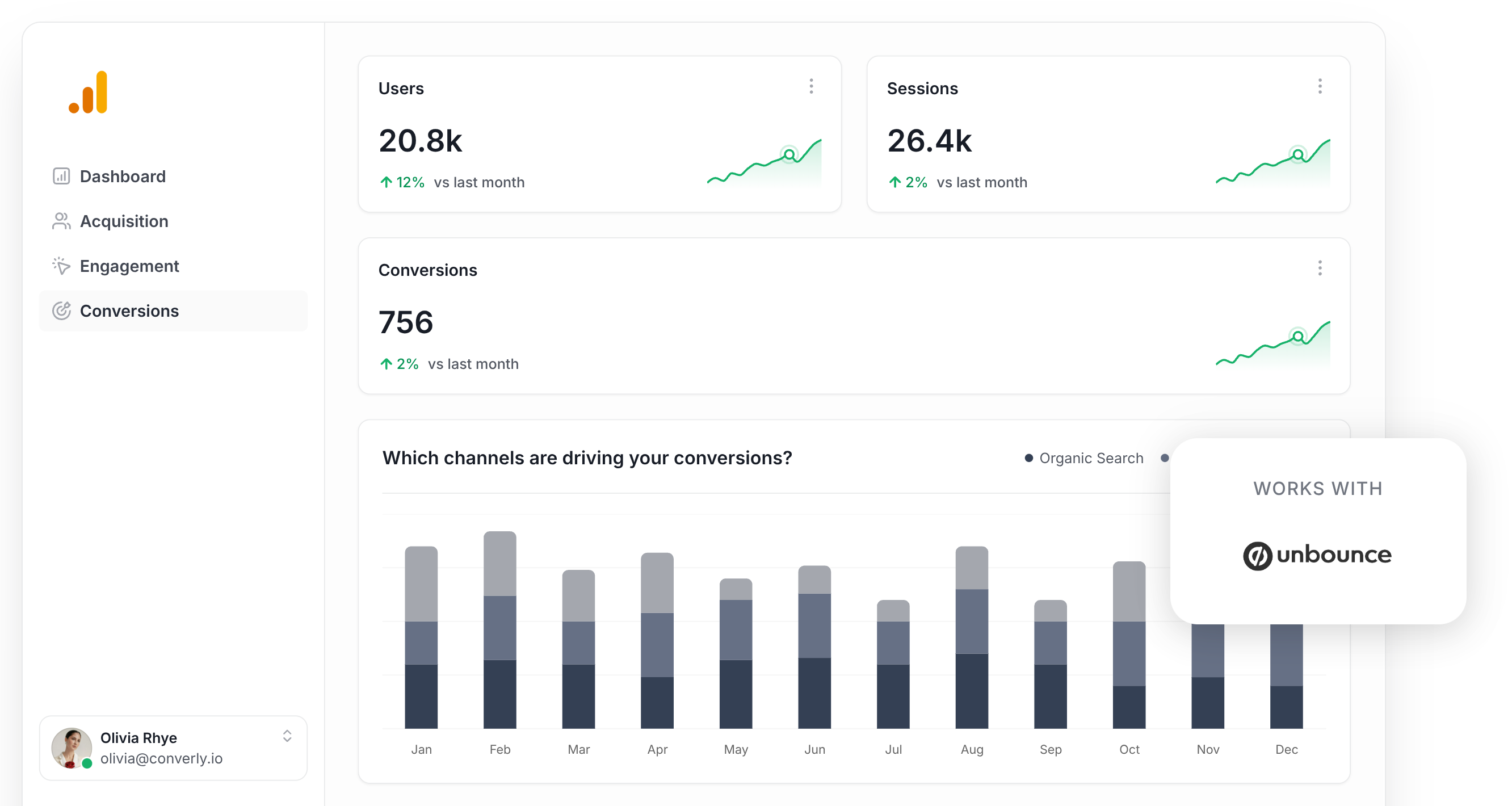
Struggling to figure out how many leads your marketing channels are actually bringing in (things like Google Ads, Meta Ads, SEO, and so on)?
You are definitely not alone. And when you have no visibility into which campaigns are generating real results, it is way too easy to keep throwing budget at the wrong things.
The good news is there is a straightforward way to fix this, and you will not need to write a single line of code to make it happen.
In this guide, we will walk you through how to use a tool called Converly to send a conversion event to Google Analytics every time someone submits an Unbounce form on your landing pages. Once it is set up, you will be able to see exactly how many leads your different campaigns are generating, which ads are performing best, and a whole lot more.
4 simple steps for tracking Unbounce form submissions as conversions in Google Analytics
Here's how to setup conversion tracking in Google Analytics in 4 simple steps:
Step 1: Build your Conversion Flow in Converly
Converly is a tool that lets you automatically send conversion events to your ad platforms and analytics tools (like Google Analytics) whenever someone fills out a form on your website.
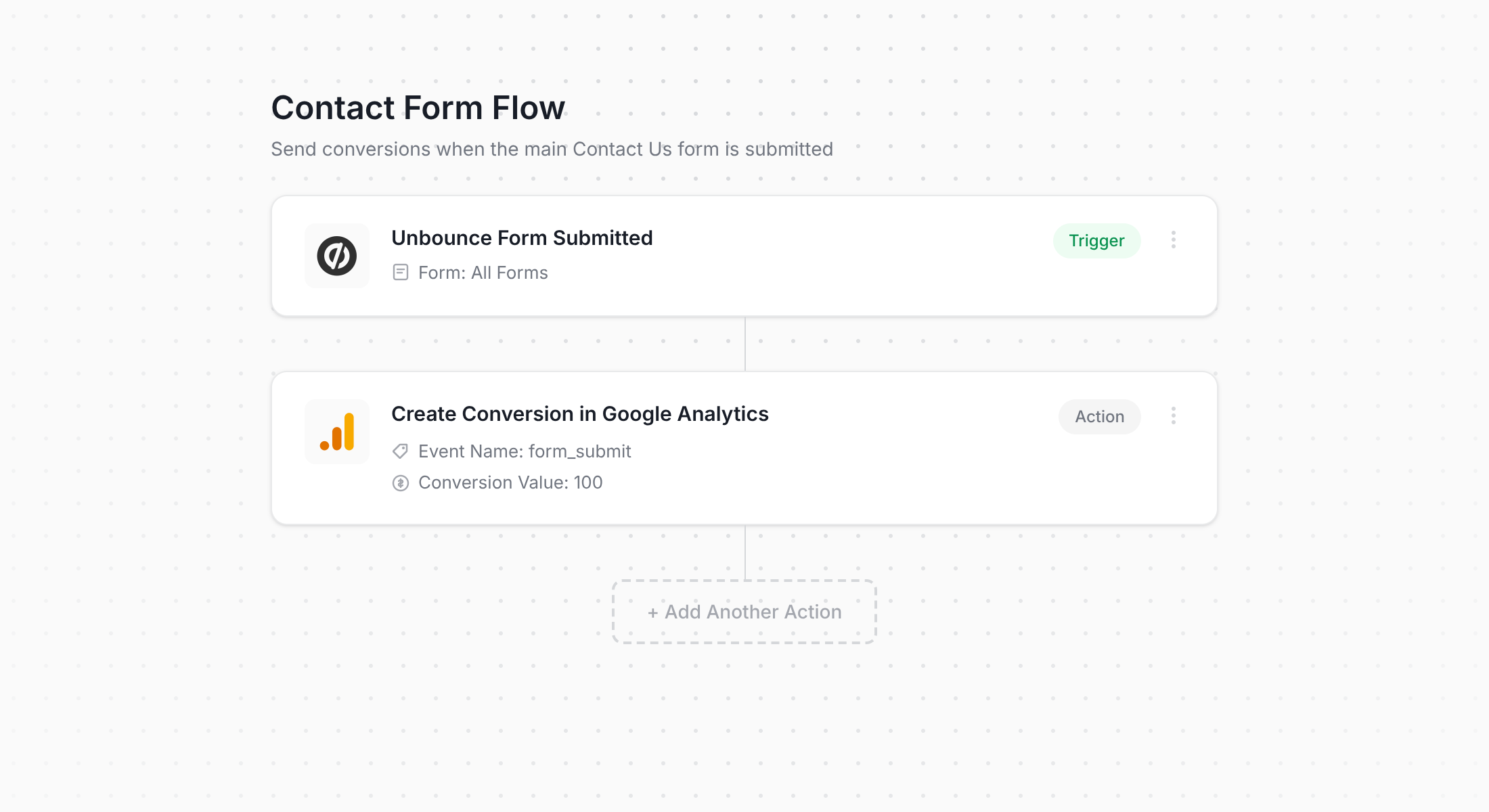
As you can see in the screenshot above, Converly has a really simple workflow builder that is easy to get your head around. If you have ever used something like Zapier or HubSpot Workflows, the whole thing will feel instantly familiar.
All you need to do is pick your trigger (like when someone submits an Unbounce form on your site) and then choose where you want the conversion event to go (such as Google Analytics). That is really all there is to it.
Step 2: Install Converly on your landing pages
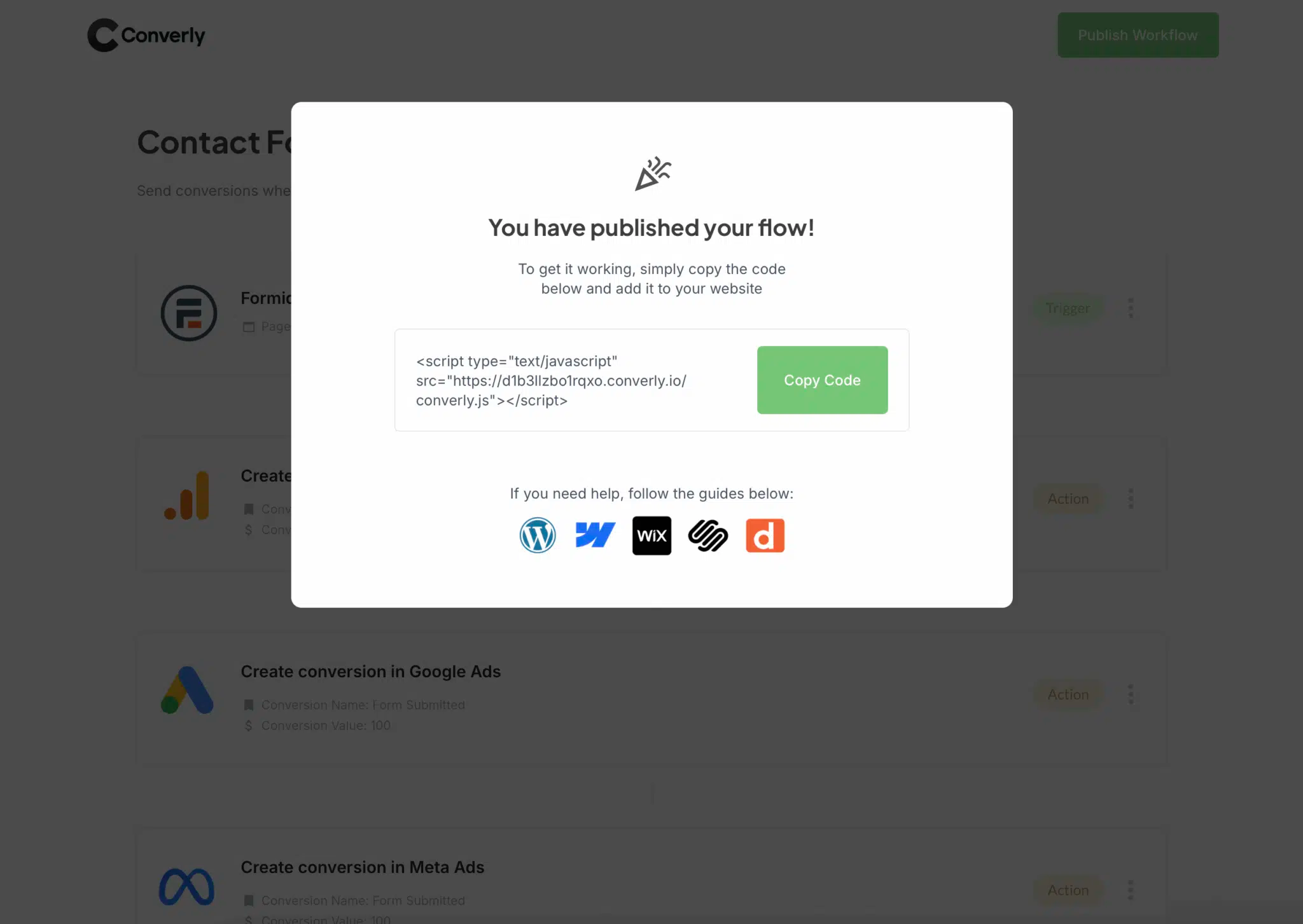
Once you have finished setting up your Conversion Flow, Converly will give you a small snippet of code to add to your landing pages.
From there, it takes care of everything on its own. It detects when someone submits an Unbounce form and fires the conversion data straight to Google Analytics (plus any other platforms you have added to your flow).
Step 3: Test it's working
With Converly installed and your Conversion Flow built, it is time to make sure everything is firing correctly.
The easiest way to do this is to open a new incognito window, head to the page where your Unbounce form lives, and submit a test entry.
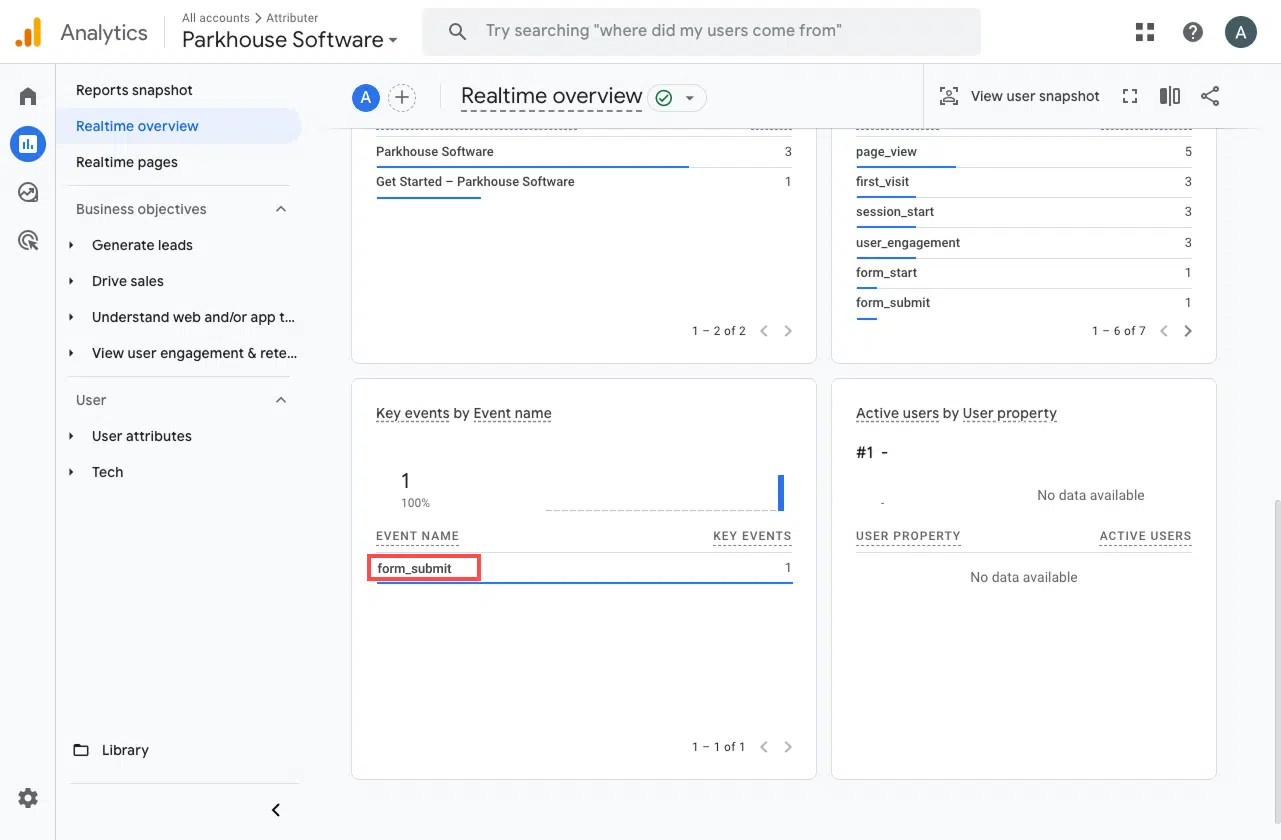
Then jump into your Google Analytics account, open up the Real Time dashboard, and take a look at the Recent Events section. If your test submission shows up there, you are good to go.
Step 4: Mark the event as a 'Key Event' (Optional, but recommended)
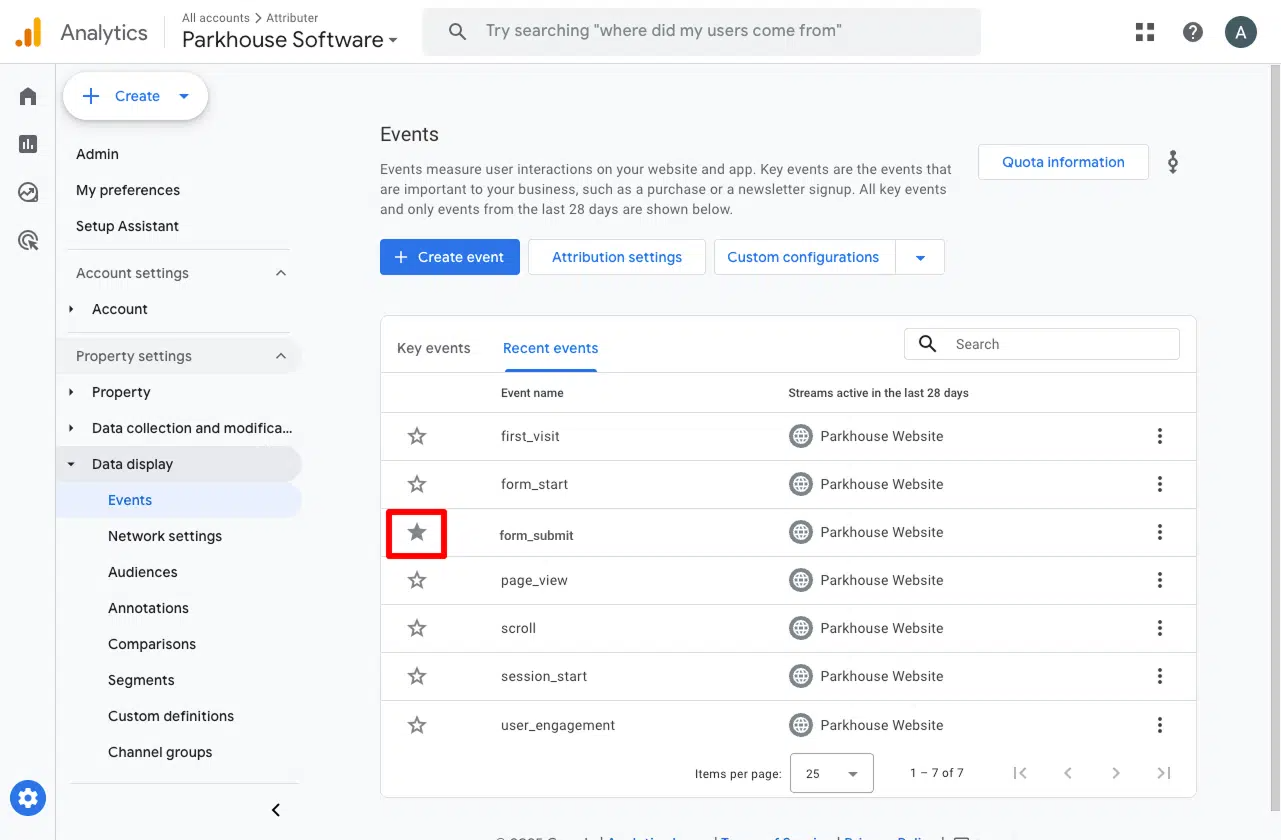
As a last step, it is a good idea to mark your form_submit event as a Key Event in Google Analytics 4. Doing this tells GA4 to treat it as a conversion, which opens up a bunch of extra reporting options. For example, you will be able to pull it into your acquisition reports or use it as a conversion point when setting up funnel and path analysis.
To get this done, head to the Admin section of your GA4 property and click on Events under the Data Display menu. Switch over to the Recent Events tab and you will see a list of everything that has been tracked so far. Find your form_submit event (or whatever custom name you went with) and click the star icon next to it to mark it as a Key Event.
Why Converly is the best way to trigger conversions in Google Analytics
As we mentioned earlier, there are quite a few ways to set up conversion tracking in Google Analytics when someone submits an Unbounce form on your site.
So what makes Converly the better choice? Here are a few reasons worth knowing about:
1. No code or complicated setup
Unlike a lot of the other methods out there, Converly is built to be genuinely simple to use.
It comes with a workflow style builder that feels natural and easy to navigate, particularly if you have spent any time using tools like Zapier or HubSpot Workflows.
All you do is select your trigger (like when someone submits an Unbounce form) and then choose what happens next (like sending a conversion event to Google Analytics). That is honestly all there is to it. No wrestling with Google Tag Manager, no code, no headaches.
2. More accurate conversion numbers
Converly is a server-side conversion tracking tool, which means it sends conversions directly to Google Analytics servers (using the Measurement Protocol) rather than relying on the Google tag.
The issue is that browser tags (like the Gtag) get blocked by ad blockers and the privacy protections built into iOS and Safari, which means a chunk of your conversions never actually make it into Google Analytics.
And it's not a small chunk either. A recent study of over 7 million conversions found that tag-based tracking was missing around 30% of conversions. About 5% of that loss came from ad blockers, and the other 25% came from privacy restrictions in modern browsers.
Using Converly to send your conversions directly to Google Analytics servers means those conversions land in your Google Analytics account where they belong.
3. Supports multiple tools and platforms
Converly connects with more than 50 different tools, covering everything from form builders and scheduling apps to chatbots and more. On top of that, it can push conversion events to a wide range of platforms including Google Analytics, Google Ads, Meta Ads, LinkedIn Ads, and plenty of others.
So if you ever bring a new tool into your marketing stack or start running ads on a new platform, getting conversion tracking set up is a breeze. A few clicks and you are done.
4. Makes it easy to add conditional logic
Converly lets you build smart rules that fire off different conversion events to your ad platforms and analytics tools depending on what someone actually does on your site.
Say you are the marketer at an accounting firm. You could set up a conversion called Consultation Requested for when someone fills out your consultation form, and a completely separate one called Guide Downloaded for when a visitor grabs one of your free resources.
That way you can track each type of conversion on its own and get a much clearer picture of what your campaigns are actually driving.
5. Great support provided for free
Anyone who has ever tried to get help from Google or Meta about conversion tracking knows it can feel like shouting into the void.
That is where Converly does things differently.
Our team has more than 20 years of hands on experience in advertising and analytics, and we are here to help you every step of the way. Whether you prefer to sort things out over email or would rather jump on a quick video call, we offer free support to make sure your setup is done right and everything is working the way it should.
6. Gives you a full conversion log and email alerts
Track your Unbounce form submissions through a tool like Google Tag Manager and you are stuck guessing whether it is still firing. You can test it once when you set it up, but unless you keep re-testing, the tracking can break quietly (someone edits the landing page form, changes a tag in Google Tag Manager, or adjusts a setting in Google Analytics) and you would never notice.
Converly takes that guesswork away. You get a full conversion log that shows every submission that fired, the exact data Converly captured, what it sent to Google Analytics, the response Google Analytics returned, and more.
You can also turn on email notifications. Get one for every submission sent to Google Analytics, or set them to fire only when a send fails, so the moment your tracking breaks you will know about it.
3 useful reports you can run when you track Unbounce form submissions as conversions in Google Analytics
Over the past 15 years leading marketing teams, I have spent a lot of time digging through Google Analytics reports trying to figure out where our visitors and leads were actually coming from.
Out of all the reports I have run over that time, these 3 have consistently delivered the most useful insights. And once you are tracking Unbounce form submissions as conversions in Google Analytics, you will be able to run them too.
1. Conversions by Channel
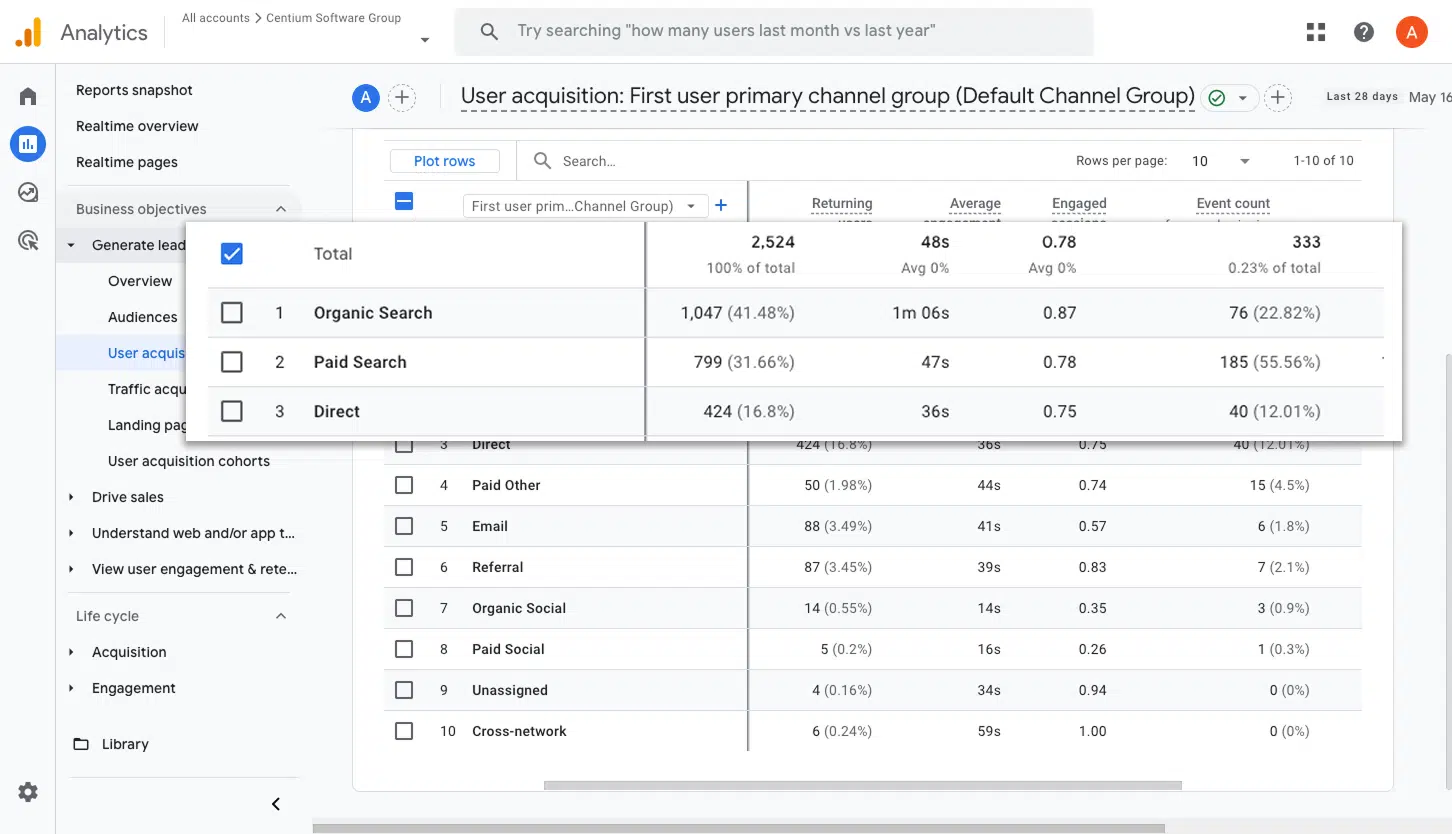
This report shows you exactly how many form submissions are coming in from each of your marketing channels, whether that is Organic Search, Paid Search, Paid Social, Organic Social, or anything else.
It is a really handy way to see which channels are pulling their weight and spot any areas where there might be an opportunity to drive even more leads.
2. Conversions by Meta Ads Network
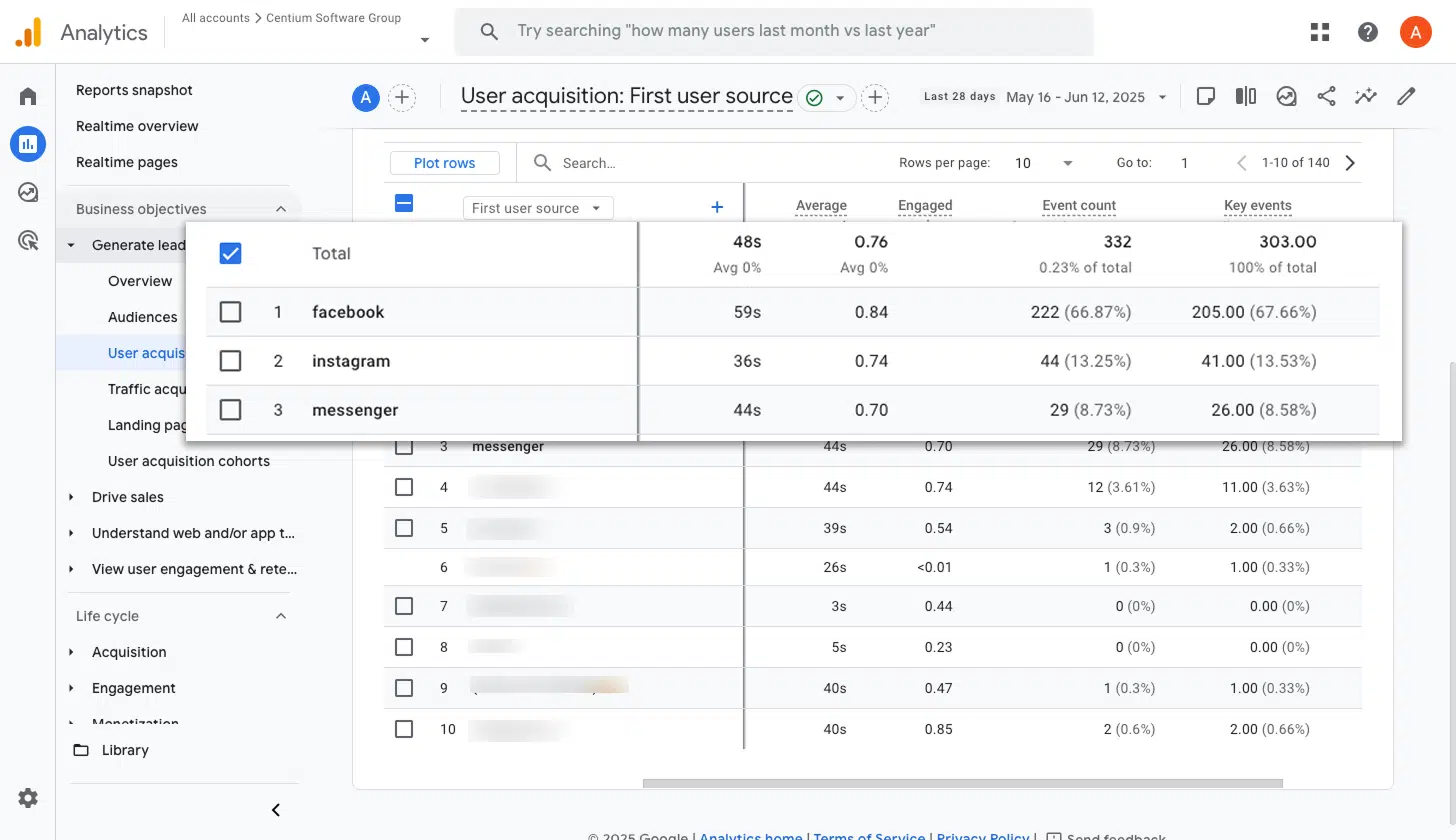
If you are running Meta ads, they are probably showing up across a bunch of different networks like Facebook, Instagram, Messenger and WhatsApp.
And since each of those platforms can perform pretty differently from one another, it is really important to know which ones are actually bringing in leads rather than just clicks.
This report gives you exactly that. It breaks down how many conversions came from each network, so you can put more budget behind the ones that are working and dial back on the ones that are not pulling their weight.
3. Conversions by Google Ads Campaign
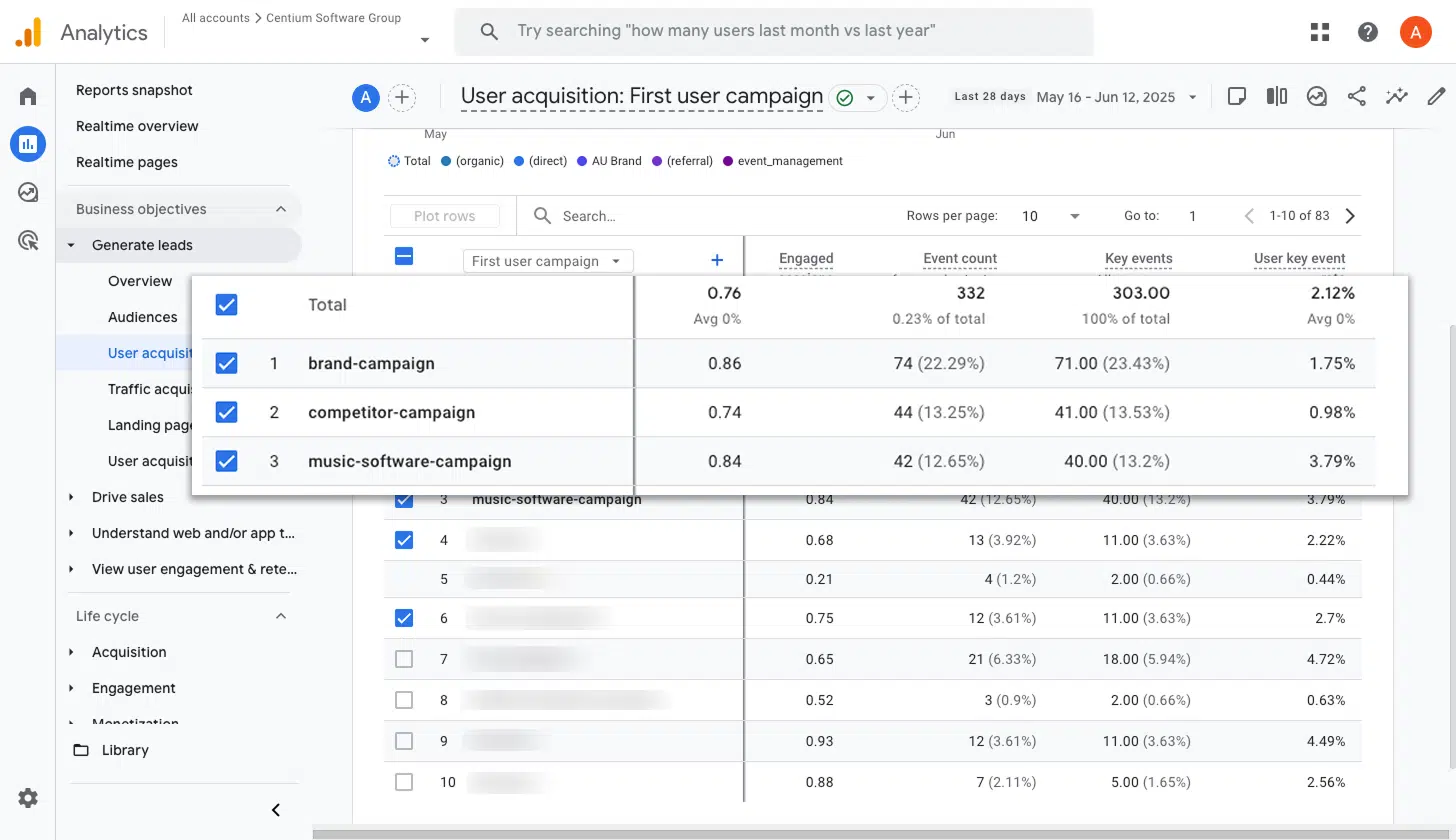
If you are advertising on Google, there is a good chance you have got several campaigns running at the same time. Some might be targeting different services, others could be focused on specific keyword types like brand terms versus non brand terms, and some might even be aimed at different geographic areas.
That is exactly why it is so important to know how each campaign is actually performing when it comes to driving conversions.
This report gives you that clarity. It shows you which campaigns are generating the most conversions, so you can confidently shift more budget into the ones that are delivering and cut back on the ones that are not.
Wrap up
Follow the steps in this guide and you will be able to send a conversion event to Google Analytics every time someone submits a form on your Unbounce landing pages, all without writing any code or dealing with a complicated setup.
And if you decide to start running ads on Google, Meta, or any other platform down the track, you can easily add them into your Conversion Flow and have the same data flowing through to them as well.
Best of all, getting started could not be easier. Converly offers a 14 day free trial and setup usually takes less than 10 minutes. Give it a go and see for yourself!
About the author

Aaron is the founder of Converly. With over 15 years of experience in digital marketing and SaaS, he's passionate about helping businesses track and optimise their ad conversions.