


Track Paperform form submissions as conversions in Google Ads
Learn how to send server-side conversions to Google Ads every time someone completes a Paperform on your website. No coding or complex setup required.
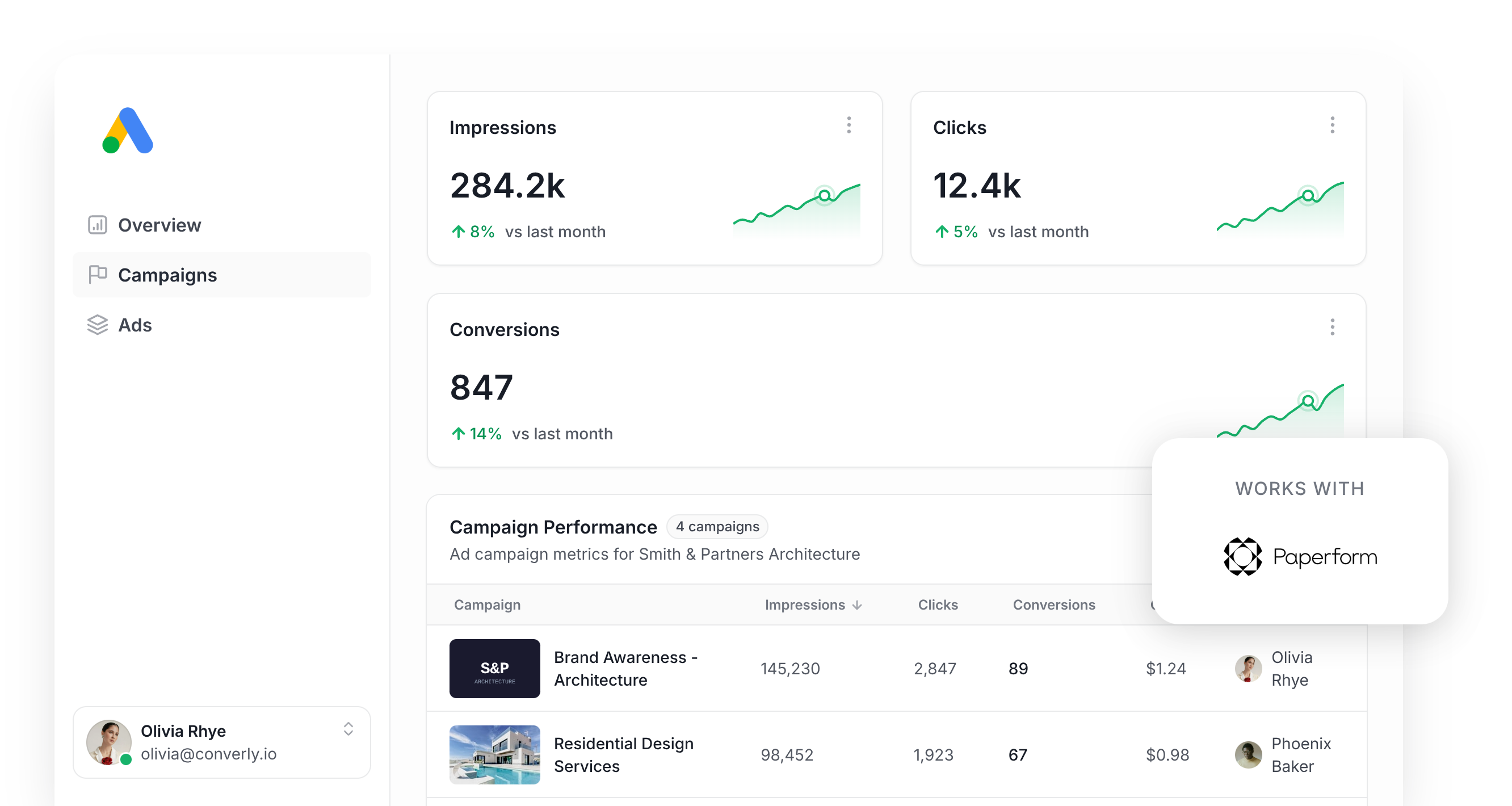
Paperform is a great way to collect leads without needing a developer to build the form for you. But if you can't see which ad campaigns are actually driving those submissions, you're flying blind when it comes to deciding where to spend your budget.
The usual fix is Google Tag Manager, but that means writing code to detect when a Paperform has been completed, then building out the triggers, tags, and variables to push that event over to Google Ads.
Some people take a shortcut and fire a conversion when someone lands on the thank you page instead, but that approach is getting less reliable every year. Ad blockers and privacy features baked into browsers like Safari and Firefox mean more than 30% of those conversions never actually reach Google. On top of that, Google Ads wants the lead's name, email, and phone number attached to every conversion, and a thank you page rarely has any of that to hand over.
So what's the right way to track Paperform submissions as Google Ads conversions? Let's walk through it.
Why you need to send conversions to Google Ads server-side
Google's smart bidding engine (the tech behind bid strategies like Target CPA and Maximise Conversions) weighs up hundreds of signals, things like location, time of day, and a searcher's past behavior, to decide how good of a fit the searcher is for your business. It will then bid higher or lower for their click based on how likely ti thinks they are to convert into a lead.
That's powerful stuff, but it only works if the conversion data feeding it is accurate. If you're not telling Google ‘this person converted and this person didn’t' then it has no way of knowing what a good lead looks like for your business.
The trouble is that the common ways of tracking conversions all depend on a tag successfully loading and firing inside the visitor's browser, and plenty of things get in the way of that happening:
- Ad Blockers - If a visitor is running an ad blocker, the Google tag never loads, so Google can't track anything they did on your website.
- Privacy Features in Browsers - Safari and similar browsers limit how long a cookie set by the Google tag can stick around, often to a single day, so if someone converts a day or two after clicking your ad, Google has no way to connect the two events.
- Using multiple devices - Someone might tap your ad on their phone during a coffee break, then come back on their laptop that night to actually fill out your Paperform. Browser tracking has no way to tell those are the same person.
Server-side tracking solves all of these problems. Instead of relying on the visitor's browser to send conversion events to Google, tools like Converly sends the lead's information directly to Google's servers, so ad blockers browser privacy settings can't get in the way.
And it's not just a theoretical improvement. Google itself reports that businesses moving to server-side tracking see conversions climb by 23% on average, while cost per conversion falls by around 10%, simply because the algorithm finally has the data it needs to figure out what your ideal customers actually looks like and can server your ads more prominently to people like them.
3 simple steps to send server-side conversions to Google Ads from Paperform
Here's how to get server-side conversion tracking running between Paperform and Google Ads in 3 easy steps.
Step 1: Build your Conversion Flow in Converly
Converly makes it easy to connect Paperform to Google Ads, and there's no custom code or messy setup involved.
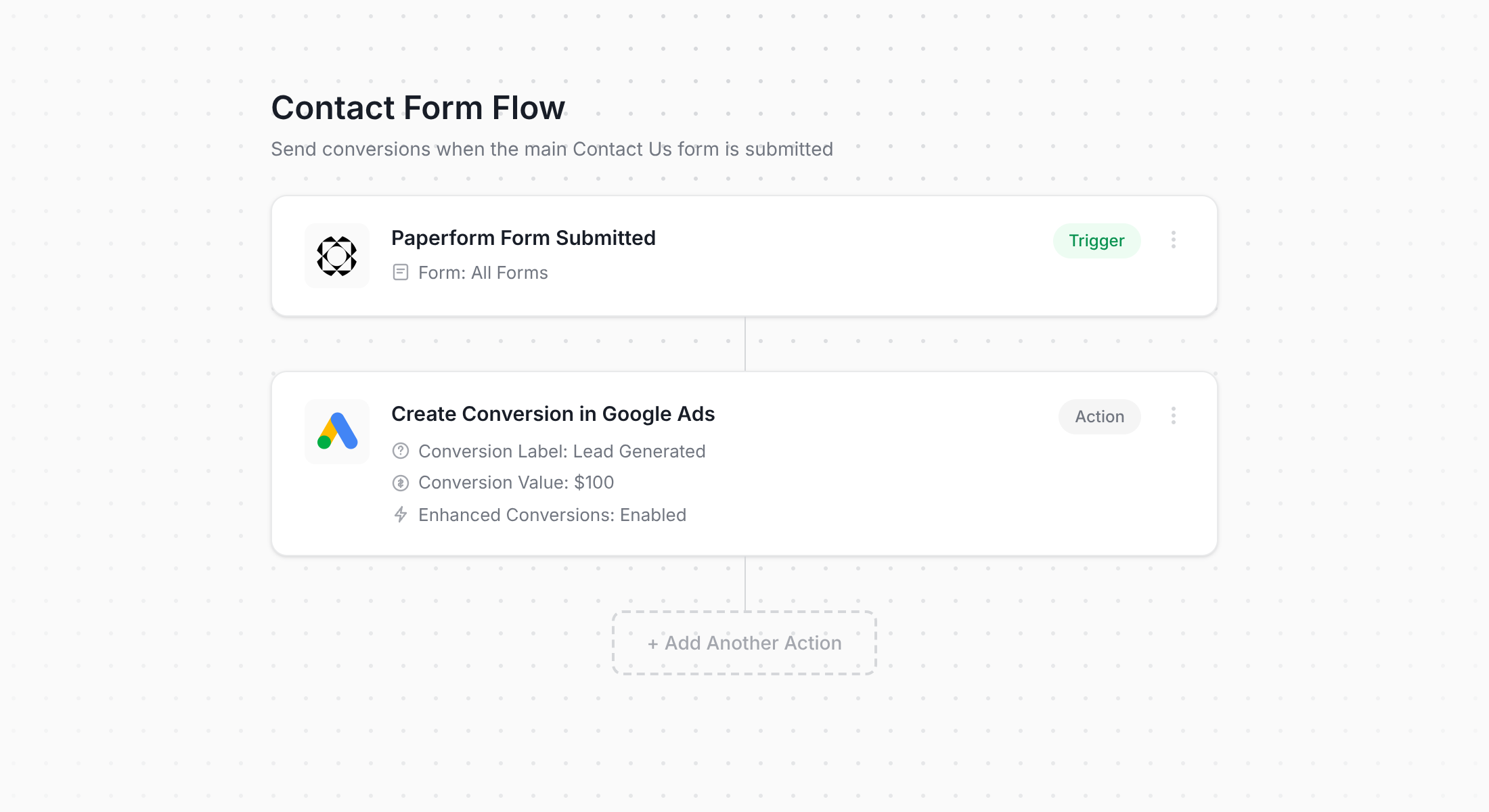
If you've used something like Zapier or HubSpot Workflows before, this will feel familiar right away. You simply pick a trigger (a Paperform submission on your site), then pick the action that should follow (sending a conversion to Google Ads).
That's genuinely it. Publish the flow and you have server-side conversion tracking live in Google Ads.
Step 2: Add the Converly code to your website
Once you publish your Conversion Flow, Converly gives you a little snippet of code to add to your site.
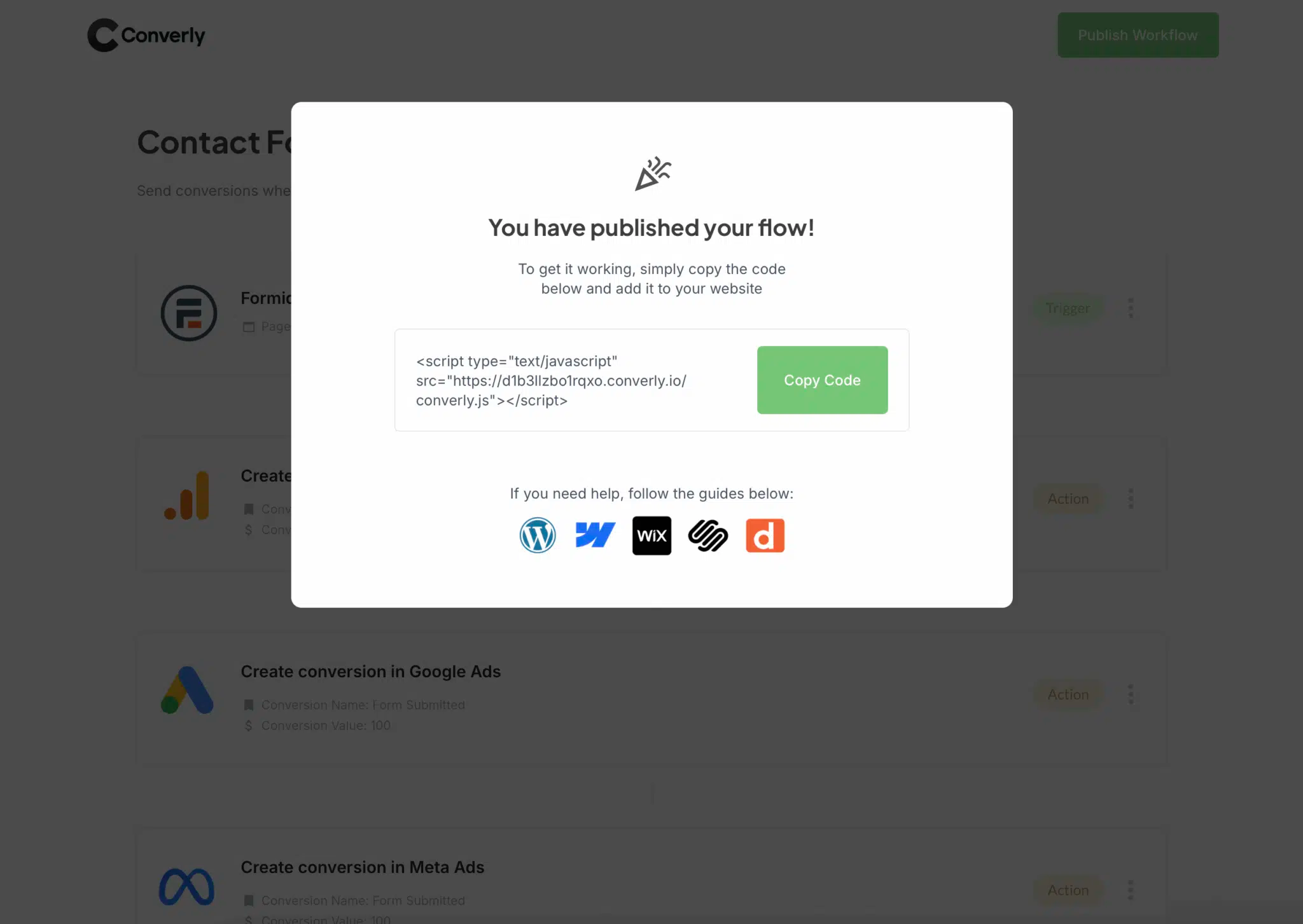
You can add this through your website's header or footer (most website builders have a section in the Settings section for this). If you already use Google Tag Manager for other things, you can also add it as a custom HTML tag through there.
Step 3: Test it works
Head to your live Paperform and submit a test entry to make sure everything is connected properly.
Then jump back into Converly, open the Conversion Flow you just built, click the 3 dots menu in the top right corner, and select View Logs.
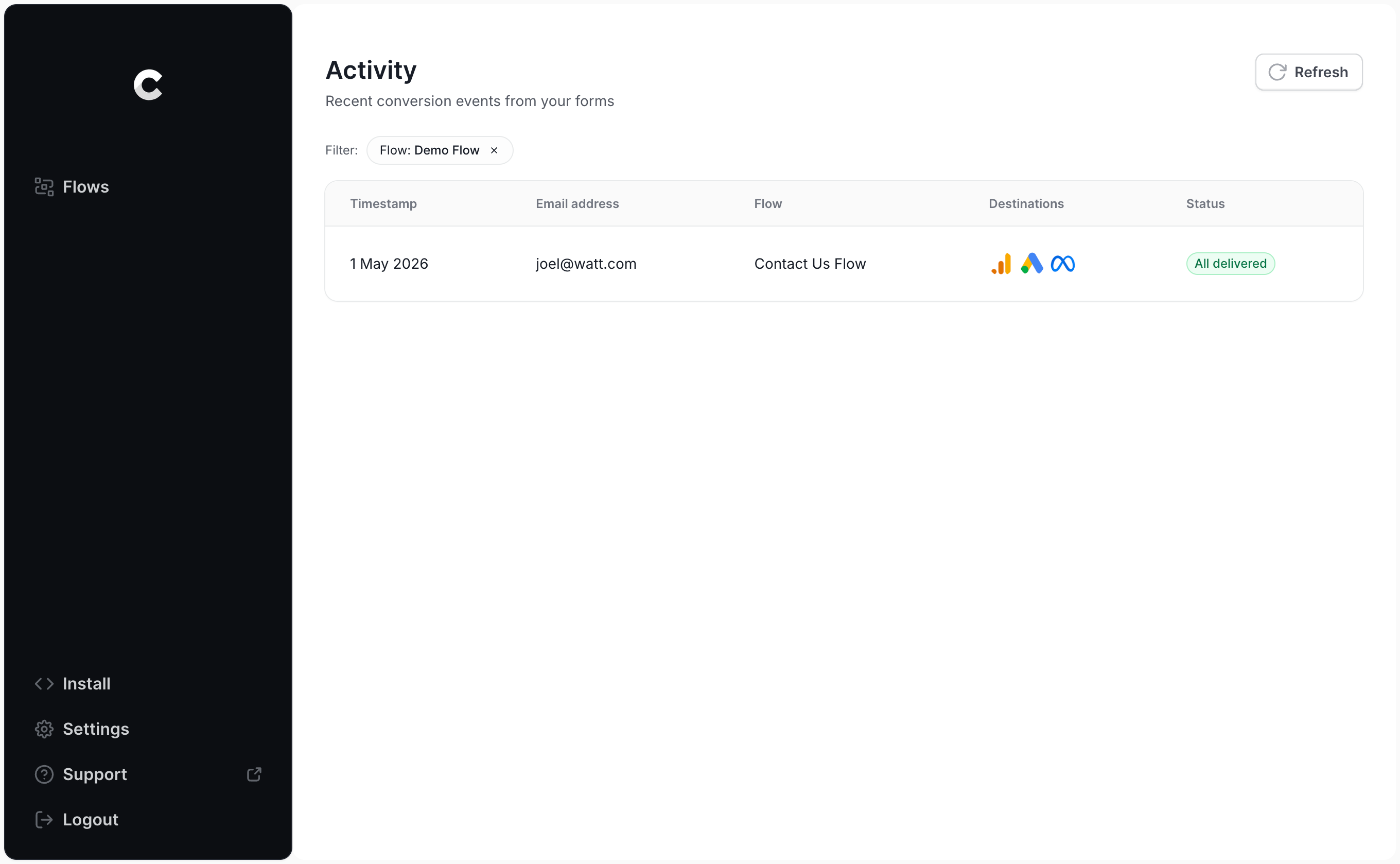
Click into the log entry from your test submission to see exactly what Converly captured, including whether Google Ads accepted it.
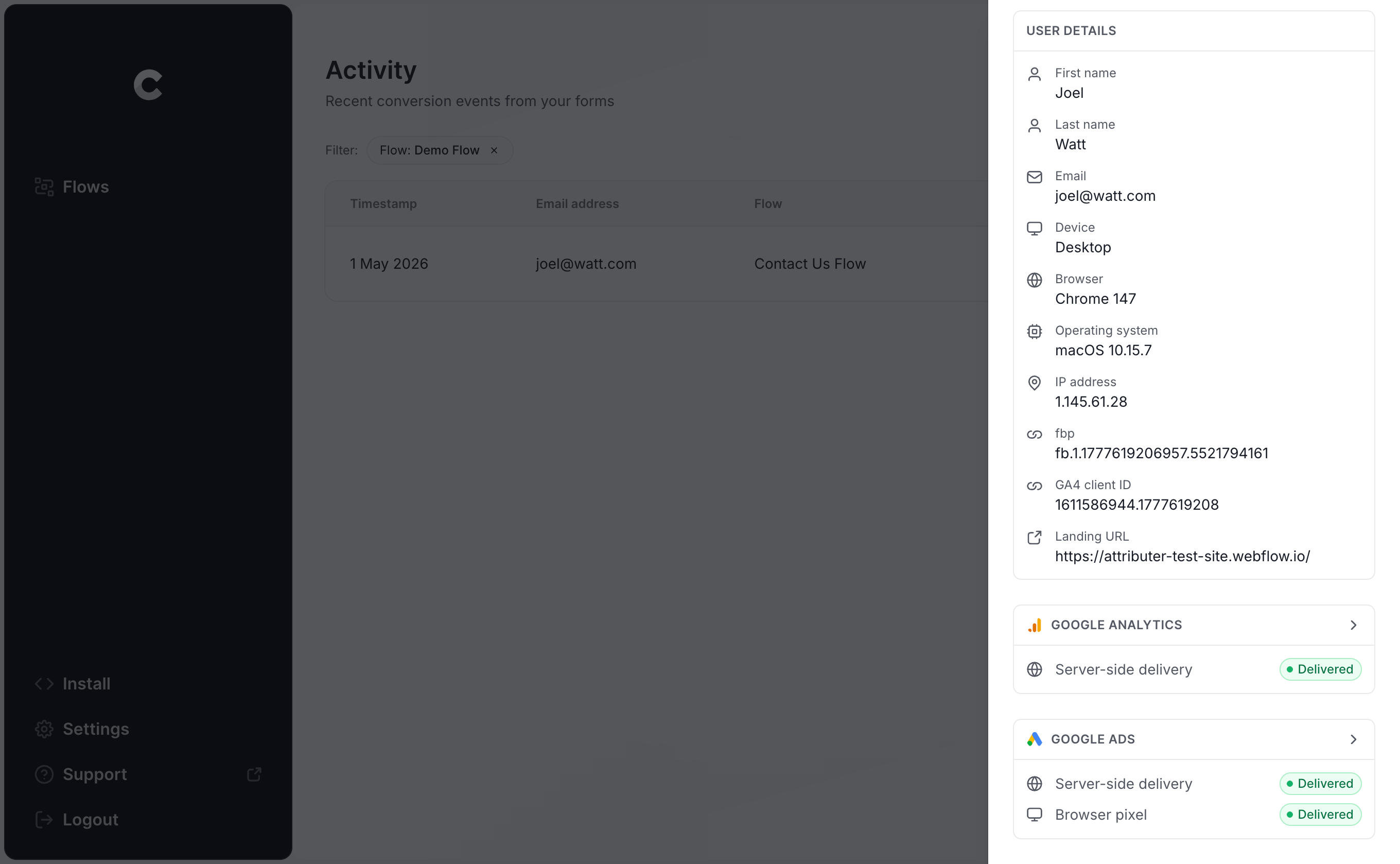
You can go even deeper and look at the actual payload Converly sent over to Google Ads, plus the response Google sent back.
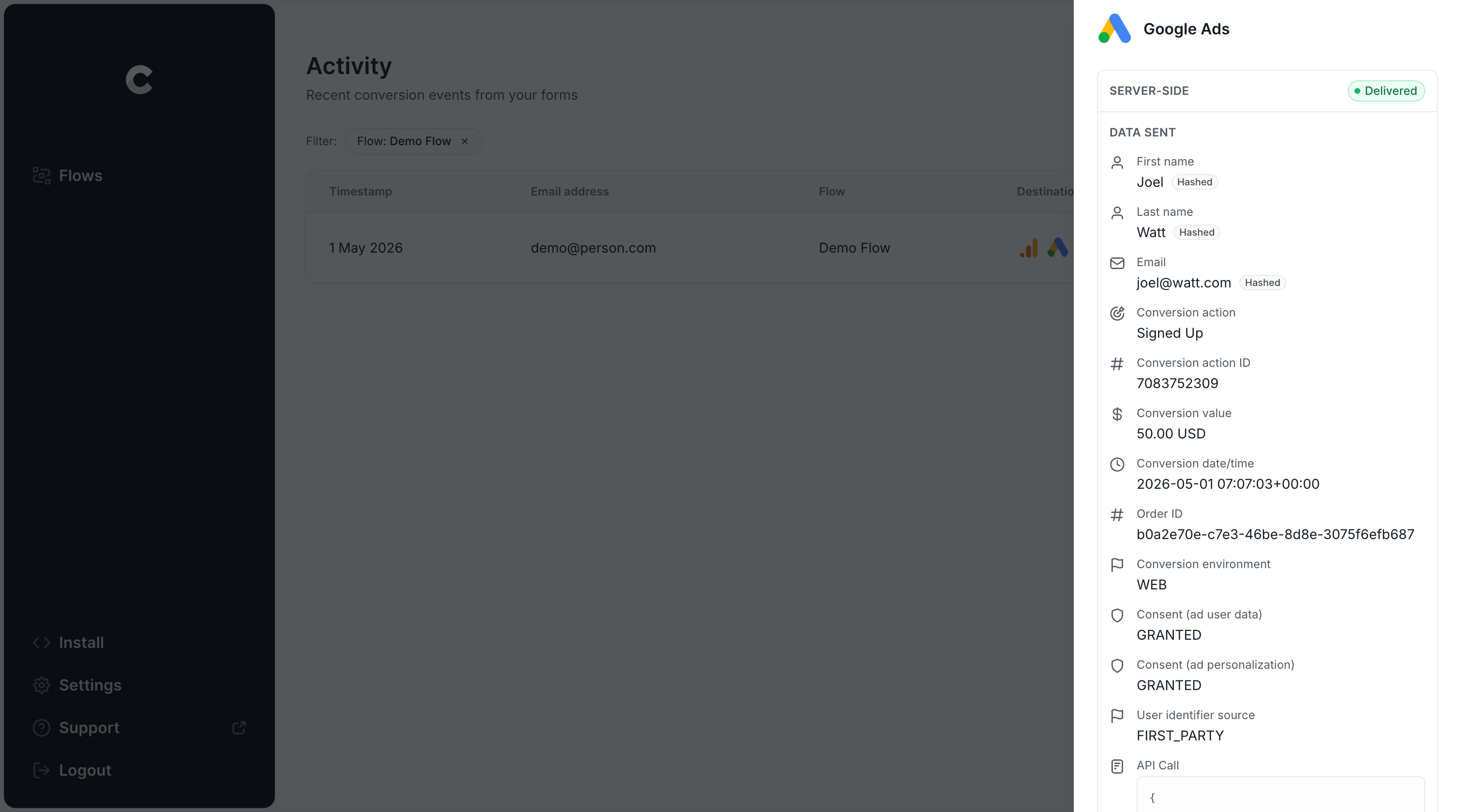
Once that test submission shows up as successfully delivered, you're done. Most people have this whole setup finished in under 5 minutes.
Why Converly is the best way to send conversions to Google Ads from Paperform
There's more than one route to getting Paperform submissions into Google Ads as conversions, so why pick Converly?
1. Easy to set up
Google Tag Manager is usually the first thing people try to use to set up conversion tracking, but that means writing code to detect the Paperform submission event, pulling the lead's name and email into the dataLayer, hashing it with SHA-256 the way Google requires, then assembling the right combination of triggers, tags, and variables.
If GTM isn't something you use every day, that's a real time sink just to get basic tracking working.
Converly skips all of that. Pick your trigger (a Paperform submission), pick your action (a Google Ads conversion), and you're finished. No code, no digging through GTM docs. We even have an MCP and CLI that you connect Clade or ChatGPT to, which means you can tell your AI agent to ‘Setup conversion tracking in Google Ads from Paperform’ and it will do it all for you!
2. Not affected by ad blockers and privacy restrictions
Any browser-based approach, whether that's using Google Tag Manager or trakcing thank you page visits, is going to lose conversions to ad blockers and privacy-focused browsers before they even reach Google. In fact, one study looking at over 7 million conversions found tag-based tracking was missing close to 30% of conversions.
Converly gets around this by sending conversions straight from our server to Google's servers, so no conversions can be blocked from getting through.
3. Works across devices
It's normal these days for someone to click your ad on their phone and but then come back and complete your Paperform later on a laptop or tablet. That gap is exactly what trips up browser-based tracking, since the click and the conversion happen on two different devices with nothing linking them together.
Converly solves this by passing the lead's details (name, email, and so on) directly to Google's servers. That gives Google the data it needs to match the conversion back to a real person and the exact ad they clicked.
4. Sends more data
On top of basic contact details like name, email, and phone, Converly also captures technical signals like the Google Click ID (GCLID), IP address, and User Agent, and sends all of that to Google Ads too.
The more data Google gets about a conversion, the better its chance of correctly matching the conversion back to the person who clicked your ad, which makes your tracking setup more accurate.
5. Supports multiple tools and platforms
Converly can detect conversions in over 100 form builders, website builders, scheduling tools, and chat widgets. From there, it can send conversion events to Google Analytics, Google Ads, Meta Ads, ChatGPT Ads, LinkedIn Ads, Microsoft Ads, and a handful of other destinations.
So if you add another tool to your stack, or start running ads on a new platform down the line, you're not starting your tracking setup over from scratch. Just connect the new one inside Converly and you're good to go.
6. Gives you a full conversion log and email alerts
With a Google Tag Manager setup, you might test things thoroughly when you first build it, but after that you're mostly hoping nothing breaks.
Converly takes that guesswork away. Every conversion is logged, so you can always see exactly what data came in, what got sent to Google Ads, and how Google Ads responded.
You can also turn on email alerts, either for every conversion or just for failures, so you'll know the moment something stops working (instead of noticing a month later when your conversion numbers have dropped to zero).
3 things you can do when you properly send conversions to Google Ads from Paperform
Once Google Ads is receiving accurate conversion data from your Paperform submissions, a lot of new reporting and optimisation options open up.
1. Report on conversions by campaign, ad group, keyword, etc.
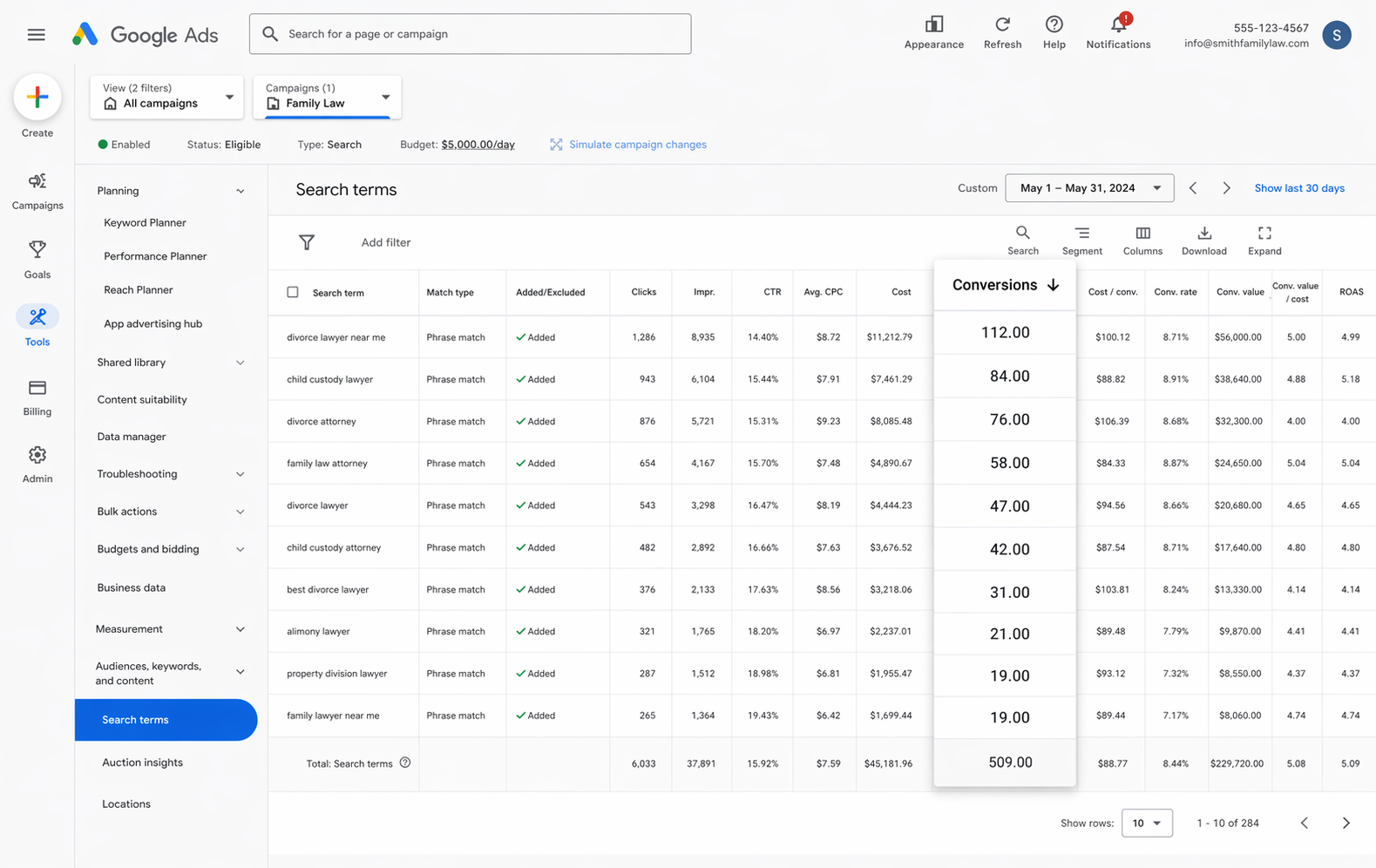
Rather than just clicks and impressions, your Google Ads account will now show conversions, conversion rate, cost per conversion, return on ad spend, and more. You can break every one of those down by campaign, ad group, keyword, ad, country, and other dimensions.
That level of visibility makes it much easier to spot which campaigns, keywords, and ads are genuinely pulling their weight, and which ones can be cut.
2. Switch to smart bidding strategies like Maximise Conversions or Target CPA
Manual bidding isn't the most effective way to run a Google Ads account these days. You're essentially telling Google to bid up to a fixed amount, say $3 a click, no matter who's actually searching or how likely they are to convert.
Smart Bidding is the better way to do it. You give Google a target, like $45 per lead, and it handles the bidding for you, weighing up signals like device, location, age, interests, and prior behavior, and bidding higher on people it thinks are more likely to convert, and lower on those who probably won't.
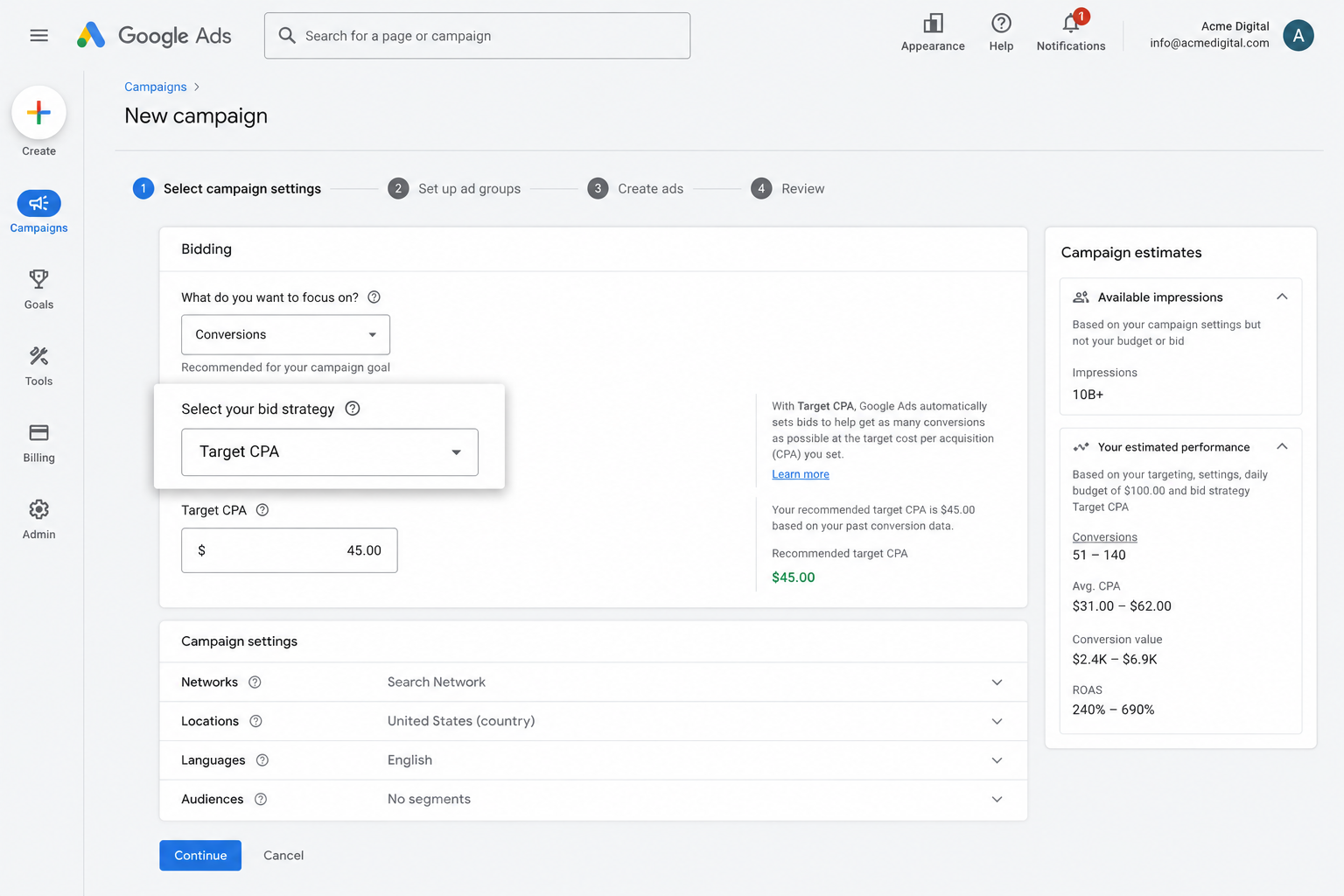
It's a great way to bring in more leads for less, but it only works well when it's backed by solid conversion data. If you give Google clean, accurate signal about who converted and who didn't, it can actually learn what a good prospect looks like for your business and show your ads more prominently to people like them.
3. Retarget people who visited your site but didn't convert
Reliable conversion data also lets you build remarketing audiences from visitors who reached your site but never completed your Paperform.
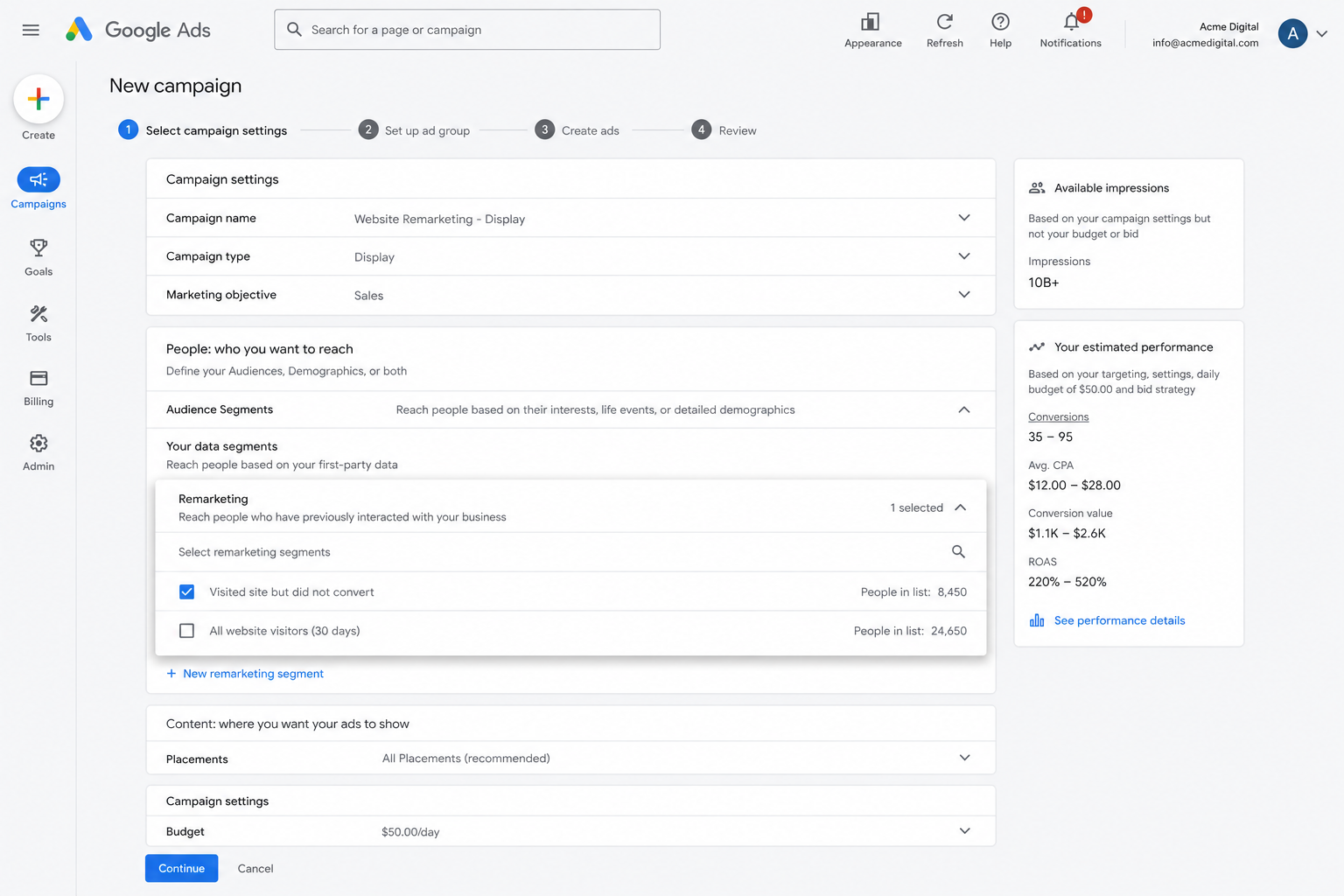
From there, you've got a few ways to win them back.
- Search - Increase or decrease your bids for this audience next time they search your keywords.
- Display - Serve display ads specifically to this group as they browse other sites on the Google Display Network.
- YouTube - Show YouTube ads to people who visited but didn't convert, keeping your brand front of mind and pulling them back to your site.
Wrap Up
If you want to send conversions to Google Ads when someone submits a Paperform on your website, then Converly is the simplest way to make it happen.
Conversions go straight to Google's servers, so ad blockers and privacy browsers never get a chance to block them, and Converly sends the full set of lead details (name, email, phone, IP address, User Agent, and more) so Google has what it needs to correctly match every conversion back to the ad click that caused it.
It takes just a few minutes to set up and comes with a 14-day free trial, so give it a try today!
About the author

Aaron is the founder of Converly. With over 15 years of experience in digital marketing and SaaS, he's passionate about helping businesses track and optimise their ad conversions.