


Track Keap form submissions as conversions in Google Analytics
Learn how to automatically send conversion events to Google Analytics whenever someone submits a Keap form on your website. No code or technical setup needed!
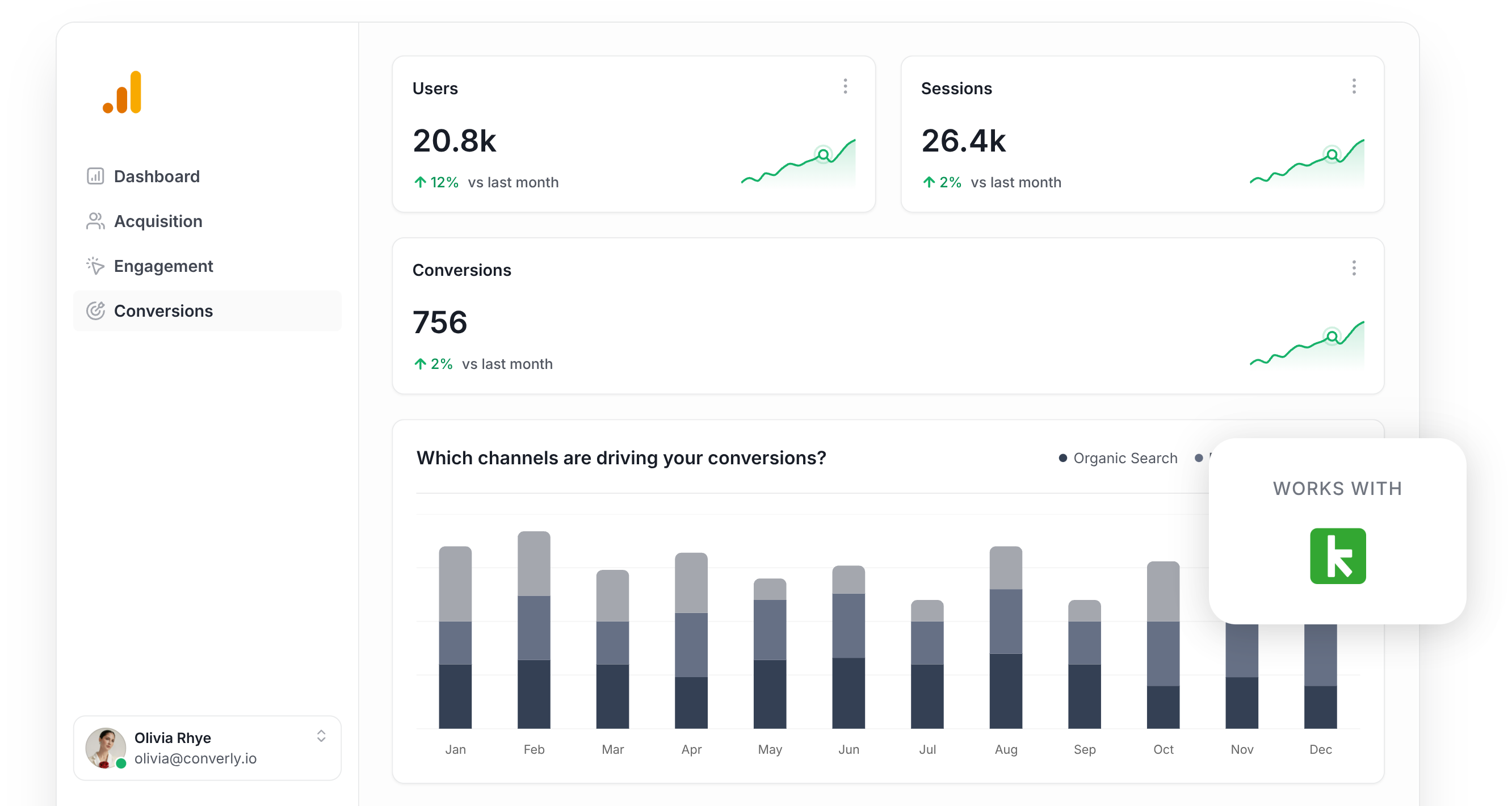
Are you finding it hard to tell which of your marketing campaigns are actually generating leads?
If so, you are in very good company. Tools like Google Analytics can tell you how many website visitors you are getting from each channel or campaign, but without solid conversion tracking, it is almost impossible to know which ones are generating actual leads for your business.
The good news is that solving this is a lot easier than you might expect, and you will not need any technical skills or coding knowledge to get it done.
This guide will walk you through how to set up Converly so that a conversion event is automatically sent to Google Analytics every time someone fills out a Keap form on your website. With this in place, you will be able to see exactly which channels, campaigns, and ads are bringing in real leads.
4 simple steps for tracking Keap form submissions as conversions in Google Analytics
Here is the full setup in 4 straightforward steps:
Step 1: Build your Conversion Flow in Converly
Converly makes it simple to send conversion events to analytics tools and ad platforms (including Google Analytics) whenever someone submits a form on your website.
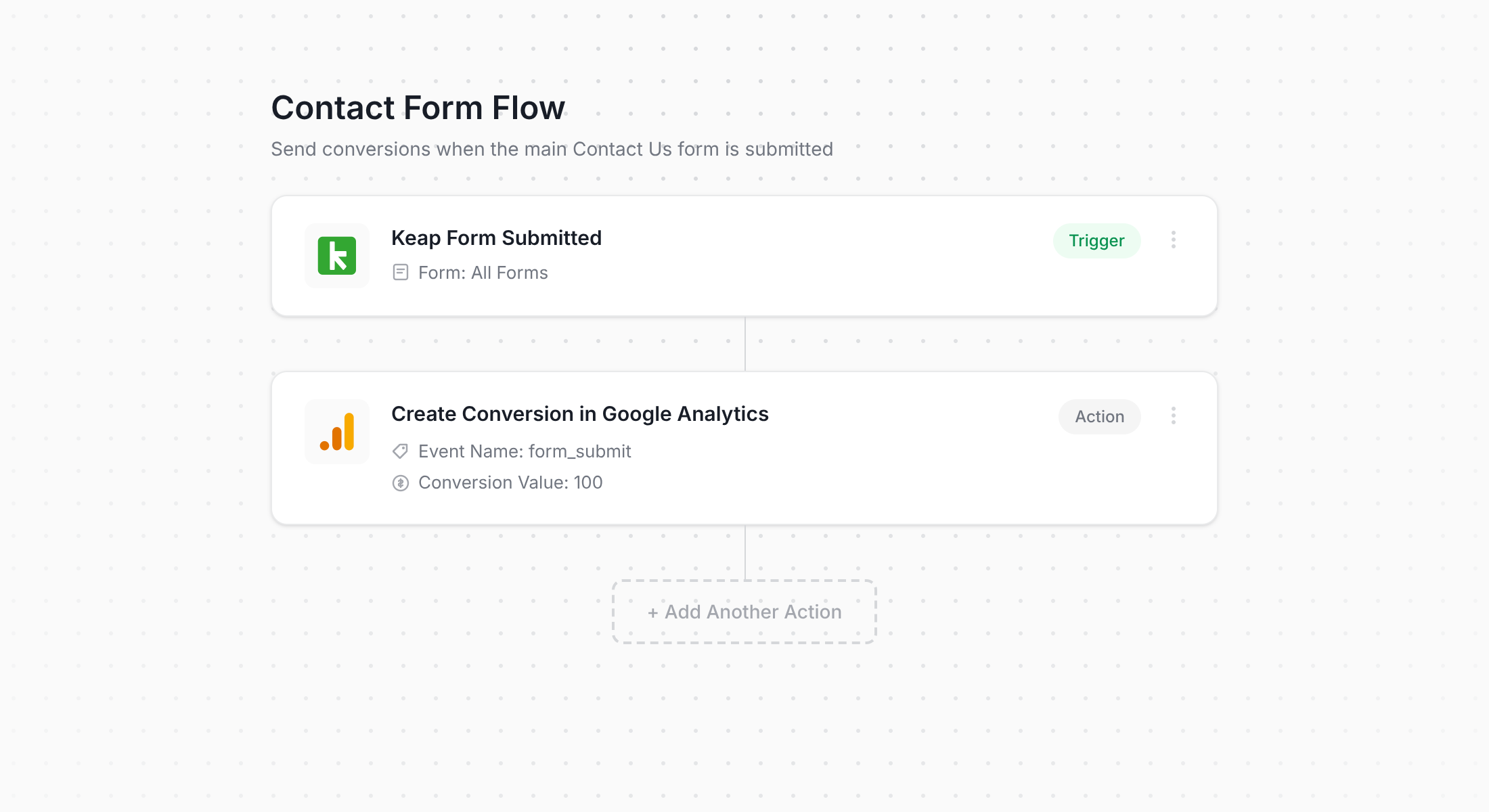
Inside Converly, you will find a visual workflow builder that feels instantly familiar. If you have ever built an automation in Keap itself, or used tools like Zapier, you will pick this up right away.
All it takes is selecting a trigger (like when someone submits a Keap form on your site) and choosing where the conversion event should go (such as Google Analytics). A few clicks and your conversion flow is live.
Step 2: Install the Converly code on your website
Once your Conversion Flow is built, Converly provides a short code snippet to add to your website. This snippet runs quietly in the background, detecting Keap form submissions and automatically sending the conversion data to Google Analytics and any other platforms you have connected.
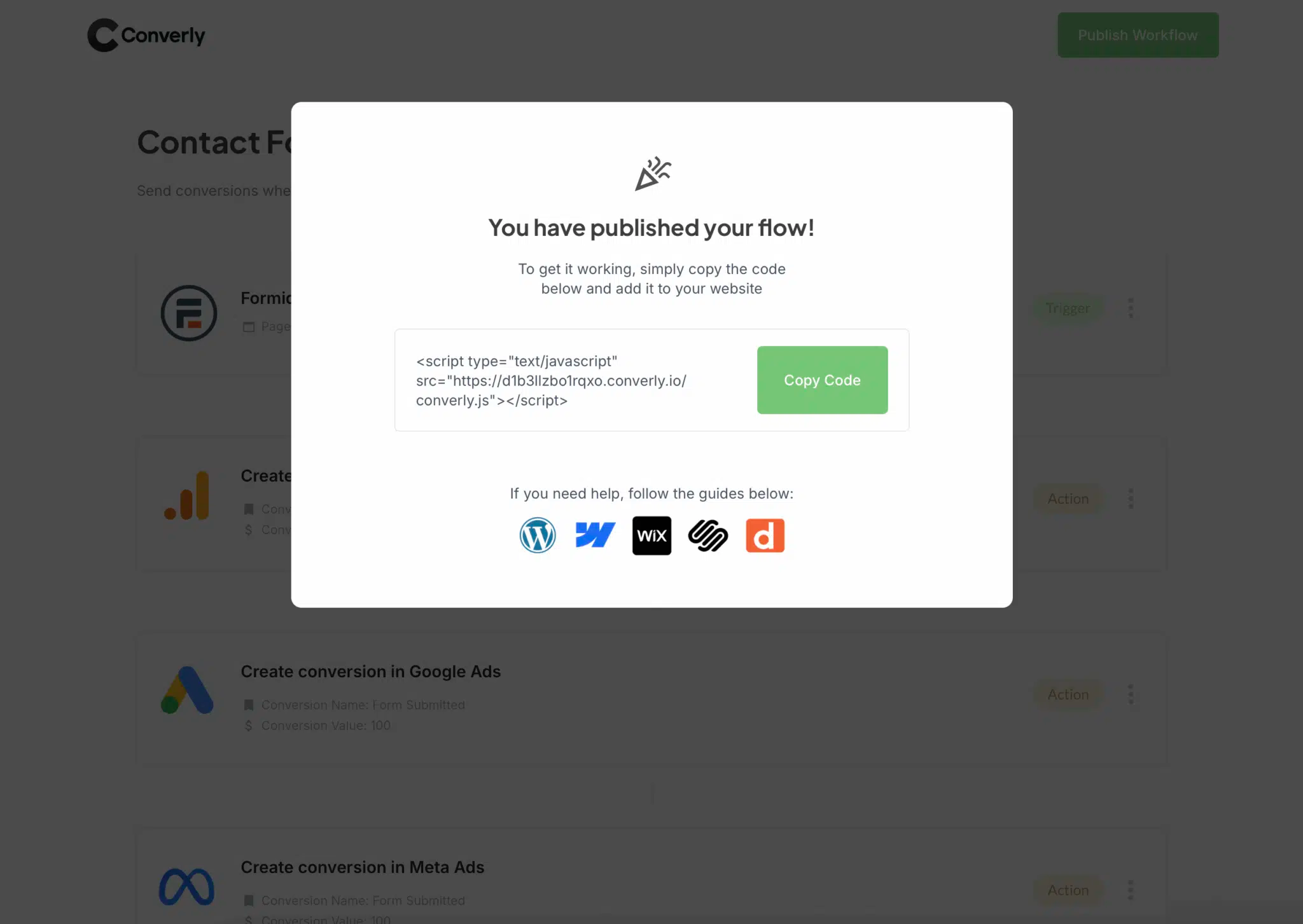
How you install the code depends on your website setup. For most platforms, you can paste it straight into the header or custom code section of your site settings. If Google Tag Manager is part of your stack, you can add it through there instead.
Step 3: Test it's working
With everything in place, the next step is verifying that your conversion events are firing correctly.
To do this, open an incognito browser window, navigate to the page with your Keap form, and submit a test entry.
After that, head into your Google Analytics account and pull up the Real Time dashboard. Look under Recent Events for the form_submit event. If it appears there, your tracking is working exactly as it should.
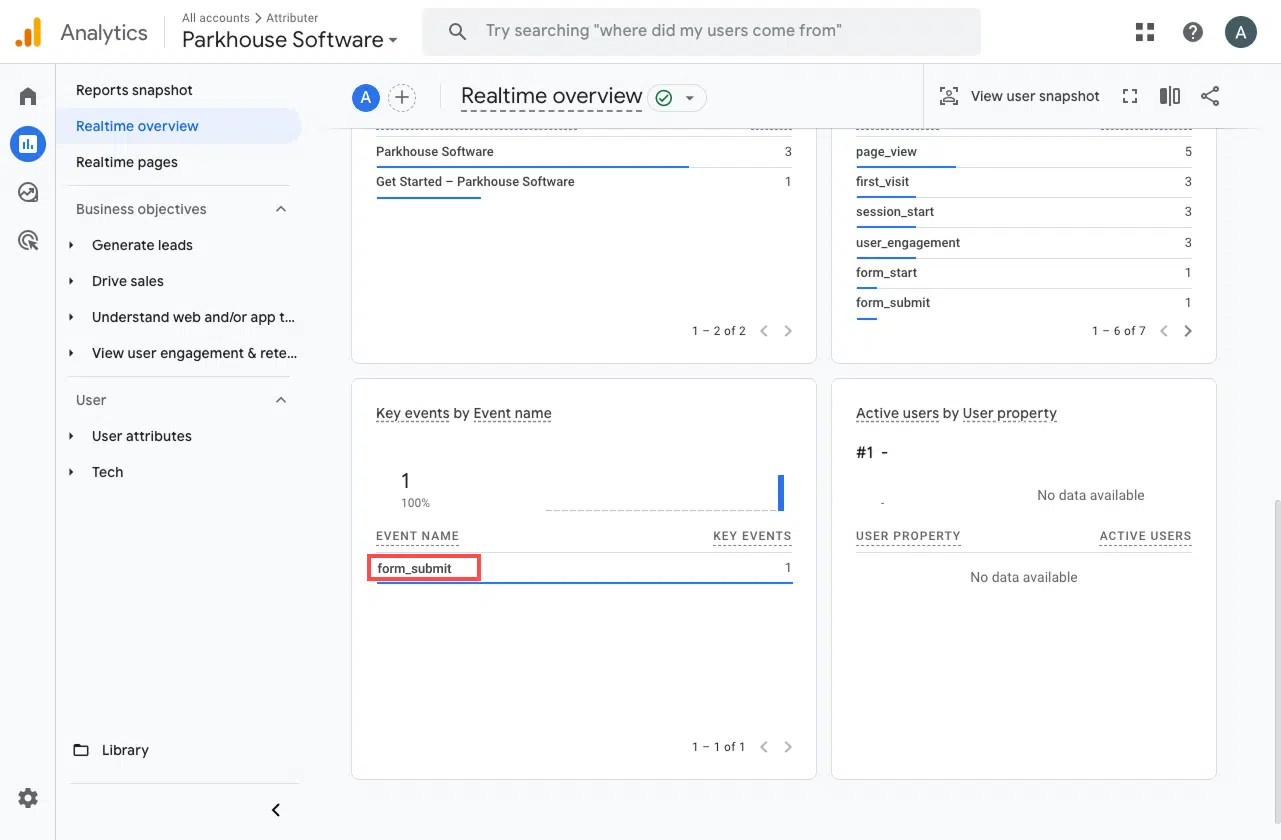
Step 4: Mark the event as a 'Key Event' (Optional, but recommended)
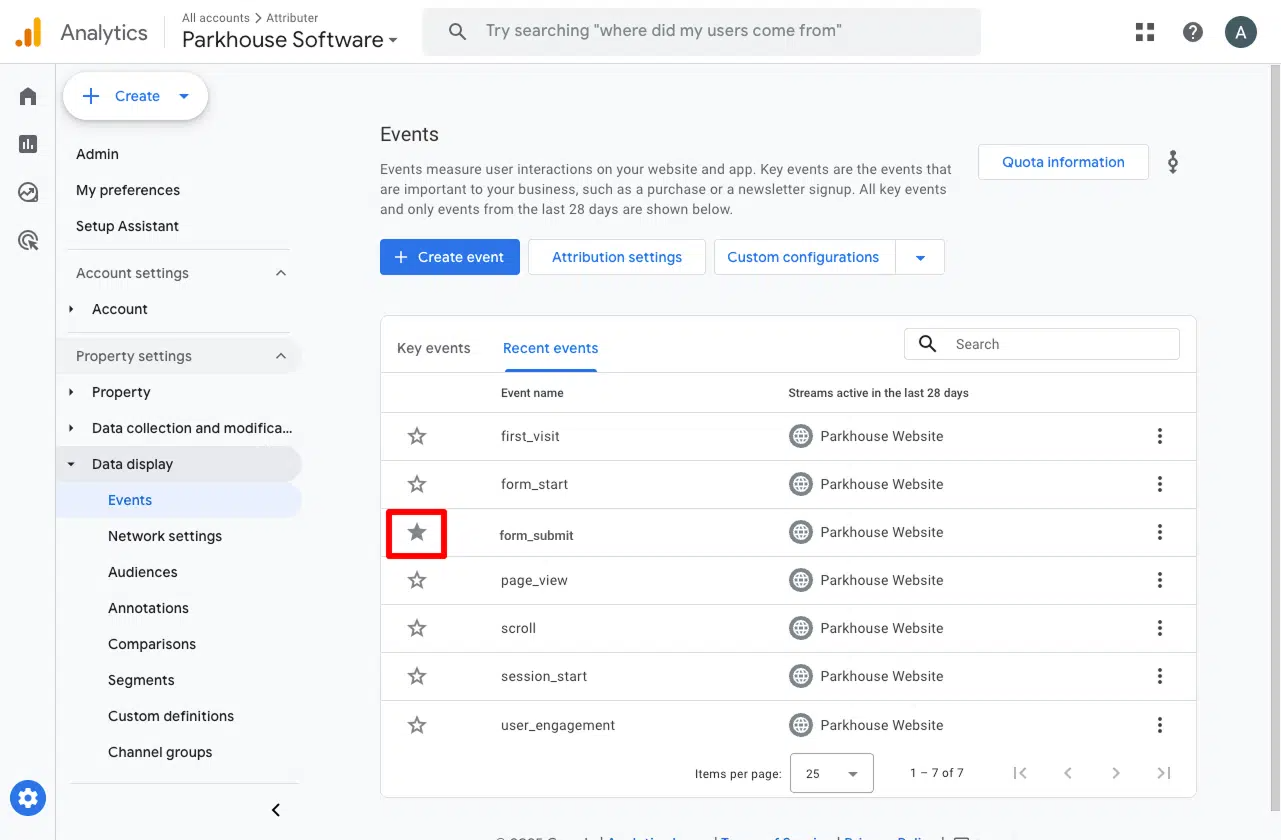
As a final step, it is a good idea to mark the form_submit event as a Key Event in Google Analytics 4. This tells GA4 to treat it as an official conversion, which gives you access to more powerful reporting features (like seeing it in acquisition reports, or using it as the conversion point in funnel exploration and path analysis).
To do this, navigate to the Admin section of your GA4 property and click Events under the Data Display menu. Open the Recent Events tab, find the form_submit event (or whatever name you set in Converly), and click the star icon next to it. That is all you need to do.
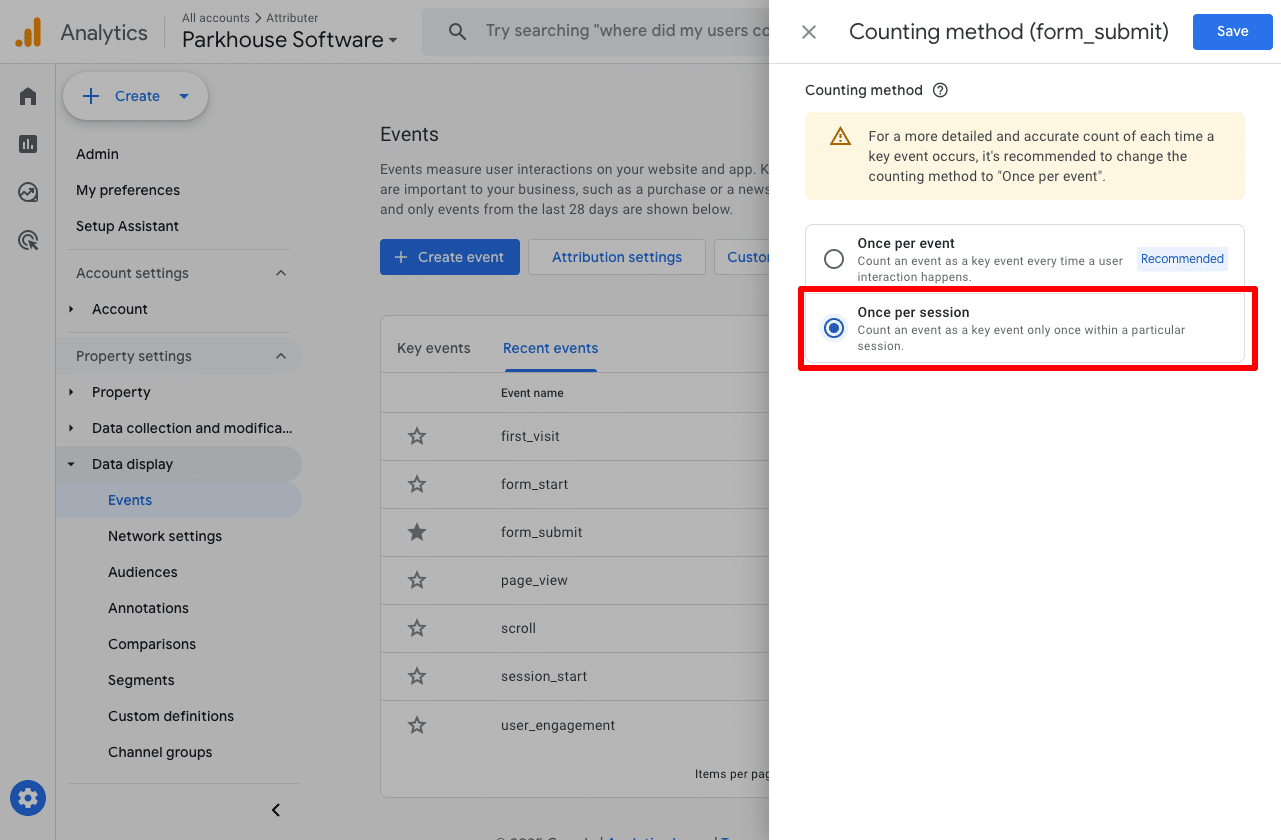
We also recommend updating the counting method for this event. Click the 3 dots next to the event and select Change Counting Method. In the sidebar that appears, choose Once Per Session.
This works well for lead generation websites because it only records 1 conversion per visit, even if someone submits the form more than once. This prevents your numbers from getting inflated (the alternative counting method is designed for eCommerce stores where you would want to track every individual purchase).
Why Converly is the best way to trigger conversions in Google Analytics
There are a few different ways to track Keap form submissions as conversions in Google Analytics. So what makes Converly the best option? Here are some key reasons:
1. Simple to set up
Many alternative methods for conversion tracking involve setting up triggers and tags inside Google Tag Manager, writing custom JavaScript to detect form submissions, and configuring data layers. For anyone who is not a developer, that can feel overwhelming.
Converly takes a completely different approach. The workflow builder is visual, intuitive, and feels a lot like tools you may already be using, such as the automation builder inside Keap or platforms like Zapier.
You simply pick your trigger (a Keap form submission), select your destination (Google Analytics), and you are done. No Google Tag Manager, no custom code, no confusion.
2. More accurate conversion numbers
Converly uses the Google Analytics Measurement Protocol to send your conversions directly to Google's servers rather than relying on a browser tag.
This is a big deal because it gets around ad blockers and the privacy restrictions built into browsers like Safari and on iOS devices.
The result? More accurate conversion data.
To put it in numbers, a recent analysis of more than 7 million conversions found that tag-based tracking missed roughly 30% of conversions (about 5% lost to ad blockers and another 25% lost to browser privacy restrictions).
Switching to server-side tracking with Converly means you get those missing conversions back in your reports.
3. Supports multiple tools and platforms
Converly works with over 50 different tools, from form builders to scheduling widgets and live chat platforms. It can also send conversion events to Google Analytics, Google Ads, Meta Ads, LinkedIn Ads, and many more.
What this means for you is that if you ever add a new form tool to your site or start advertising on another platform, getting conversion tracking set up takes just a couple of clicks. No need to build a whole new tracking setup from scratch.
4. Makes it easy to add conditional logic
Converly lets you create intelligent rules that send different conversion events based on the specific actions visitors take on your site.
For instance, imagine you are running marketing for an architecture firm. You could set up one conversion called Consultation Request that fires when someone fills out your consultation booking form. At the same time, you could create a separate conversion called Portfolio Download for when visitors grab a copy of your portfolio.
Tracking these conversions separately gives you real clarity on which campaigns are driving high-value actions (like requesting a consultation) versus lower-value ones.
5. Great support provided for free
Getting help from Google or Meta with conversion tracking is notoriously difficult. It can take days to get a response, and even then the answer often does not solve your problem.
Converly is different. Our team has over 20 years of hands-on experience in advertising and analytics. Whether you want to sort things out over email or book a quick video call, we are happy to help, and it is completely free. We will make sure everything is configured correctly and running smoothly.
6. Gives you a full conversion log and email alerts
One of the trickiest things about a tool like Google Tag Manager is that you can never really be sure it is still working. A few tests at setup tell you it works that day, but unless you keep re-testing every week, it can break without a trace (someone updates the Keap form, changes a tag in Google Tag Manager, or edits something inside Google Analytics) and you would be none the wiser.
Converly clears that up. You get a full conversion log that captures every form submission, the data Converly recorded for it, what it sent on to Google Analytics, the response Google Analytics returned, and more.
You can also turn on email notifications. Get one for every submission sent to Google Analytics, or limit them to failed sends only, so you find out the instant your tracking goes down.
3 useful reports you can run when you track Keap form submissions as conversions in Google Analytics
After more than 15 years of leading marketing teams, I have spent a huge amount of time inside Google Analytics trying to understand exactly where leads and customers are coming from.
These are the 3 reports that have consistently given me the best insights. Once you have Keap form submissions flowing into Google Analytics as conversions, you will be able to run these reports yourself.
1. Conversions by Channel
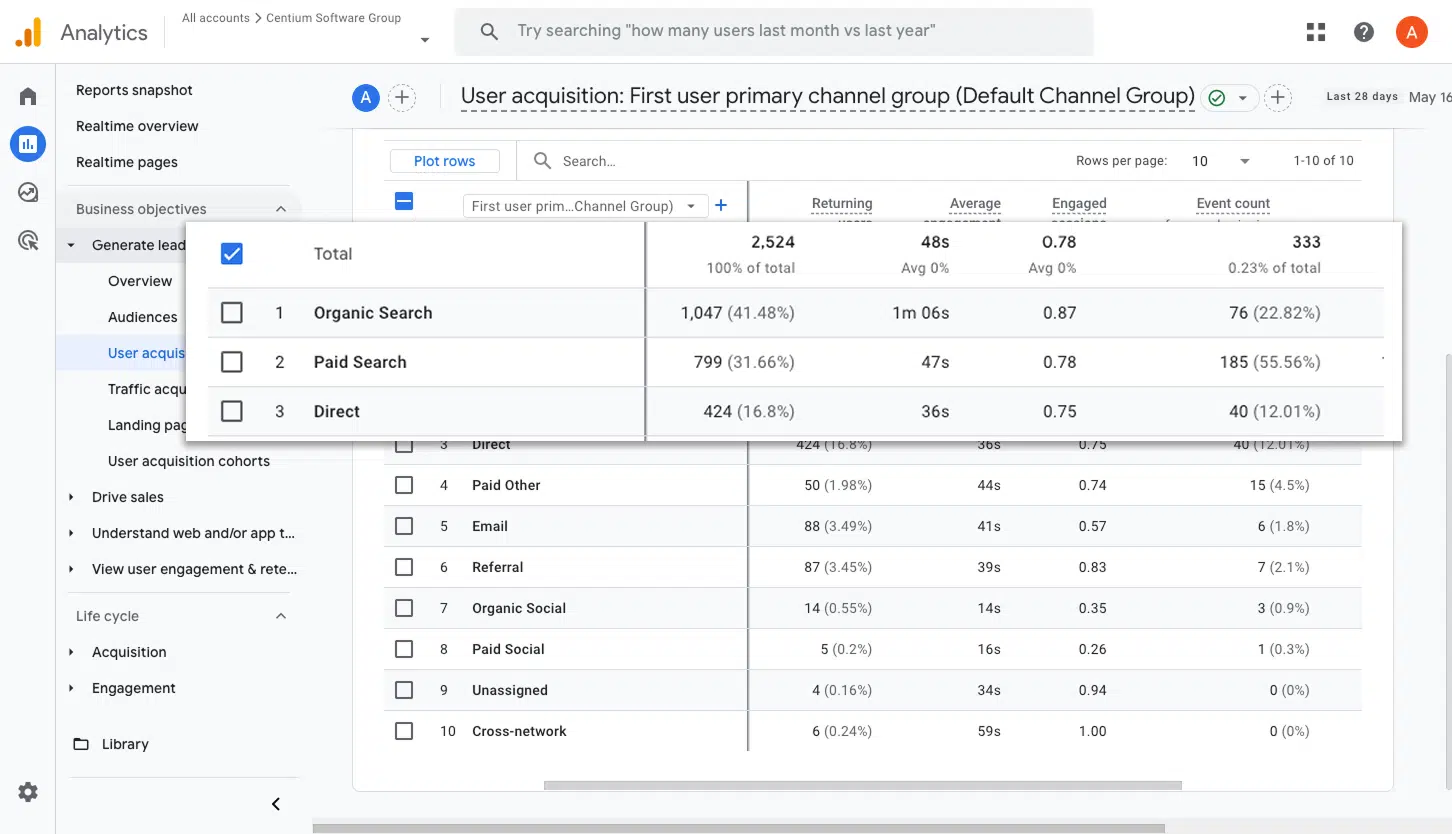
This report breaks down how many form submissions you are receiving from each marketing channel, including Paid Search, Paid Social, Organic Search, Organic Social, and more.
It is a straightforward way to understand which channels are generating the most leads and to identify areas where you could ramp up your efforts for even better results.
2. Conversions by Meta Ads Network
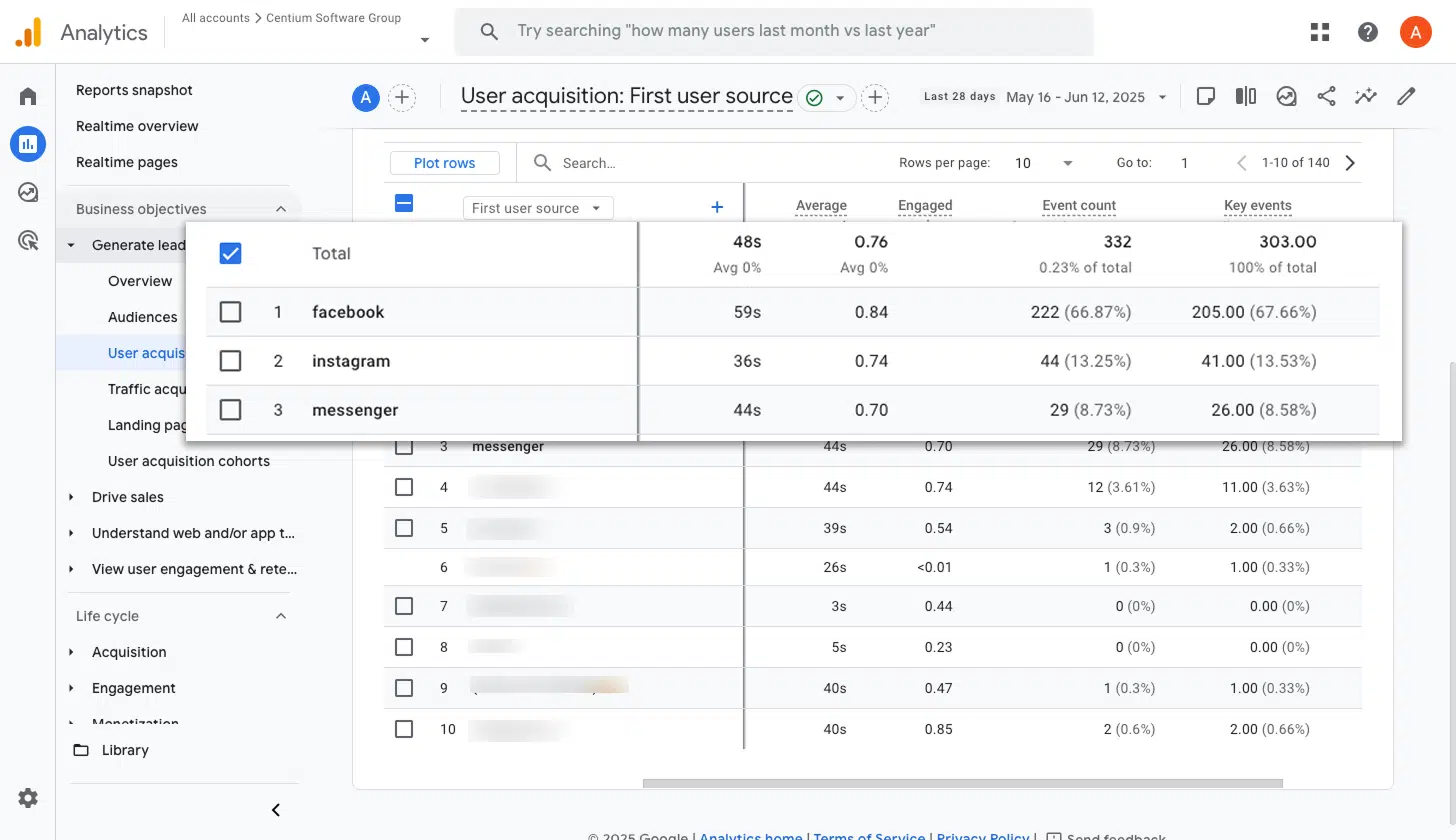
If you are running ads through Meta, your campaigns are likely appearing across several networks, including Facebook, Instagram, Messenger, and WhatsApp.
Because each of these platforms performs differently, it is valuable to know which ones are actually turning visitors into leads. This report breaks that down clearly, so you can put more budget behind the networks that are converting and reduce spend on the ones that are not.
3. Conversions by Google Ads Campaign
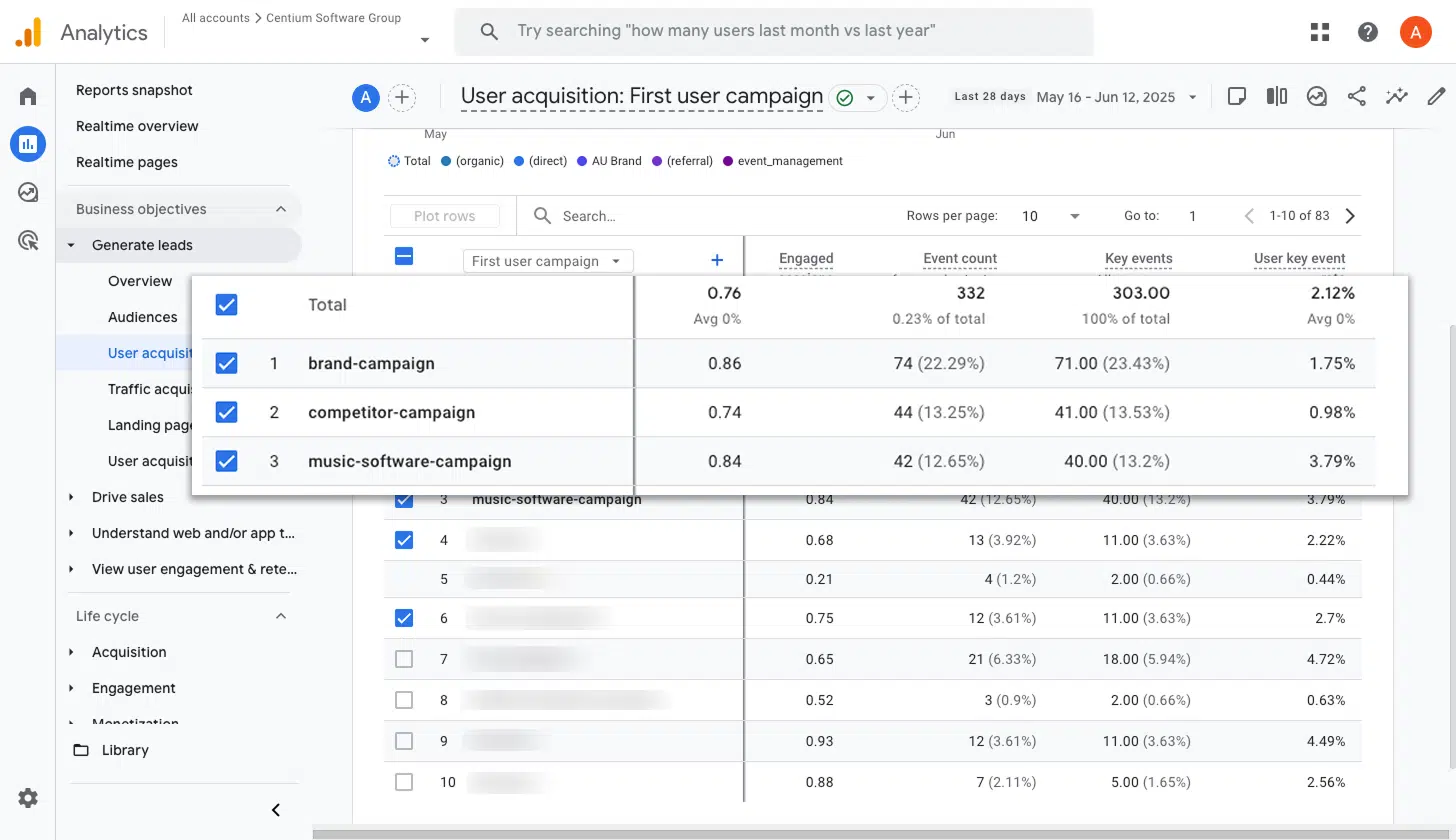
If Google Ads is part of your marketing strategy, you probably have multiple campaigns running simultaneously, perhaps targeting different services, keyword themes, or geographic regions.
Being able to see which campaigns are actually generating conversions (rather than just clicks) is essential for smart budget allocation. This report makes it easy to identify your top performers so you can invest more in what is working and scale back on what is not.
Wrap up
Converly makes it easy to send conversion events to Google Analytics whenever someone submits a Keap form on your website. There is no code to write and no complicated technical configuration to deal with.
And if you are running ads on platforms like Google or Meta, you can easily add those to your Conversion Flow and have the same data sent to them too. It only takes a few clicks.
Getting started is quick. Converly offers a 14-day free trial, and most people are fully set up in under 10 minutes. Give it a go and see how much easier conversion tracking can be.
About the author

Aaron is the founder of Converly. With over 15 years of experience in digital marketing and SaaS, he's passionate about helping businesses track and optimise their ad conversions.