


Track Formidable Forms submissions as conversions in Google Ads
Learn how to send server-side conversions to Google Ads each time a Formidable form is submitted on your WordPress site. No code required!
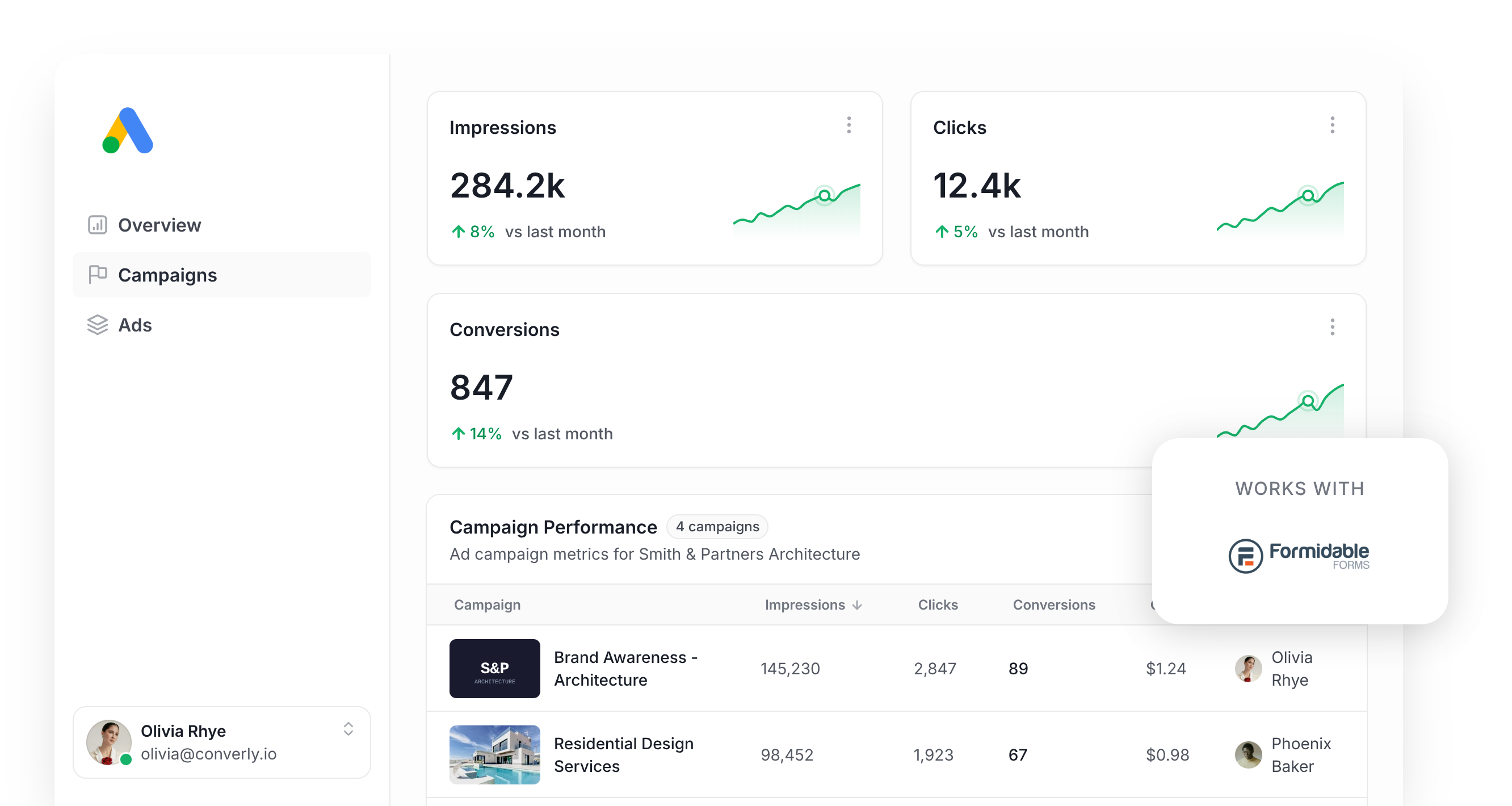
Google Ads can be a fantastic way to drive new leads and customers into your business, but getting conversion tracking dialled in is genuinely tricky.
Tools like Google Tag Manager expect you to write your own JavaScript to catch form submissions, then wire up triggers, tags, variables, and a stack of other technical things.
And simpler tactics, like firing a conversion on a thank you page visit, can leak up to 30% of your conversions thanks to ad blockers, browser privacy features (think Safari), and people clicking your ad on mobile then coming back later on a laptop to convert.
So what's a marketer meant to do?
In this guide, we'll walk through how to set up reliable conversion tracking in Google Ads whenever a Formidable Forms form is submitted on your WordPress site (using a method called server-side tracking).
Why you need to send conversions to Google Ads server-side
Accurate conversion tracking is the key to success with Google Ads.
Under the hood, Google Ads has a smart bidding system that pulls together thousands of signals (location, browsing history, device, time of day, and plenty more) to predict whether the person searching for your keyword is likely to convert into a lead, and it adjusts bids up or down depending on that prediction.
For that prediction engine to actually be useful though, it needs reliable conversion data. You essentially need to feed it a clean stream of "this person became a lead, this one didn't" so the algorithm learns what your ideal customer looks like.
The trouble with the usual conversion methods (tracking thank you page visits or using tools like Google Tag Manager) is that everything happens inside the visitor's browser. That introduces a few problems:
- Ad Blockers — Ad blockers stop the Google Tag from loading in the first place, so anything that happens on your site goes completely unrecorded.
- Privacy Features in Browsers — Browsers like Safari ship with anti-tracking tech that limits how long the Google Tag can remember a visitor (so a click today and a conversion 3 days later usually won't be connected).
- Using multiple devices — A visitor might tap your ad on their phone during their commute and then convert on a desktop that evening, which means the conversion can't be credited back to the original ad click.
That's exactly why server-side tracking matters. Rather than relying on the visitor's browser to send the data to Google, you send a clean, private message straight to Google's servers with the lead's information, so the data can't be messed with by ad blockers or browser privacy controls.
And the numbers back this up. Google's own benchmarks show that switching to server-side tracking typically delivers a 23% average lift in recorded conversions and a 10% drop in cost per conversion, simply because the bidding algorithm has cleaner data to learn from.
3 simple steps to send server-side conversions to Google Ads from Formidable Forms
Follow these 3 simple steps to get server-side conversion tracking working between Formidable Forms and Google Ads.
Step 1: Build your Conversion Flow in Converly
Converly is a tool built specifically to make sending server-side conversions from Formidable Forms to Google Ads quick and easy.
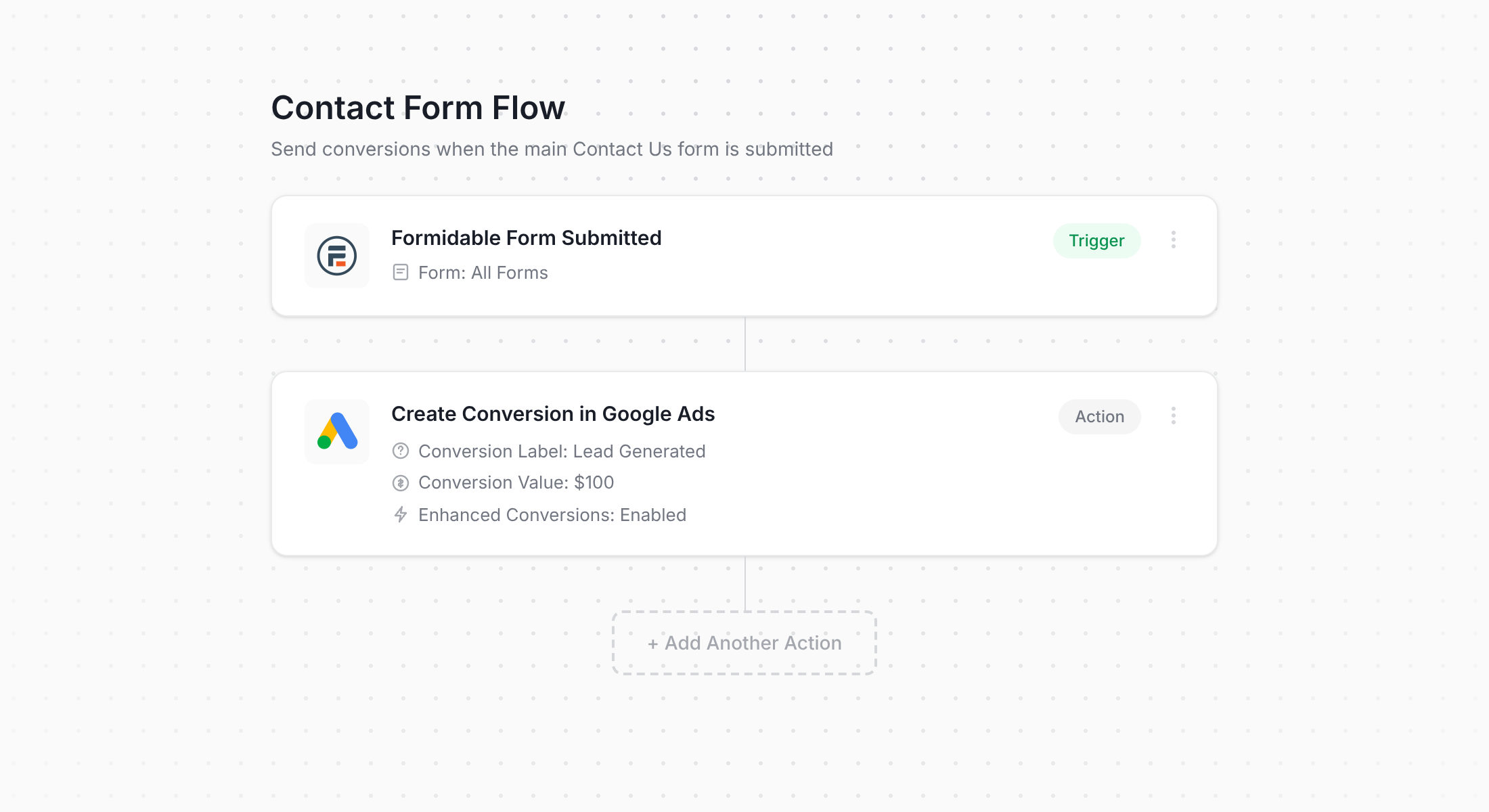
As shown in the screenshot above, Converly ships with a straightforward workflow builder that should feel instantly familiar to anyone who's used Zapier or HubSpot Workflows in the past.
You just choose your trigger (like a Formidable Forms form being submitted), then pick the actions you want to occur (such as sending a conversion through to Google Ads).
That's the whole setup. A few clicks later, you've got server-side conversion tracking running for Google Ads.
Step 2: Add the Converly code to your website
After you've built and published your Conversion Flow, Converly will hand you a small code snippet to install on your WordPress site.
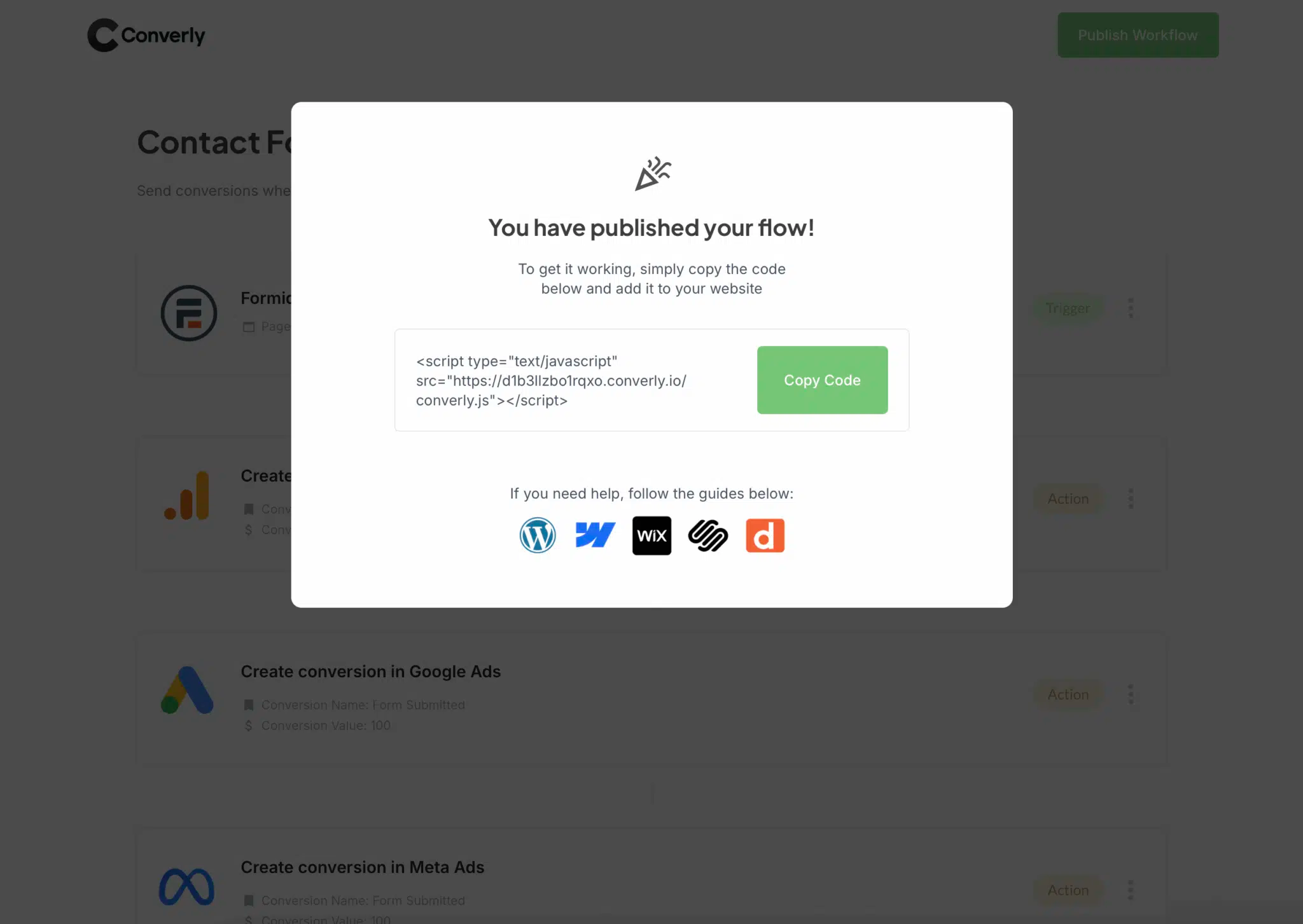
On WordPress, the easiest path is to drop the snippet into your theme's header (most modern themes have a Custom Code or Header Scripts field under their settings), use a plugin like Insert Headers and Footers, or install it through Google Tag Manager if you've already got that running.
Step 3: Test it works
The last thing to do is confirm everything's actually working by heading to your site and submitting one of your forms.
After that, jump back into your Conversion Flow, click the 3 dots menu in the top right corner, and choose View Logs.
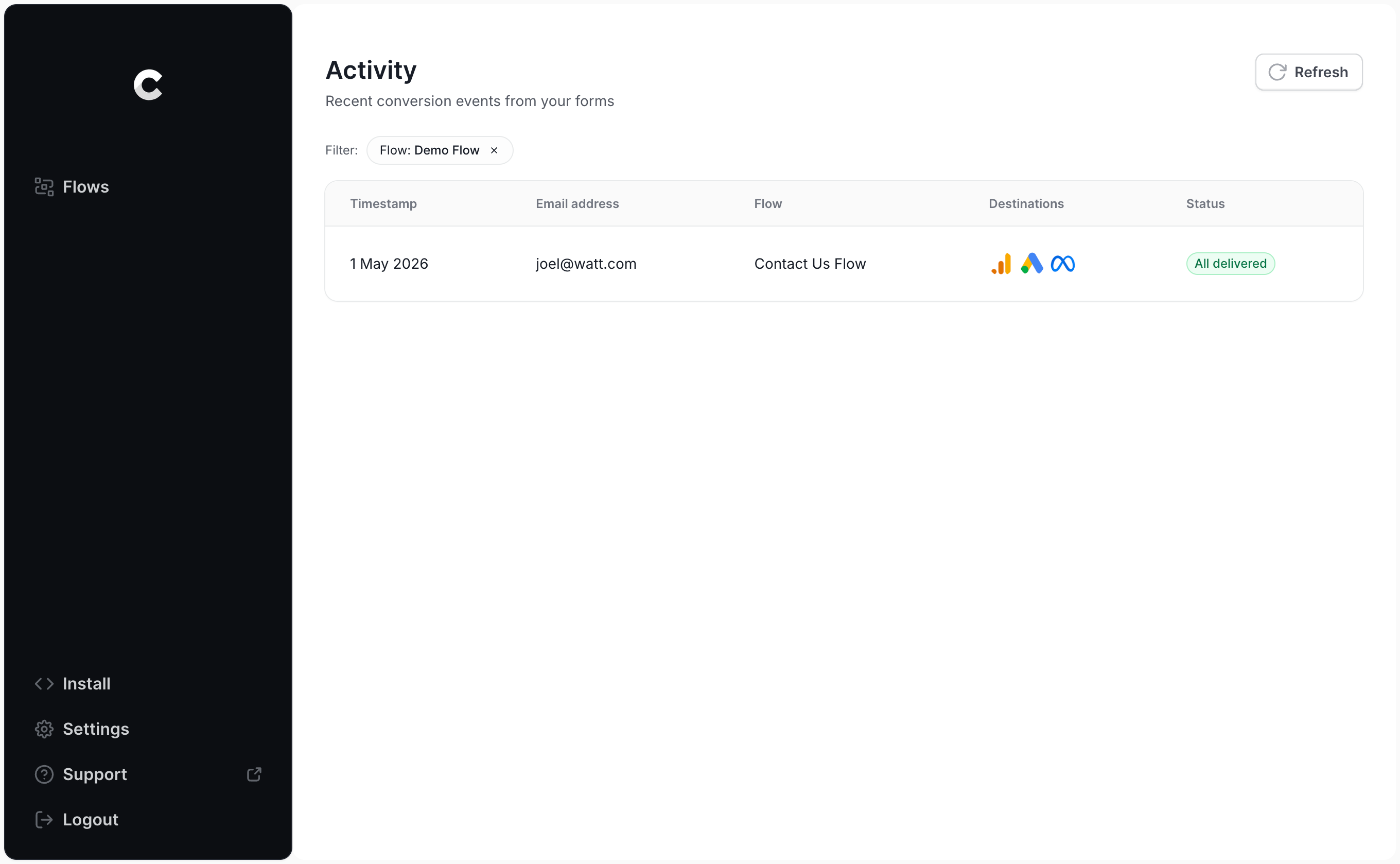
From the logs view, click into your test entry to drill into the full details, including whether the conversion landed in Google Ads or not.
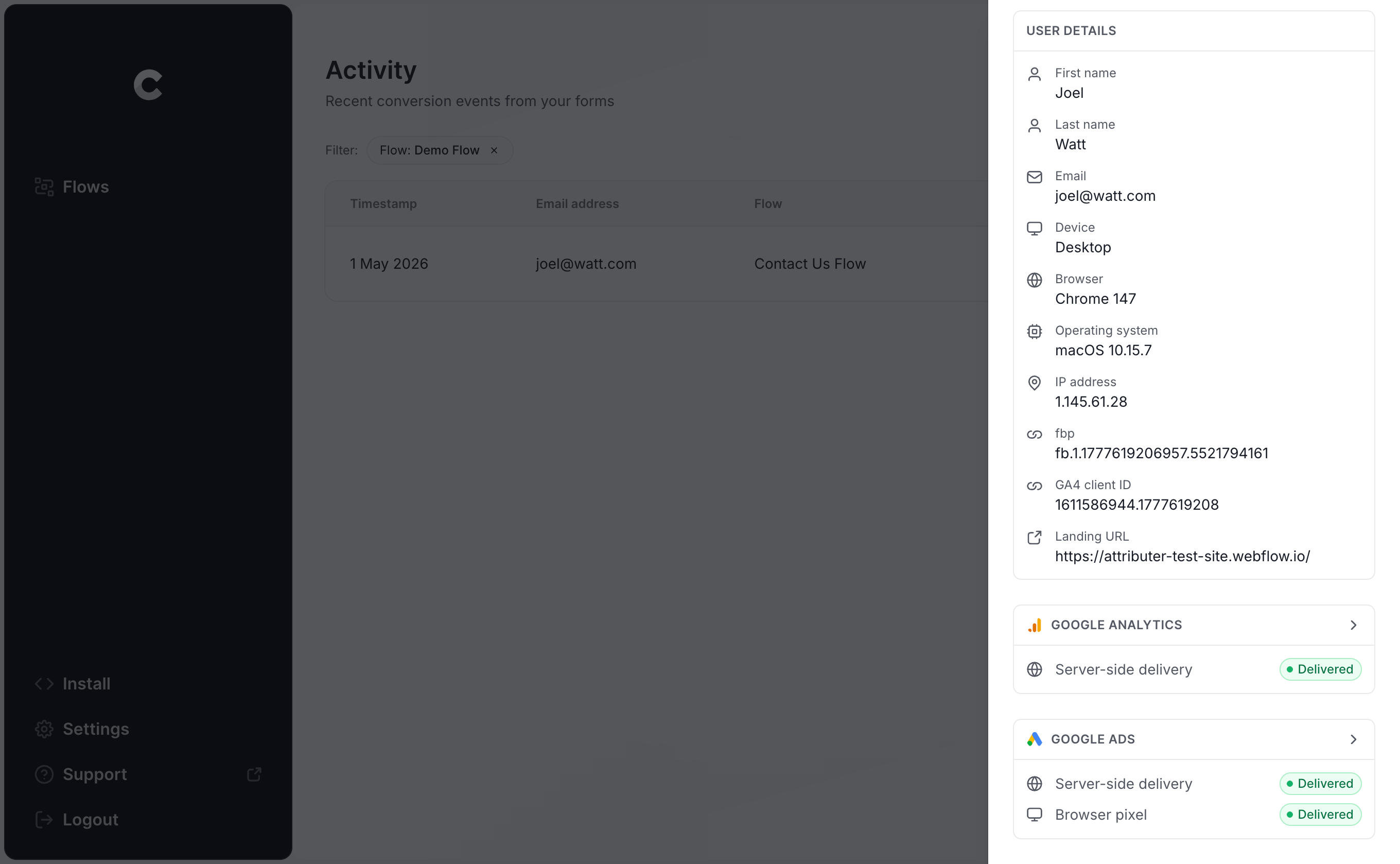
You can dig in even further to inspect every piece of data Converly sent to Google Ads, what Google's servers responded with, and so on.
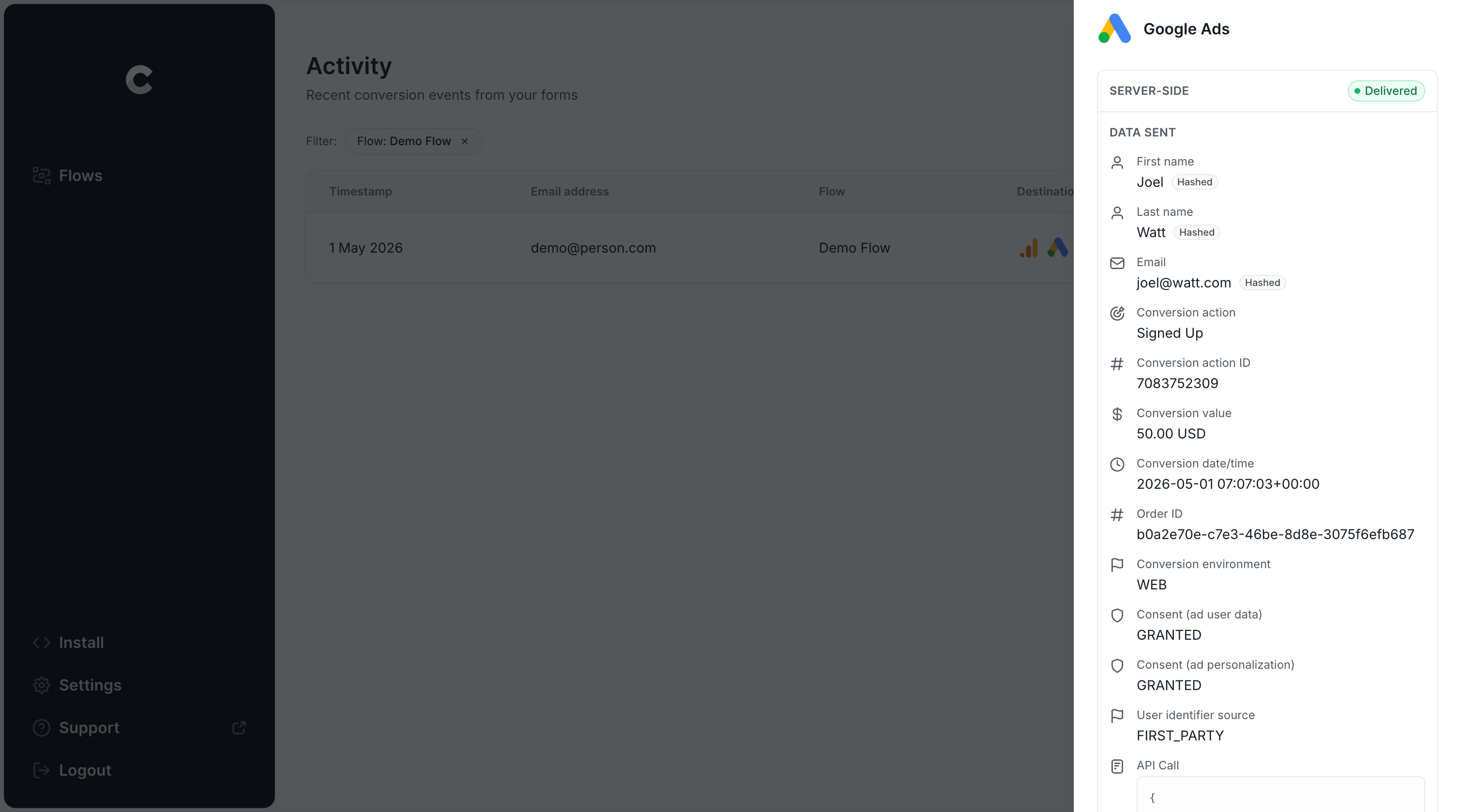
If your test submission shows up in the logs and you can see it was successfully delivered to Google Ads, your conversion tracking is good to go. End to end, you're typically looking at less than 5 minutes from start to finish.
Why Converly is the best way to send conversions to Google Ads from Formidable Forms
There are a handful of ways to push conversions into Google Ads when a Formidable Forms form is submitted on your site, so why go with Converly? A few things stand out:
1. Easy to set up
The default approach most teams go for is Google Tag Manager. The trouble is, Formidable Forms submits entries over AJAX and fires its own 'frm_after_create_entry' hooks rather than triggering a clean page navigation, which makes building a reliable GTM listener a real chore. You'll typically end up writing custom JavaScript to hook into those events, pulling the lead's name and email out of the entry, pushing it into the DataLayer, hashing the data with SHA-256 (which Google requires), then wiring up the matching variables, triggers, and tags.
Unless you live and breathe Google Tag Manager, expect to lose a serious chunk of your week trying to make all that click together.
Converly takes a much simpler route. You select a trigger (like a Formidable Forms entry being submitted on your site) and define what should happen next (a conversion being sent to Google Ads). No custom scripts, no hacky listeners, just clean conversion tracking that works.
2. Not affected by ad blockers and privacy restrictions
If you're leaning on Google Tag Manager (or doing something basic like tracking thank you page visits), a real chunk of your conversions are quietly disappearing into the void thanks to ad blockers and privacy-first browsers blocking the Google Tag from ever loading.
In fact, research that looked across more than 7 million conversions actually found tag-based tracking missed roughly 30% of all conversions. Around 5% of that loss came down to ad blockers, with the bigger chunk (close to 25%) caused by browser-level privacy protections.
Because Converly pushes the conversion straight to Google's servers though, none of that matters. Ad blockers and privacy-focused browsers can't touch it, so the data you see in Google Ads ends up far more accurate.
3. Works across devices
It's really common for a lead to first discover you on one device (their phone during a coffee break, for example) and then wait until they're at a proper computer to actually submit a form.
If your conversions are firing client-side through something like Google Tag Manager, there's no way to tie those two sessions together because they happened on different browsers on different devices.
Converly sidesteps that by sending the lead's details (like their name, email, and so on) directly to Google's servers. From there, Google can use that data to stitch the conversion back to the original ad click on the phone, which means the campaigns that actually drove the lead get the credit they deserve.
4. Sends more data
Beyond the lead's name, email, and phone, Converly also captures and forwards technical signals like the GCLID, IP address, User Agent, and more straight through to Google Ads.
In practice, this gives Google Ads a much richer picture of the person who converted, which increases its chances of being able to match the conversion back to the original ad click (even if that click happened weeks earlier on a different device).
What you get out of it is more accurate conversion tracking and far better data sitting inside Google Ads to make decisions with.
5. Supports multiple tools and platforms
Converly integrates with more than 100 different form builders, scheduling apps, chat widgets, and plenty of other tools.
It can also push conversion events out to Google Analytics, Google Ads, Meta Ads, LinkedIn Ads, Microsoft Ads, and a whole bunch of other destinations.
So if you ever swap in a new tool on your site or start advertising on a new ad network, you don't have to start your conversion tracking from scratch. Just open Converly, click a few options, and you're connected.
6. Gives you a full conversion log and email alerts
When your conversions go to Google Ads through a tool like Google Tag Manager, you have no reliable way of knowing whether they are still firing. A handful of tests when you first set it up will confirm it works, but unless you keep repeating them, your tracking can quietly break (someone tweaks the form, edits a tag in Google Tag Manager, or changes something in Google Ads) and you would have no idea.
Converly removes that guesswork. You get a full conversion log that shows every conversion that fired, exactly what data Converly captured, what it sent to Google Ads, the response Google Ads returned, and more.
On top of that, you can turn on email notifications. Get one for every conversion sent to Google Ads, or set them to only fire when a send fails, so the moment your tracking breaks you will know about it.
3 things you can do when you properly send conversions to Google Ads from Formidable Forms
Once you have proper, reliable conversion tracking running in Google Ads, a bunch of useful capabilities open up that simply weren't possible before.
1. Report on conversions by campaign, ad group, keyword, etc.
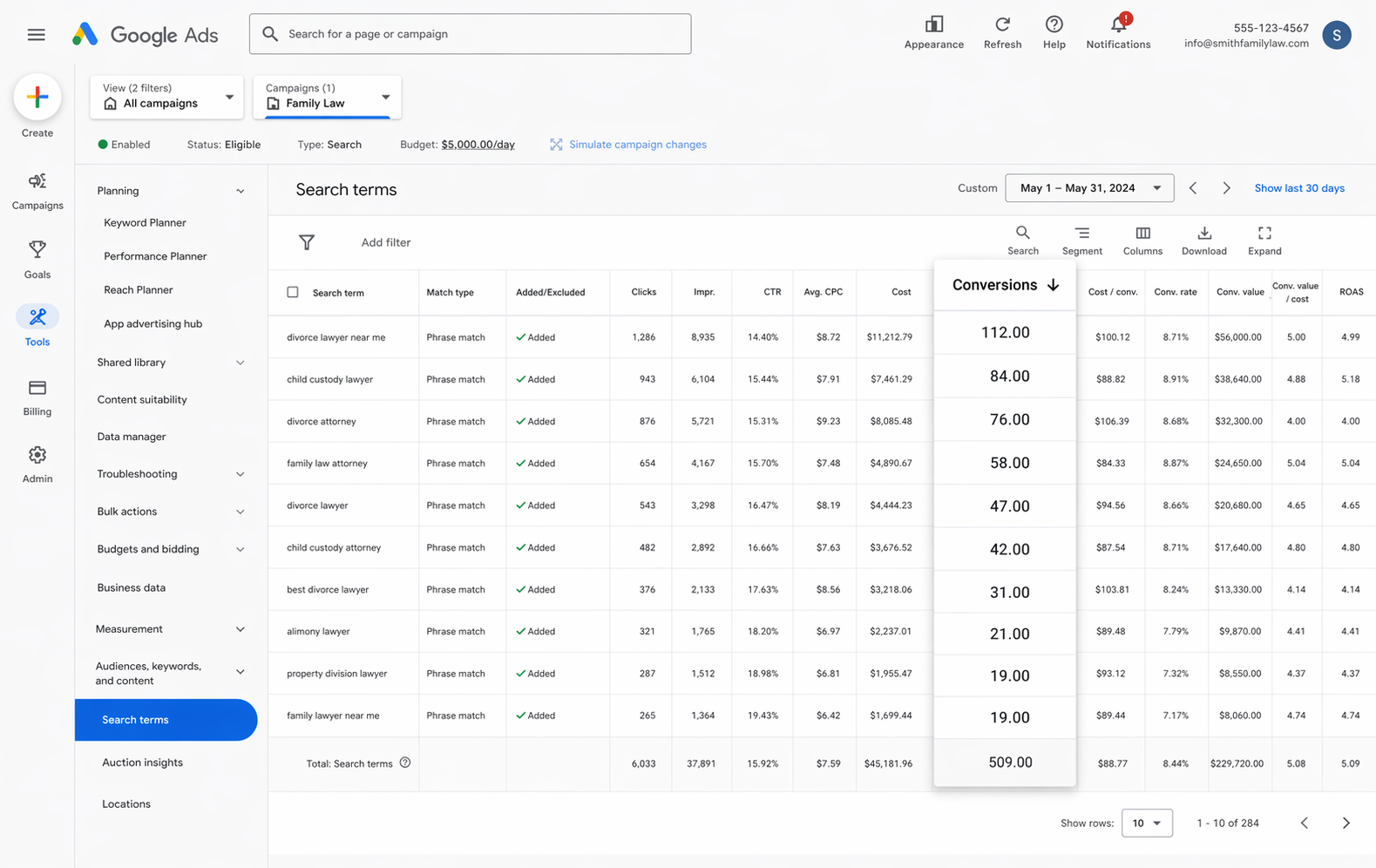
With conversion data flowing in, your Google Ads reports go from just showing impressions and clicks to showing total conversions, conversion rate, cost per conversion, return on ad spend, and plenty more.
Better still, you can slice those numbers by campaign, ad group, keyword, individual ad, country, and a long list of other dimensions.
That gives you a much clearer view of what's actually working in your Google Ads account and where your biggest growth opportunities are sitting.
2. Use Google's Smart Bidding technology
Where manual bidding has you saying "I'll pay $3 for a click", Google's smart bidding flips the model. You tell Google what you want to pay for a result (say $45 per lead) and it handles the bidding for you in real time.
When a person searches for a keyword you are bidding on, Google factors in everything it knows about the searcher (age, location, device, interests, browsing history, and so on) and dials its bid up or down based on how likely that person looks to convert.
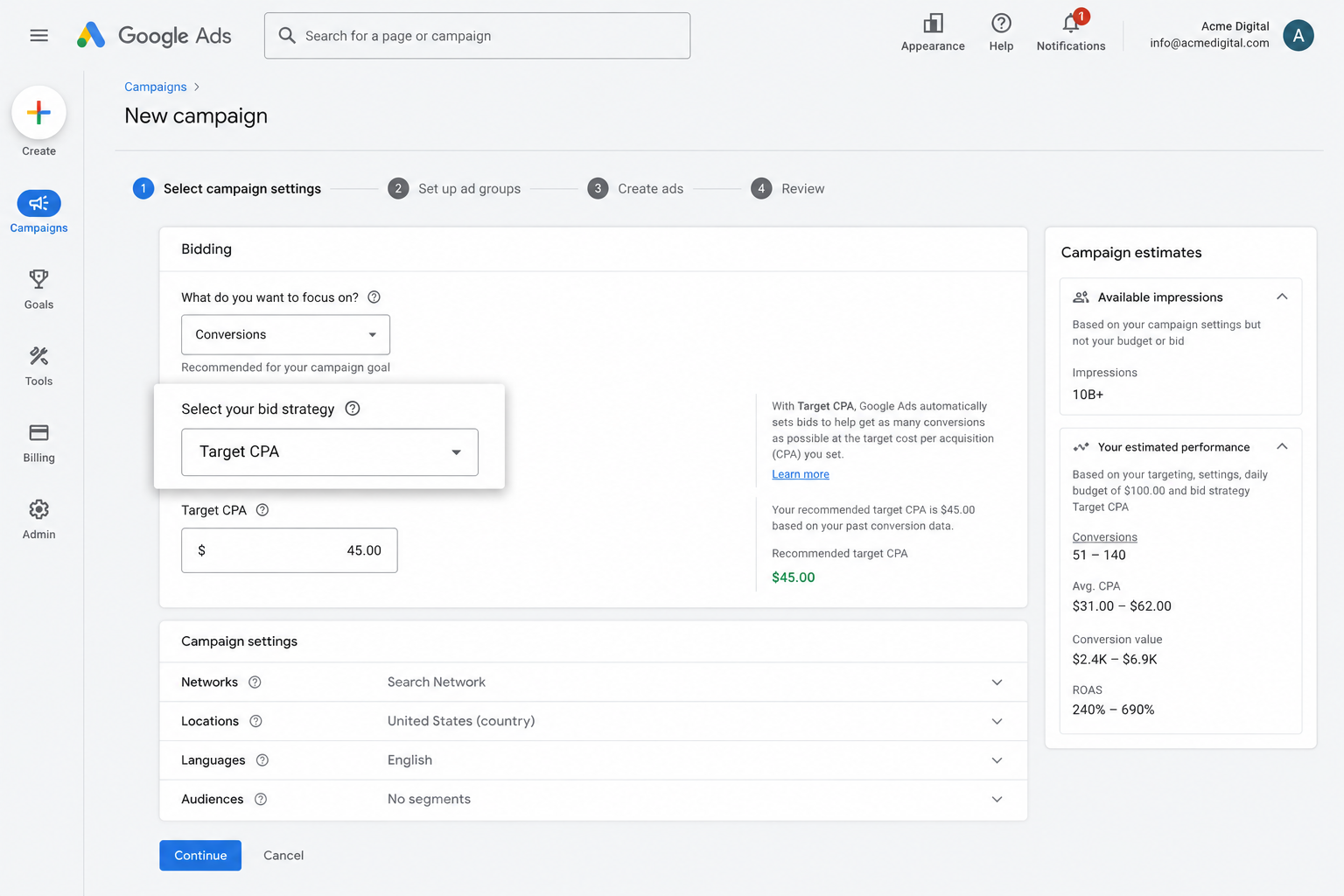
It's incredibly powerful, but it only works when your conversion tracking is solid. Without proper conversion tracking in place, Google has no real sense of what a high-value searcher looks like for your business, and tends to overspend on clicks from people who'll never convert (which quietly eats your budget).
By using Converly to send conversions directly to Google's servers, you give Google's smart bidding technology the data it needs to do its best work, which usually means more leads at a lower cost.
3. Retarget people who visited your site but didn't convert
With reliable conversion data flowing into Google Ads, you can also start building remarketing lists of people who came to your site but didn't end up filling out a form.
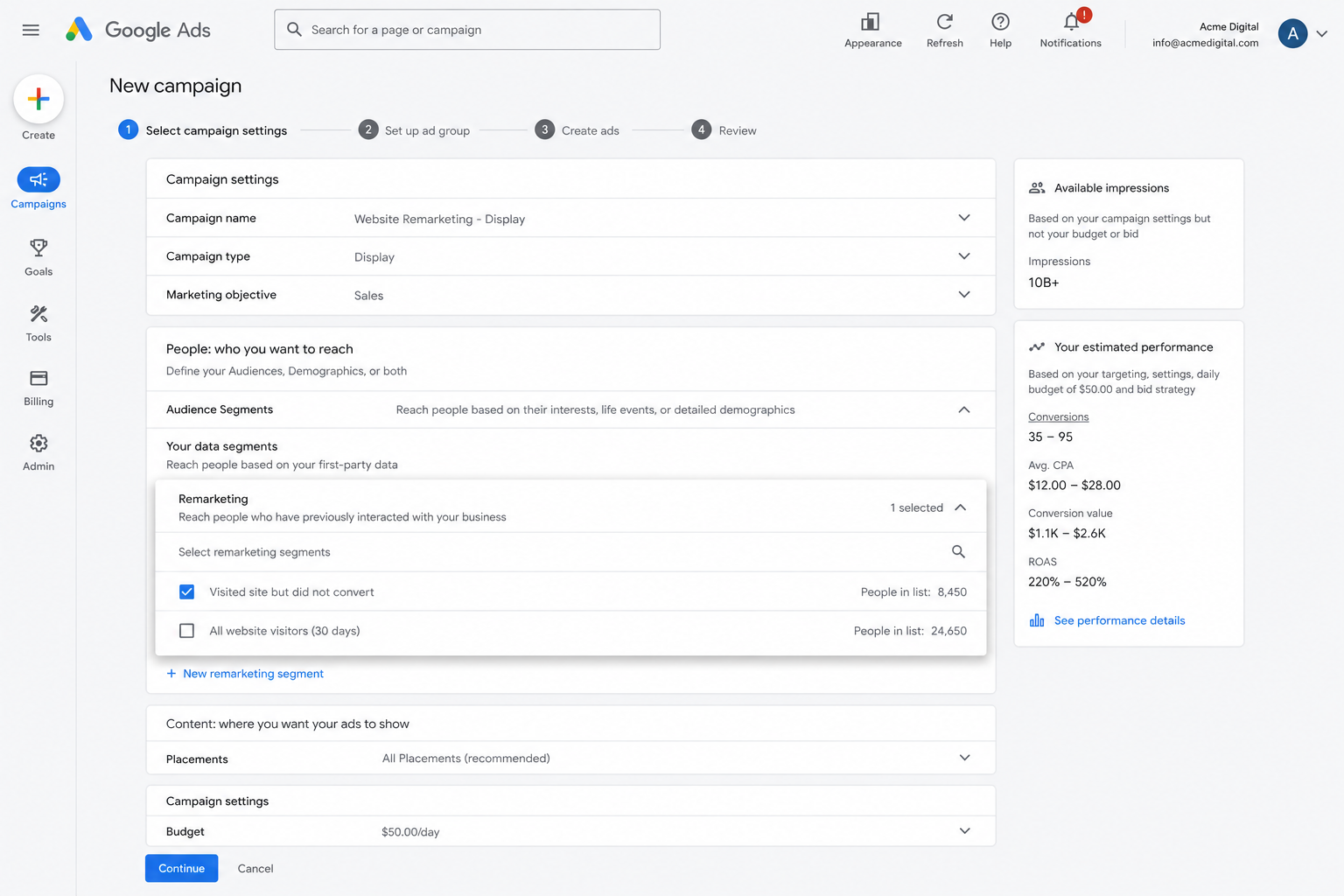
From there, you can re-engage those people through a few different channels, including:
- Search — Bid more aggressively (or pull back, if you'd prefer) on these visitors the next time they search your keywords.
- Display — Show display ads on the Google Display network exclusively to these visitors, so your brand stays front of mind as they move around the web.
- YouTube — Run YouTube ads aimed specifically at this audience, so they regularly catch your message while watching videos.
Wrap Up
If your goal is to send conversions into Google Ads each time a Formidable Forms form is submitted on your WordPress site, Converly is a really solid way to make that happen.
It delivers conversions directly to Google's servers, so they sail past ad blockers and privacy-focused browsers, and it sends across a rich payload of lead details (name, email, phone, IP address, User Agent, and more) so Google has every chance of matching the conversion back to its original ad click.
Best of all, the whole thing takes just a few minutes to set up and comes with a 14-day free trial, so give it a try today!
About the author

Aaron is the founder of Converly. With over 15 years of experience in digital marketing and SaaS, he's passionate about helping businesses track and optimise their ad conversions.