


Track Fluent Forms submissions as conversions in Google Ads
Learn how to send server-side conversions to Google Ads whenever a Fluent Forms entry is submitted on your WordPress site. No code required!
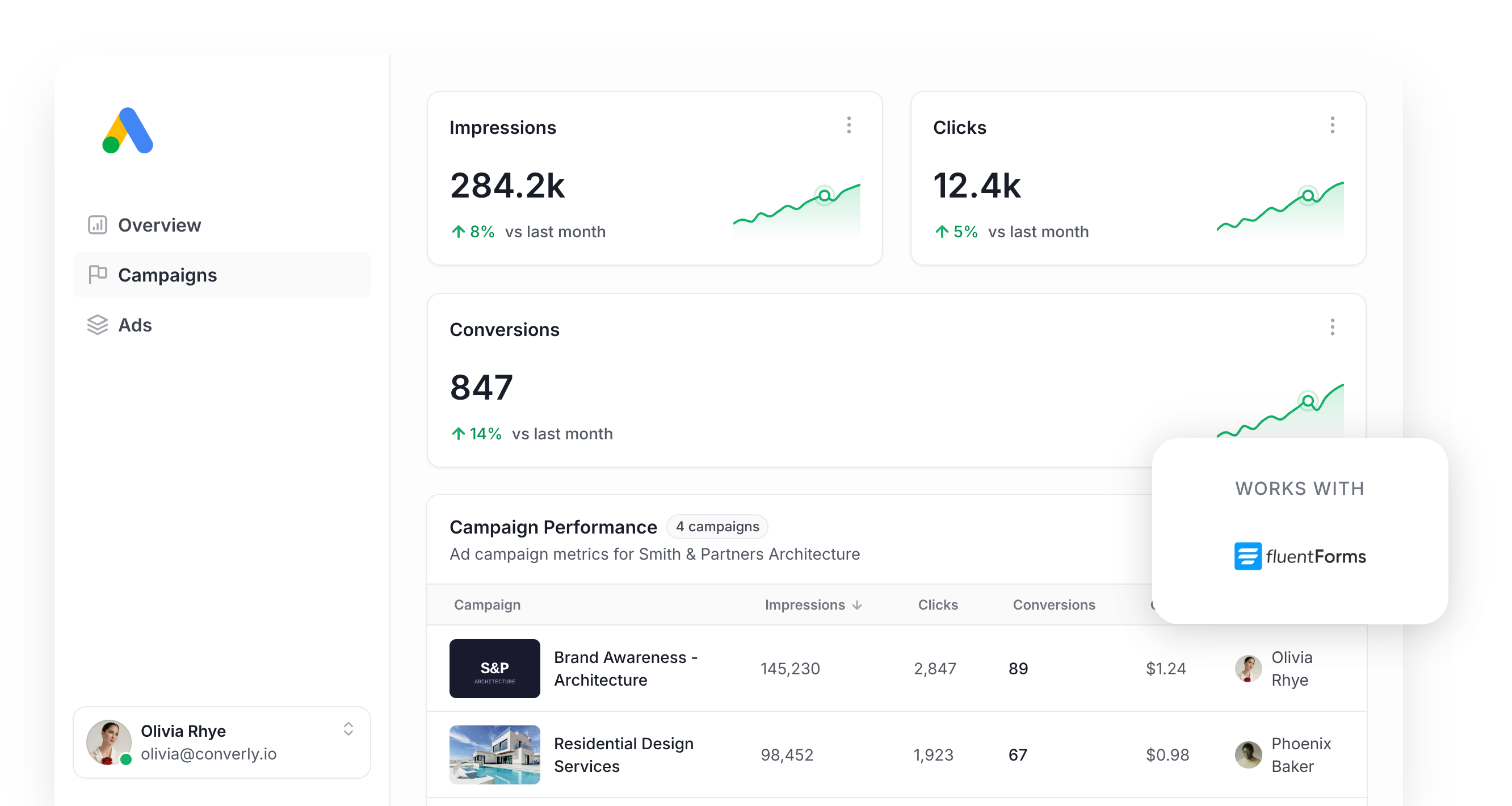
Google Ads can be a powerful channel for bringing in new leads and customers, but setting up conversion tracking the right way is surprisingly tricky.
Tools like Google Tag Manager expect you to write custom JavaScript to catch form submissions, and from there you've got triggers, tags, variables, and a pile of other moving parts to wire together.
And the simple approach of tracking thank-you page views can quietly lose you up to 30% of your conversions thanks to ad blockers, browser privacy features (looking at you, Safari), and people clicking your ad on their phone before circling back on their laptop to convert.
So what's the right move?
In this article, we'll walk through how to set up proper conversion tracking in Google Ads each time someone submits a Fluent Forms form on your WordPress site (using an approach known as server-side tracking).
Why you need to send conversions to Google Ads server-side
Accurate conversion tracking is the foundation of any successful Google Ads account.
Google Ads has a built-in smart bidding engine that weighs up thousands of signals (the user's location, their purchase history, time of day, and so on) to figure out whether a given searcher is likely to buy from you, then raises or lowers its bid based on how strong a fit they look.
It's incredibly powerful, but the catch is that the algorithm needs reliable conversion data to do its job. It has to be told "this person converted, this one didn't" so it can learn the patterns of who actually becomes a customer.
The problem with other conversion methods (like tracking thank-you page views or relying on Google Tag Manager) is that they push conversions back to Google through the visitor's browser. That approach runs into a few problems:
- Ad Blockers — Ad blockers stop the Google Tag from loading on your site, which means it can't record anything a user does while they're there.
- Privacy Features in Browsers — Browsers like Safari ship with built-in privacy tech that limits how long the Google Tag can track a visitor (often to a single day), so if someone clicks your ad and converts 3 days later, it won't get credited.
- Using multiple devices — A person might click your ad on their work laptop and then convert later from their home computer or phone, which makes it impossible to tie the eventual conversion back to the original ad click.
This is exactly why server-side tracking matters. Rather than hoping things go right inside the visitor's browser, you fire off a direct, private message to Google's servers containing the lead's details, which sidesteps ad blockers and privacy controls entirely.
The numbers back up how effective this is. Google's own research shows server-side tracking typically lifts total recorded conversions by an average of 23% and cuts cost per conversion by around 10% (because the algorithms have cleaner data to optimise against and serve smarter ads as a result).
3 simple steps to send server-side conversions to Google Ads from Fluent Forms
Here are 3 simple steps for getting server-side conversion tracking running between Fluent Forms and Google Ads.
Step 1: Build your Conversion Flow in Converly
Converly makes sending server-side conversions from Fluent Forms to Google Ads dead simple.
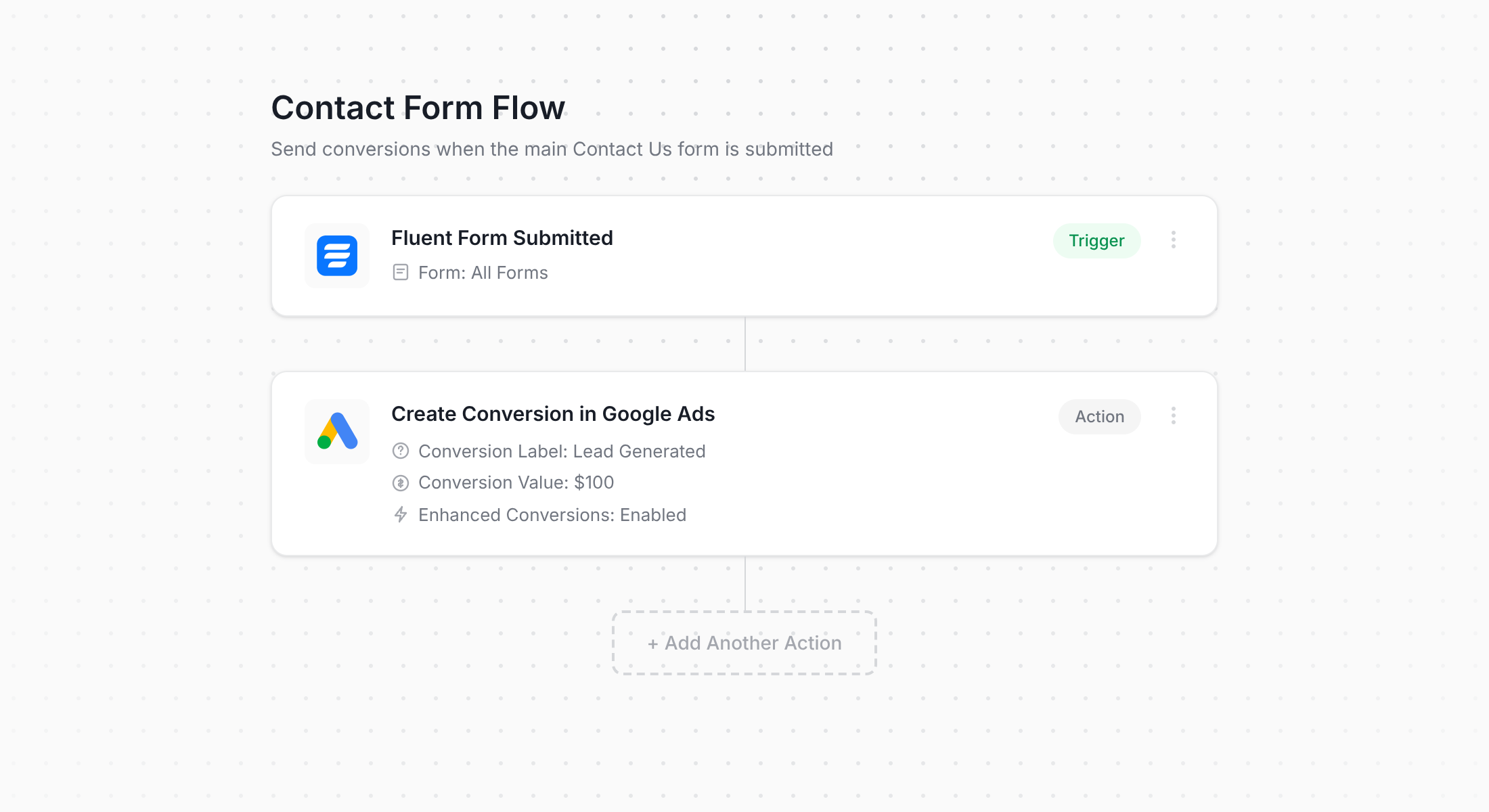
As the screenshot above shows, Converly ships with a clean workflow builder that will feel instantly familiar to anyone who's used Zapier or HubSpot Workflows.
Just choose your trigger (like a Fluent form being submitted) and then layer on the actions you want to fire (in this case, sending a conversion to Google Ads).
That's the whole thing. A handful of clicks later and you've got server-side conversion tracking running in Google Ads.
Step 2: Add the Converly code to your website
After publishing your Conversion Flow, Converly gives you a short snippet of code that needs to go on your website.
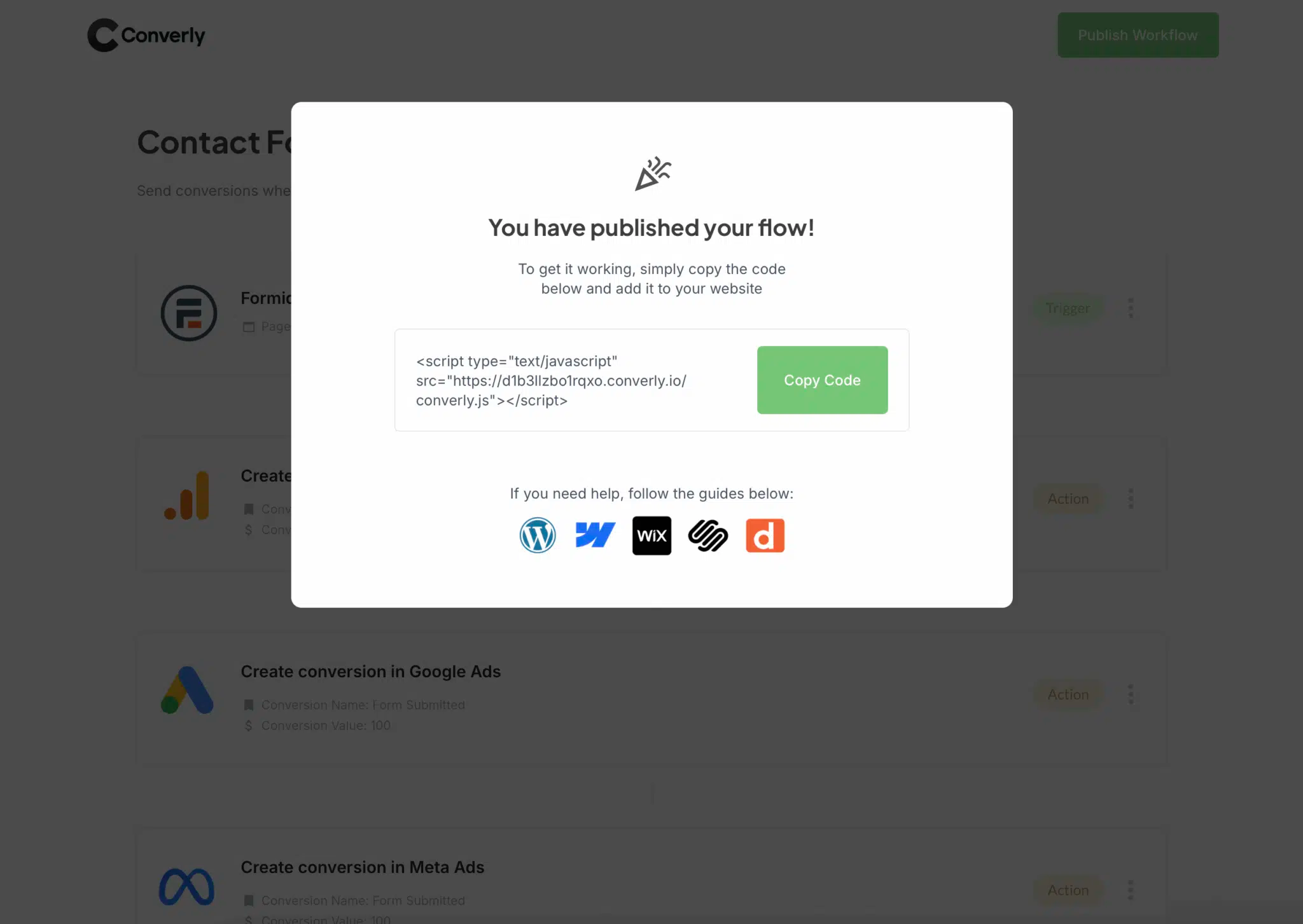
Since Fluent Forms runs on WordPress, you've got a few options for getting the snippet onto your site. Many themes include a header or custom code area in their settings where you can paste it directly. If yours doesn't, free plugins like "Insert Headers and Footers" handle it in seconds. And if you're already running Google Tag Manager on the site, you can drop the snippet in there as a custom HTML tag.
Step 3: Test it works
The last thing to do is head over to your website and fill out a test submission on the form.
Then hop back into your Conversion Flow, click the 3 dots menu in the top right, and choose View Logs.
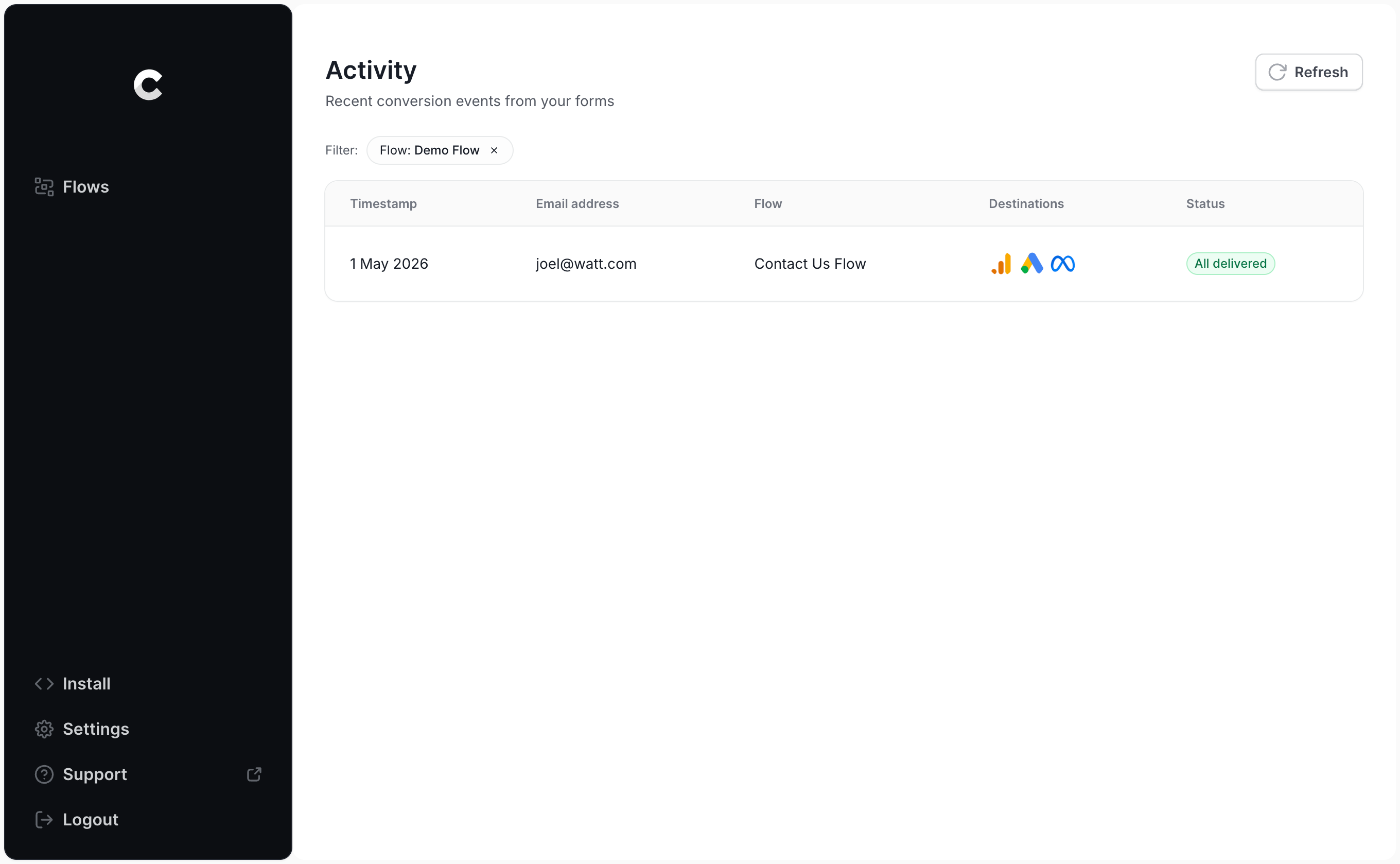
On the logs page, click into your test entry to see the full details, including whether the conversion made it through to Google Ads.
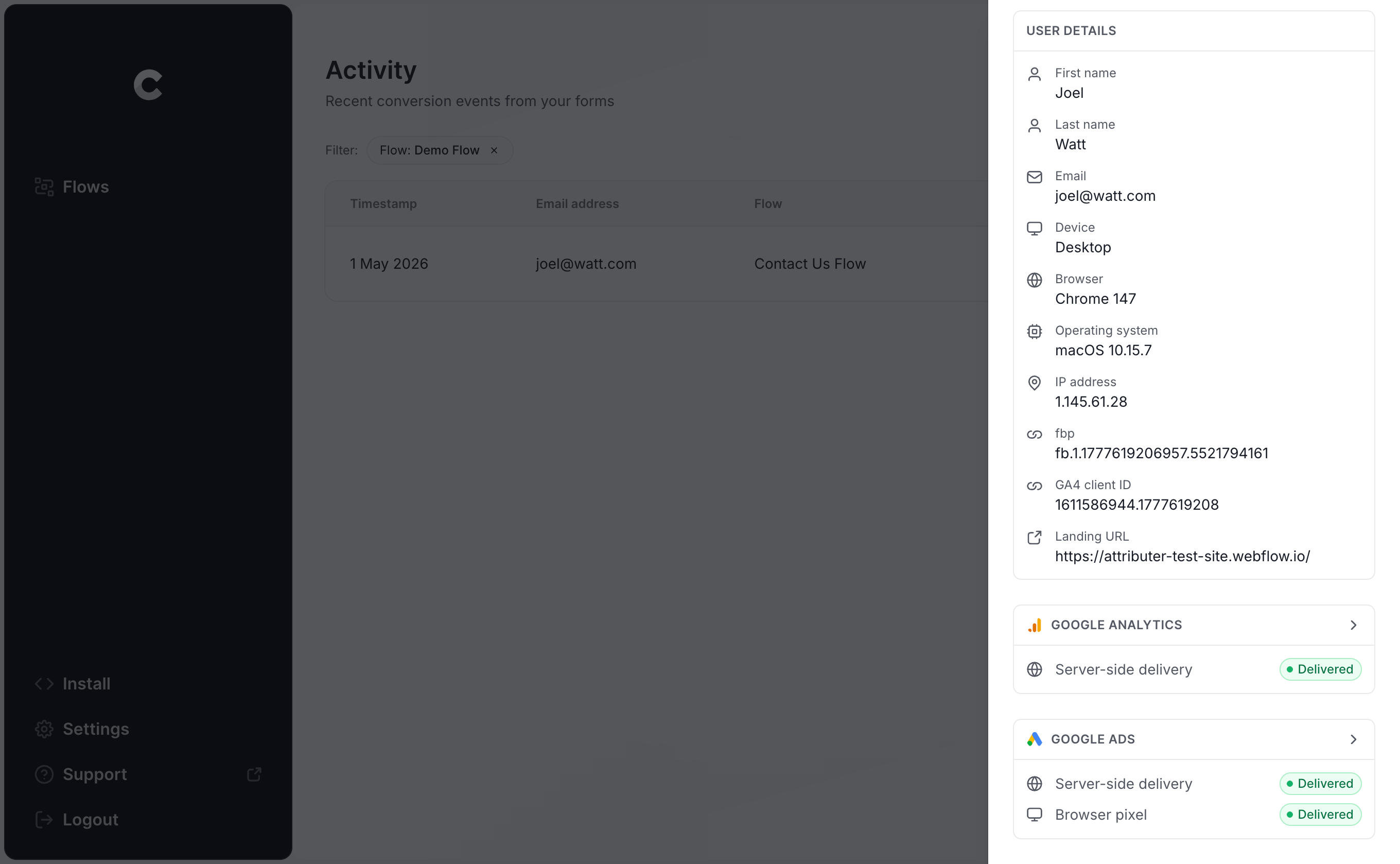
You can drill in even further to see exactly what data Converly sent to Google Ads, what the server sent back, and so on.
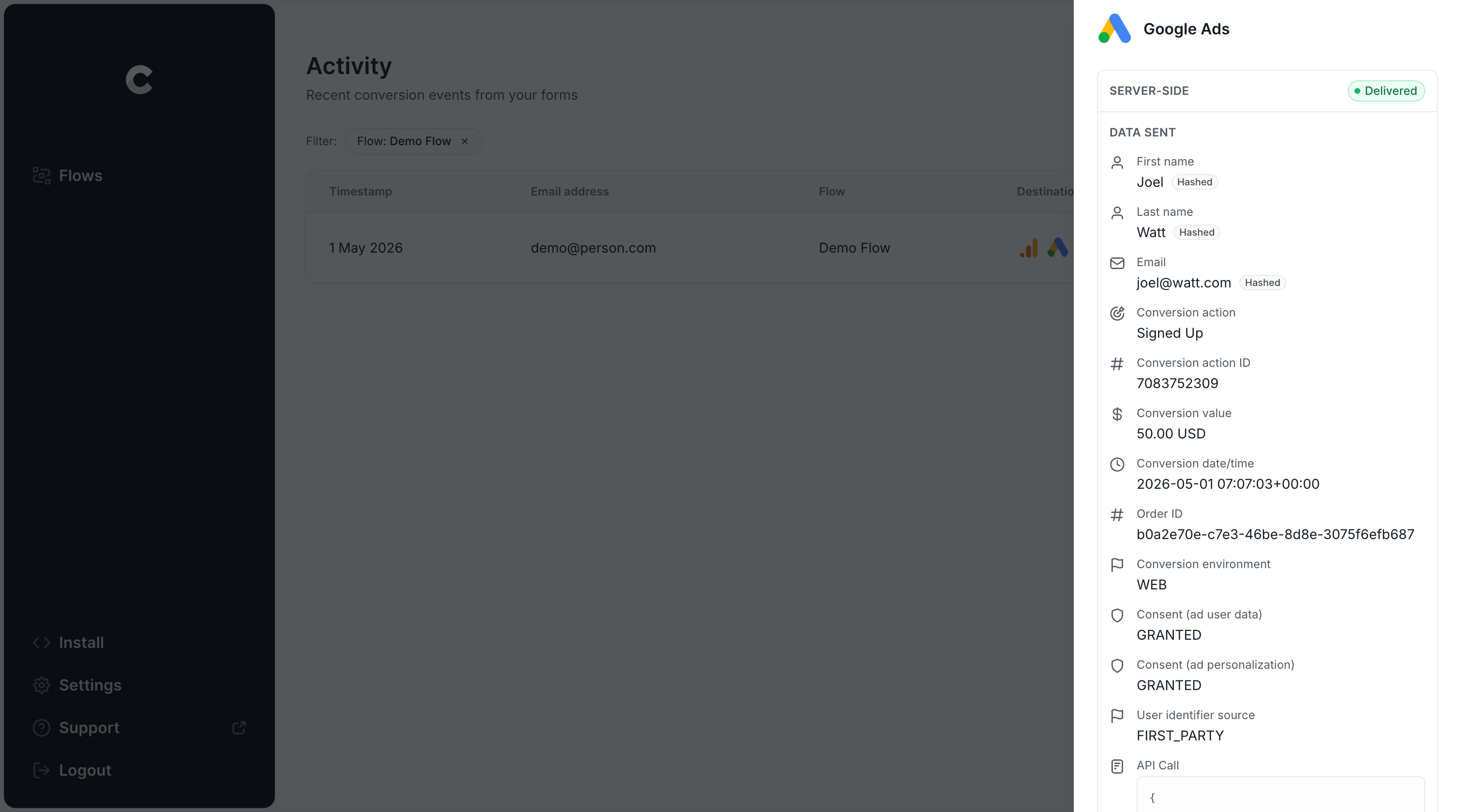
If your test entry shows up in the log and you can see it was delivered to Google Ads, you're good to go. From start to finish, the whole setup typically takes less than 5 minutes!
Why Converly is the best way to send conversions to Google Ads from Fluent Forms
There are other paths you could take to push conversions to Google Ads when a Fluent Forms entry is submitted, so why go with Converly? A few reasons:
1. Easy to set up
The go-to method for sending conversions to Google Ads is Google Tag Manager, but it's far from straightforward. With Fluent Forms specifically, you'd typically need to write custom JavaScript that listens for the fluentform-submission-success event the plugin fires when an entry is submitted, set up a GTM listener that captures the payload, push the lead's name and email into the dataLayer, hash everything with SHA-256 (Google requires it), and then build out the variables, triggers, and tags from there. Fluent Forms does also offer server-side fluentform_submission_inserted hooks for developers, but tapping into those means writing PHP and managing your own outbound API calls to Google.
Unless you live and breathe Google Tag Manager (or you're comfortable shipping custom PHP), expect to lose hours figuring it all out.
Converly takes a much simpler path. Pick your trigger (a Fluent Forms entry being submitted on your site) and then choose what should happen as a result (a conversion being sent to Google Ads). No custom code, no fiddly setup, just conversion tracking that works.
2. Not affected by ad blockers and privacy restrictions
If you're using Google Tag Manager (or doing something basic like tracking thank-you page views), a meaningful chunk of your conversions will never reach Google because ad blockers and privacy-focused browsers stop the Google Tag from ever loading.
In fact, one study looking at over 7 million conversions found tag-based tracking was missing roughly 30% of all conversions. About 5% of those losses came from ad blockers, and the bigger slice (around 25%) was from browser-level privacy measures.
Converly skips all of that by sending conversions directly to Google's servers, so ad blockers and privacy-focused browsers have nothing to interfere with. The end result is much more accurate conversion data in Google Ads.
3. Works across devices
It's pretty common for someone to first discover your site on one device (say, their phone) and then wait until they're back at a desktop to actually submit the form.
When you're tracking conversions in the browser (with something like Google Tag Manager), there's no way to stitch those two sessions together because they happened on different devices.
Converly sidesteps this by sending identity data (name, email, and so on) straight to Google's servers, which lets Google connect the dots between the original ad click on the phone and the eventual conversion on the desktop. That way your ads get the credit they actually earned.
4. Sends more data
Converly doesn't just send Google Ads the lead's name, email, and phone to help with matching. It also captures and forwards technical signals like the GCLID, IP address, User Agent, and more.
The upshot is Google ends up with a much richer profile of the person who converted, and can use all of that information to match the conversion back to an ad click (even if that click happened weeks earlier on a different device).
For you, that translates into more accurate conversion tracking and better data inside Google Ads.
5. Supports multiple tools and platforms
Converly plays nicely with more than 100 different form builders, scheduling tools, chat widgets, and other lead-capture tools.
It can also push conversion events out to Google Analytics, Google Ads, Meta Ads, LinkedIn Ads, Microsoft Ads, and plenty of other platforms.
So if you ever swap out a tool or start advertising somewhere new, you're not stuck rebuilding everything from scratch. A few clicks inside Converly and the new connection is live.
6. Gives you a full conversion log and email alerts
Here's something a tool like Google Tag Manager won't tell you, whether your conversion tracking is actually still running. You can prove it works on the day you set it up, but unless you keep re-testing every week or so, it can fail silently (somebody edits the form, changes a tag in Google Tag Manager, or adjusts something in Google Ads) and you'd have no clue.
Converly hands you a full conversion log instead. It shows every conversion that fired, the precise data Converly captured, what got sent to Google Ads, the response Google Ads returned, and a good deal more.
On top of that, you can turn on email notifications. Get one for every conversion sent to Google Ads, or set them to fire only when a send fails, so you know straight away the moment your tracking breaks.
3 things you can do when you properly send conversions to Google Ads from Fluent Forms
Once you've got real, accurate conversion tracking flowing into Google Ads, a whole set of things become possible that weren't before.
1. Report on conversions by campaign, ad group, keyword, etc.
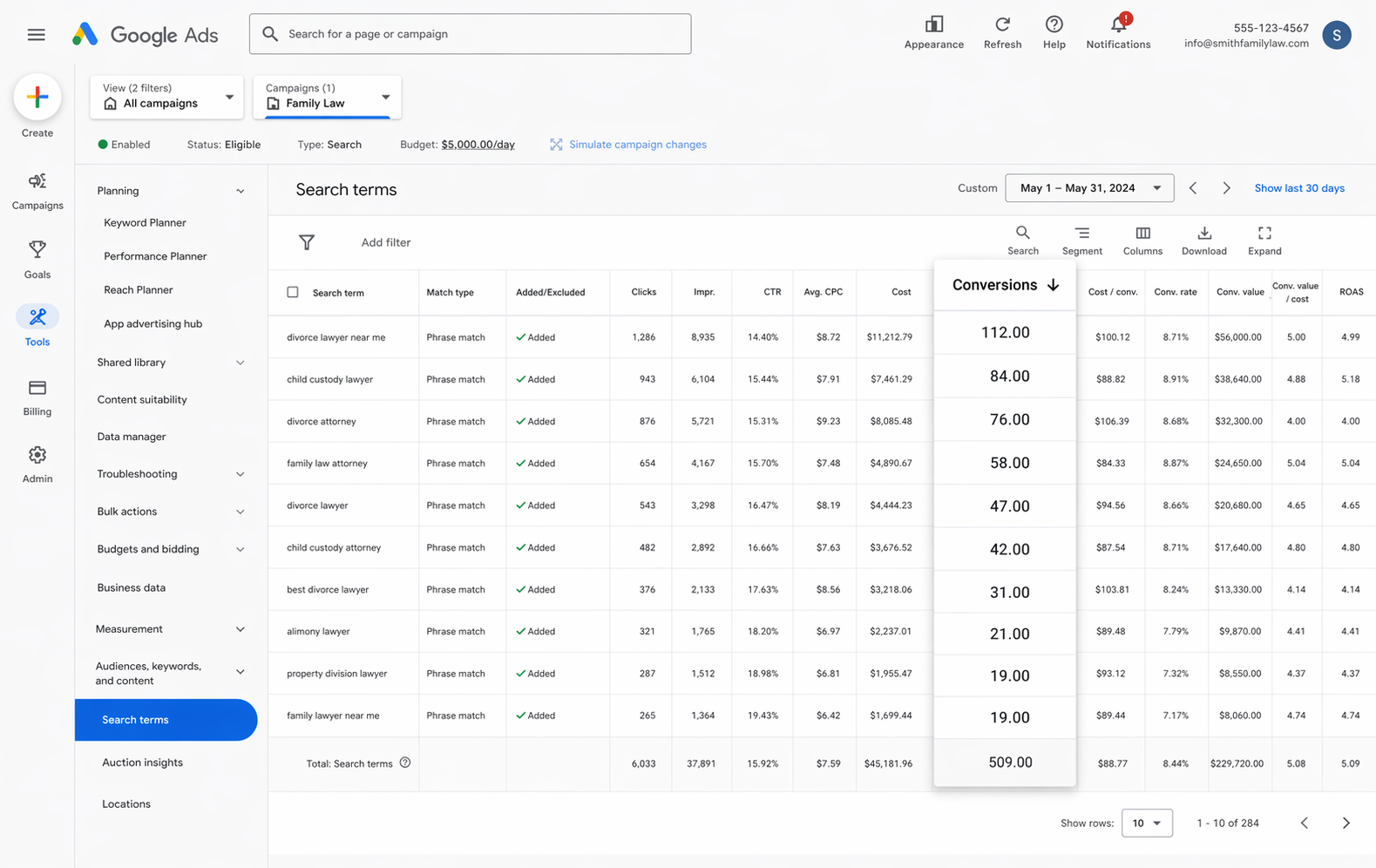
With accurate conversion tracking in place, your Google Ads reports go well beyond impressions and clicks. You'll see the number of conversions, your conversion rate, cost per conversion, return on ad spend, and a whole lot more.
And you can slice all of that by campaign, ad group, keyword, ad, country, and more.
This gives you a far better understanding of how your Google Ads are actually performing and shows you where the biggest growth opportunities are hiding.
2. Use Google's Smart Bidding technology
With manual bidding, you're basically telling Google "I'll pay up to $3 per click," and it will bid up to that amount for anyone that searches your keywords.
On the other hand, Google's smart bidding technology lets you describe the outcome you want (like a $45 cost per lead) and Google's algorithms handle the bidding for you. Google factors in everything it knows about the searcher (age, location, device, purchase history, and so on) and decides whether to bid up or back off based on how likely that person is to actually convert.
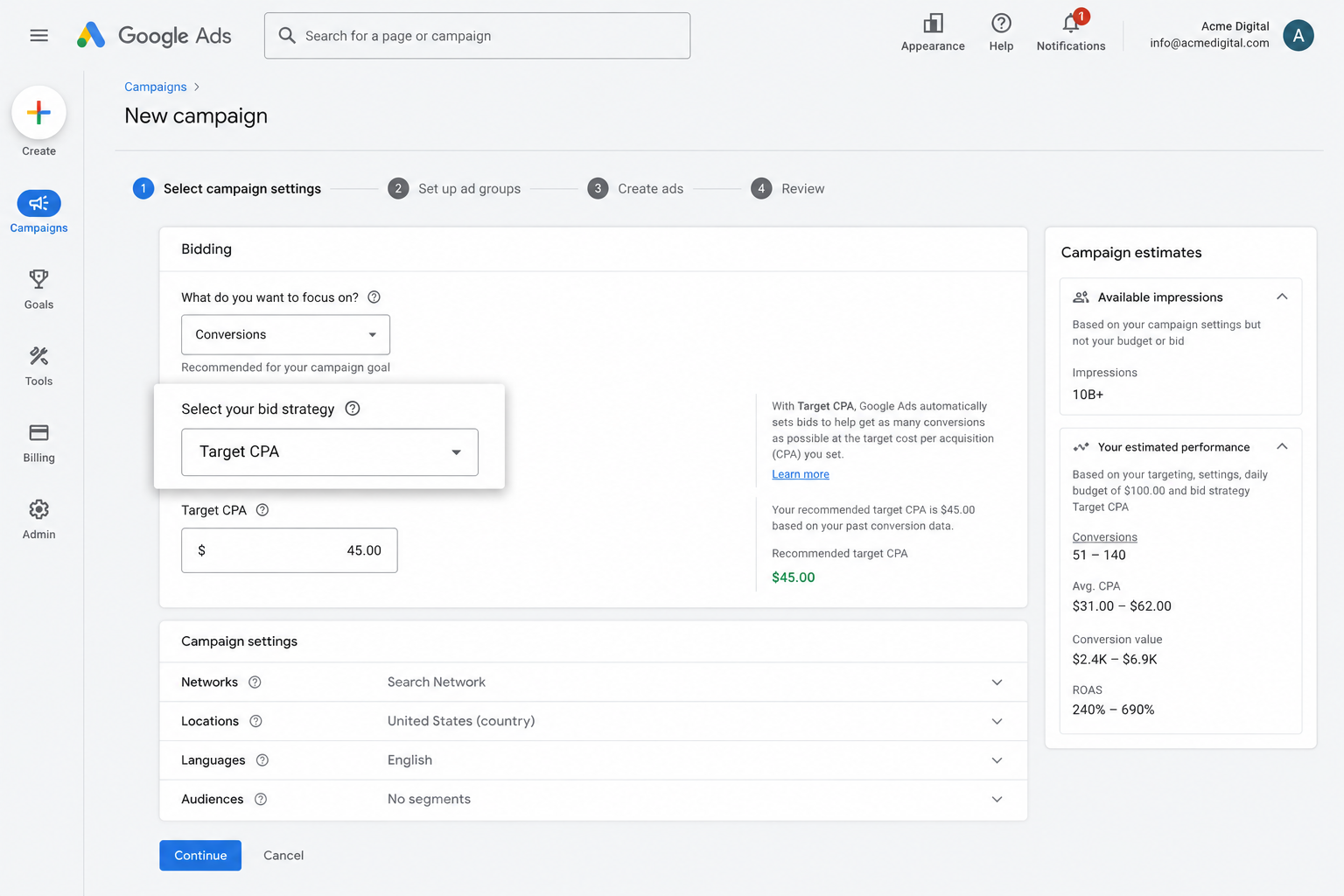
It's incredibly powerful, but it only works when conversion tracking is accurate. Without it, Google has no idea what a "good" searcher actually looks like for you, and will end up paying top dollar for clicks from the wrong audience (burning through your budget and pushing costs up).
By setting up accurate, server-side conversion tracking through Converly, you can finally get the most out of Google's smart bidding features, bringing in more leads at a lower cost.
3. Retarget people who visited your site but didn't convert
Sending accurate conversion data into Google Ads also unlocks the ability to build remarketing lists of website visitors who didn't convert the first time around.
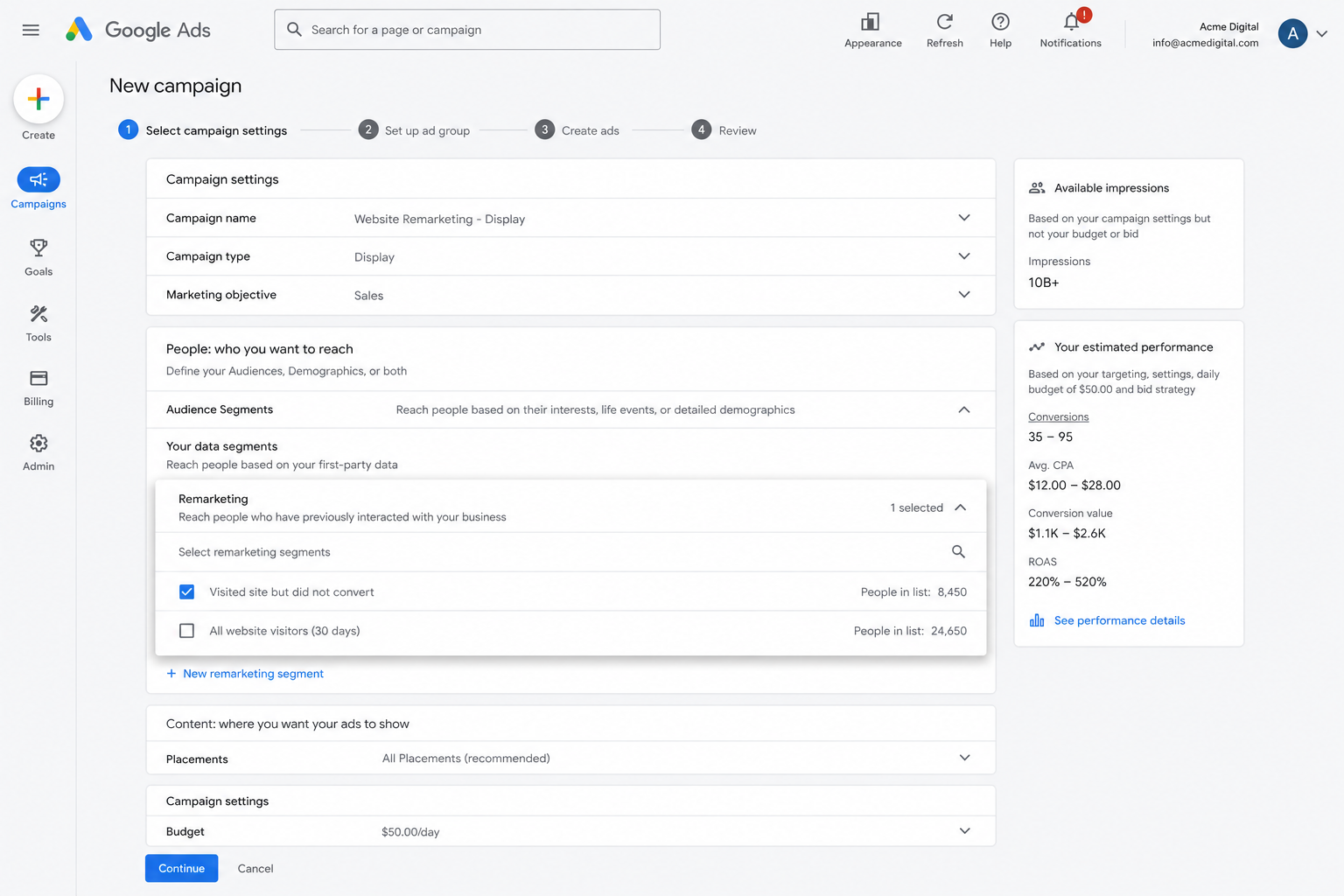
You can then go after those people in a few different ways, including:
- Search — Bid more aggressively (or less, if you prefer) for these visitors when they search your keywords again later.
- Display — Run display ads across the Google Display network that target only this group, so they keep seeing your brand as they browse the web.
- YouTube — Serve YouTube Ads exclusively to these visitors, so your brand keeps showing up while they watch videos.
Wrap Up
If you're looking for a way to send conversions to Google Ads each time someone submits a Fluent Forms form on your site, Converly is a great option.
It pushes conversions directly to Google's servers so they don't get blocked by ad blockers or privacy-focused browsers, and it ships a healthy amount of detail about the lead (name, email, phone, IP address, User Agent, and more) so Google has the best possible chance of matching the conversion back to the right ad click.
Best of all, it can be up and running in just a few minutes and comes with a 14-day free trial, so give it a try today!
About the author

Aaron is the founder of Converly. With over 15 years of experience in digital marketing and SaaS, he's passionate about helping businesses track and optimise their ad conversions.