


Track Eloqua form submissions as conversions in Google Ads
Learn how to send server-side conversions to Google Ads whenever a lead completes an Eloqua form on your website. No code required!
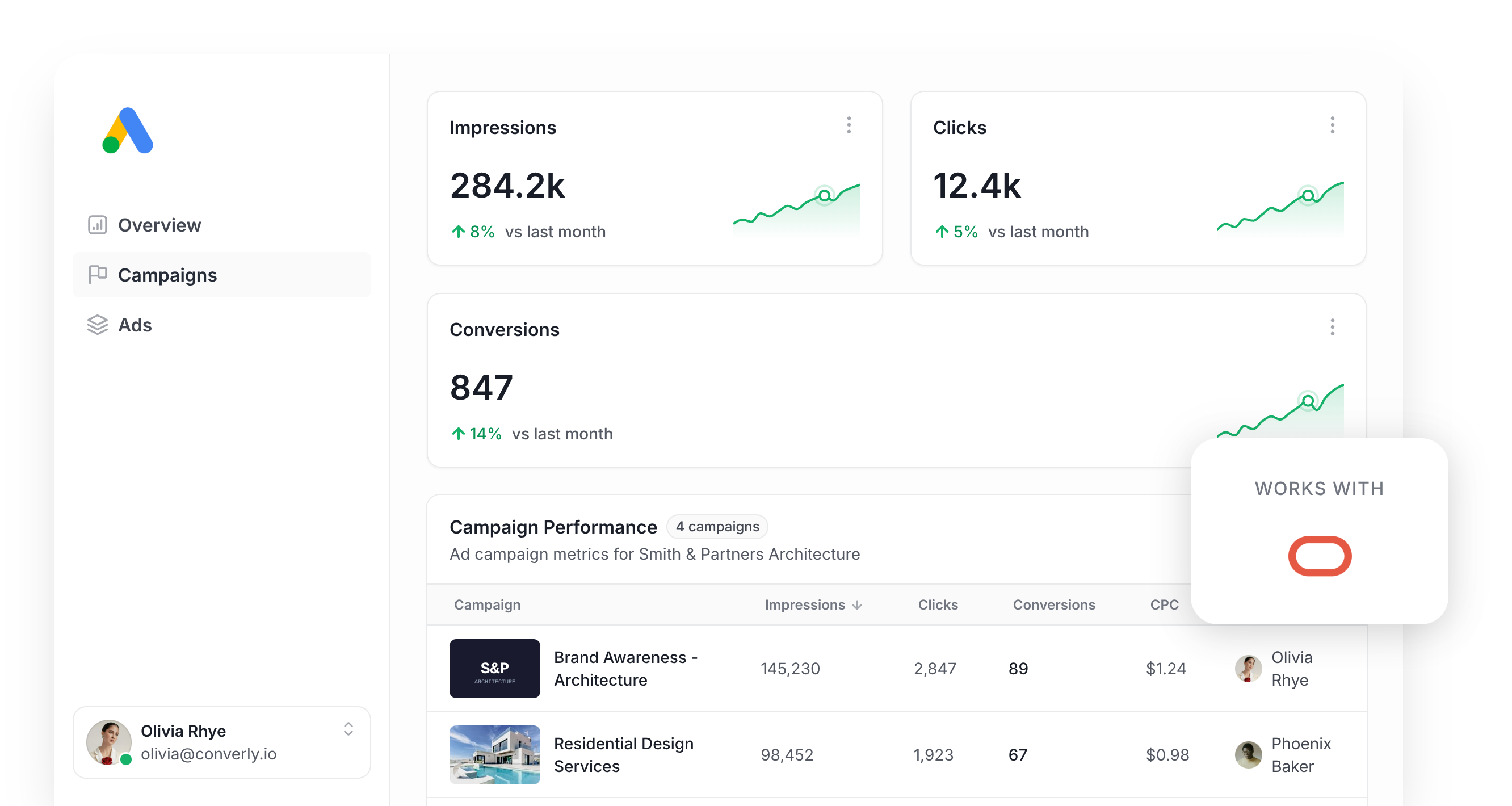
If you're spending money on Google Ads to generate leads and pipeline, you need to know which of your campaigns are actually working and which ones aren't, and the best way to do that is to set up conversion tracking in Google Ads.
The problem is, it's oddly difficult to do.
You could use tools like Google Tag Manager, but that means writing code to listen for the form submission, firing an event into the dataLayer, then building out the tags, triggers, and variables needed to pass it through.
There are simpler methods, like watching for a thank you page visit or a button click, but those are ridiculously unreliable. Ad blockers, Safari's tracking limits, and leads who start on one device and finish on another can wipe out close to 30% of your genuine conversions.
Is there a better way? Yes, and it doesn't require a developer.
This guide covers how to set up reliable server-side conversion tracking for Google Ads whenever a lead fills out a form built in Oracle Eloqua.
Why server-side tracking matters for Google Ads
These days, having proper conversion tracking isn't optional. It's the data that everything else depends on.
Google Ads' smart bidding strategies (like Maximize Conversions or Target CPA) use signals like location, device, time of day, prior purchase history, and much more to estimate how likely a given searcher is to convert, then bids accordingly. It bids higher (and therefore shows ad more prominently) for people who look like they'll convert and pulls back from those who won't.
It's a genuinely powerful way to bring in more leads for less spend, but it only works if the conversion data feeding it is solid. You need to be telling Google "this person converted" and "this person didn't" so it can learn what your best leads actually look like and serve your ads to more people like them.
The trouble with older tracking approaches (like tracking thank you page visits) is that they all use the visitor's own browser to send the conversion to Google, which opens the door to a few problems:
- Ad blockers - A lot of visitors run browser extensions that block ad scripts outright, so the Google Tag never fires and nothing gets recorded.
- Browser privacy limits - Safari and other privacy-focused browsers limit how long the Google Tag can track visitor, often to a single day, so a lead who clicks your ad and converts a few days later can't be matched back to that click.
- Multiple devices - A lead might click your ad on their phone during a commute, then come back later on their work laptop and fill out your Eloqua form then. Browser-based tracking has no way to join those two visits because they happen on different devices, so your ads never gets the credit.
Server-side tracking doesn't send conversions through the visitor's browser. Instead, the lead's details get sent straight to Google's servers in a direct API call, so ad blockers and privacy restrictions can't get in the way.
Although it all sounds a bit technical, it has a measureable impact on your results. In fact, Google's own data shows using server-side tracking typically gives you **23% lift in recorded conversions and a 10% drop in cost per conversion (**because the bidding algorithms finally have the data they need to learn what your ideal customer looks like and can go and show yoru ad more prominently to people like them).
3 simple steps to send server-side conversions to Google Ads from Eloqua
Setting up server-side tracking between your Eloqua forms and Google Ads is easy with Converly. Here's how it works:
Step 1: Build your Conversion Flow in Converly
Converly makes it easy to send a server-side conversion to Google Ads whenever someone submits an Eloqua form on your website.
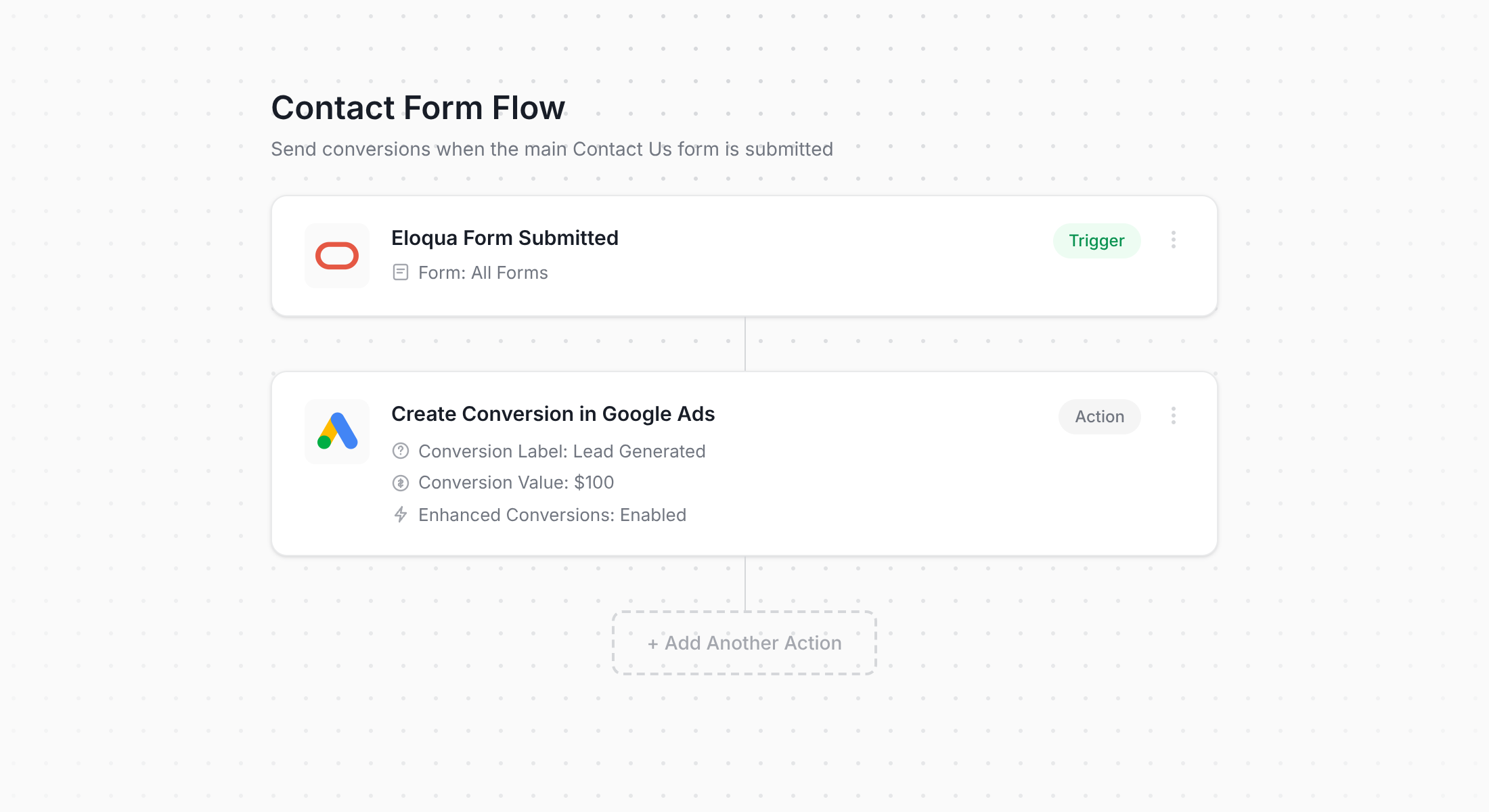
The above screenshot is Converly's workflow builder. If you've ever used a tool like Zapier or the Campaign Canvas in Eloqua, you will recognize the layout immediately.
You simply pick a trigger (like a lead completing your Eloqua form), then choose the action that should follow it (a conversion sent through to Google Ads).
That's really all there is to it. A few clicks and you've got server-side conversion tracking set up. No developers or custom scripts involved.
Step 2: Add the Converly code to your website
Once your Conversion Flow is published, Converly gives you a little snippet of code to add to your site.
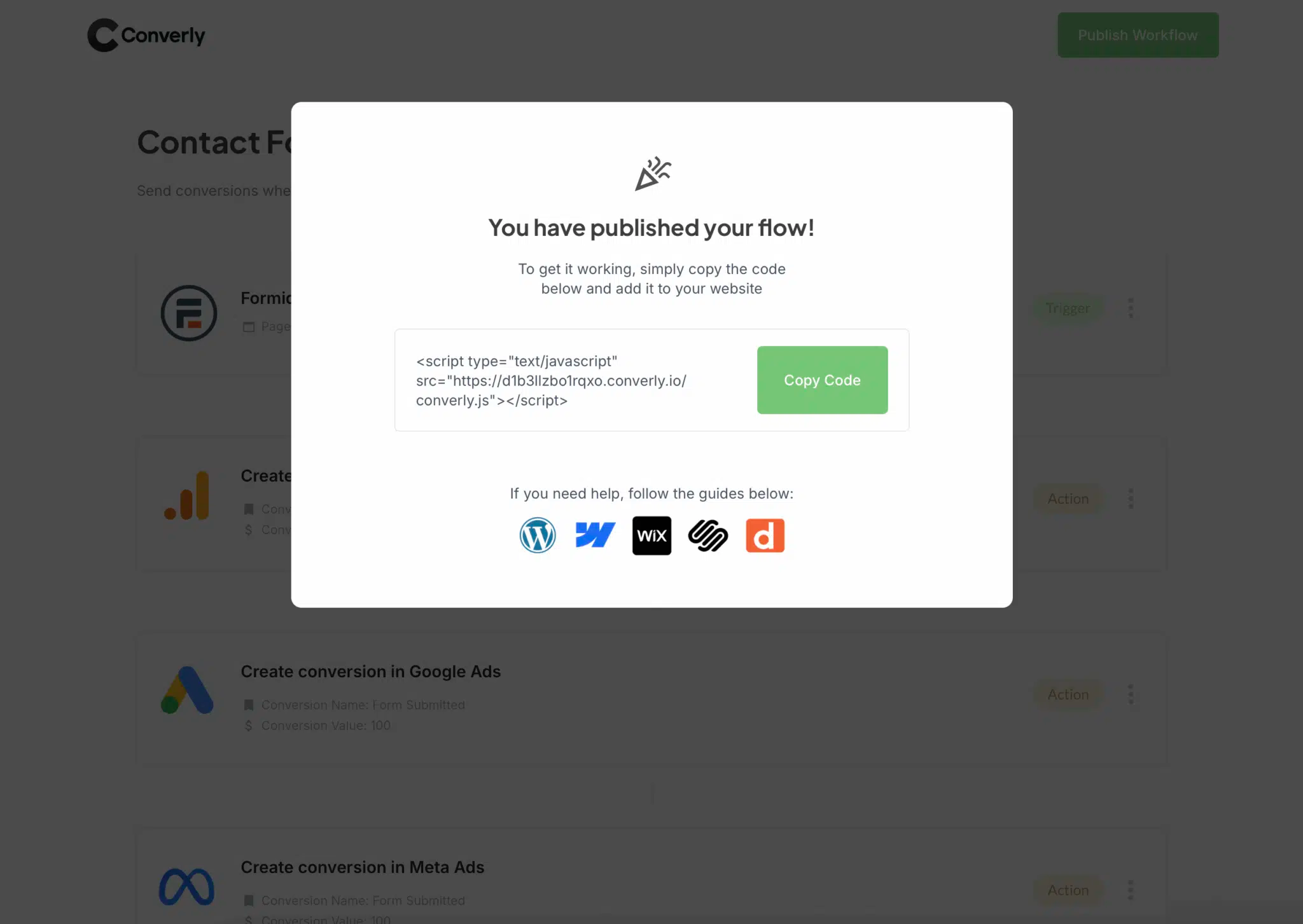
You just need to drop it into your website's Header or Custom Code section (wherever your CMS or site builder lets you add scripts) and mark it so that loads on every page. If you already use Google Tag Manager to add scripts to your website, then you can add the snippet there instead.
Step 3: Test it works
Now that everything is set up, head to your live site and submit one of your Eloqua forms.
Then go back into Converly, open the Conversion Flow, click the 3 dots menu in the top right, and select View Logs.
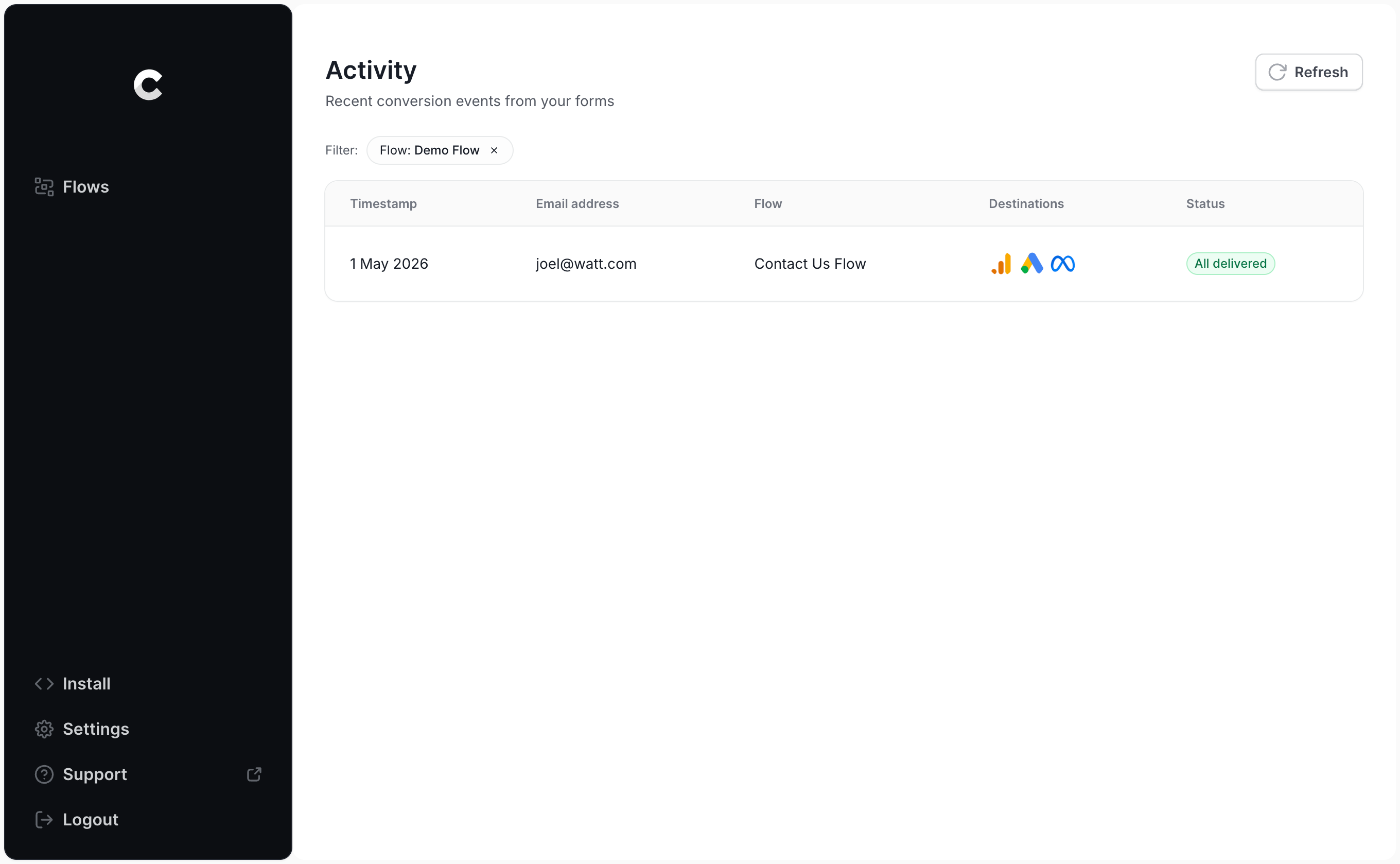
Open the entry for your test submission from the logs screen, and you'll see exactly what data was captured, where it was sent, etc.
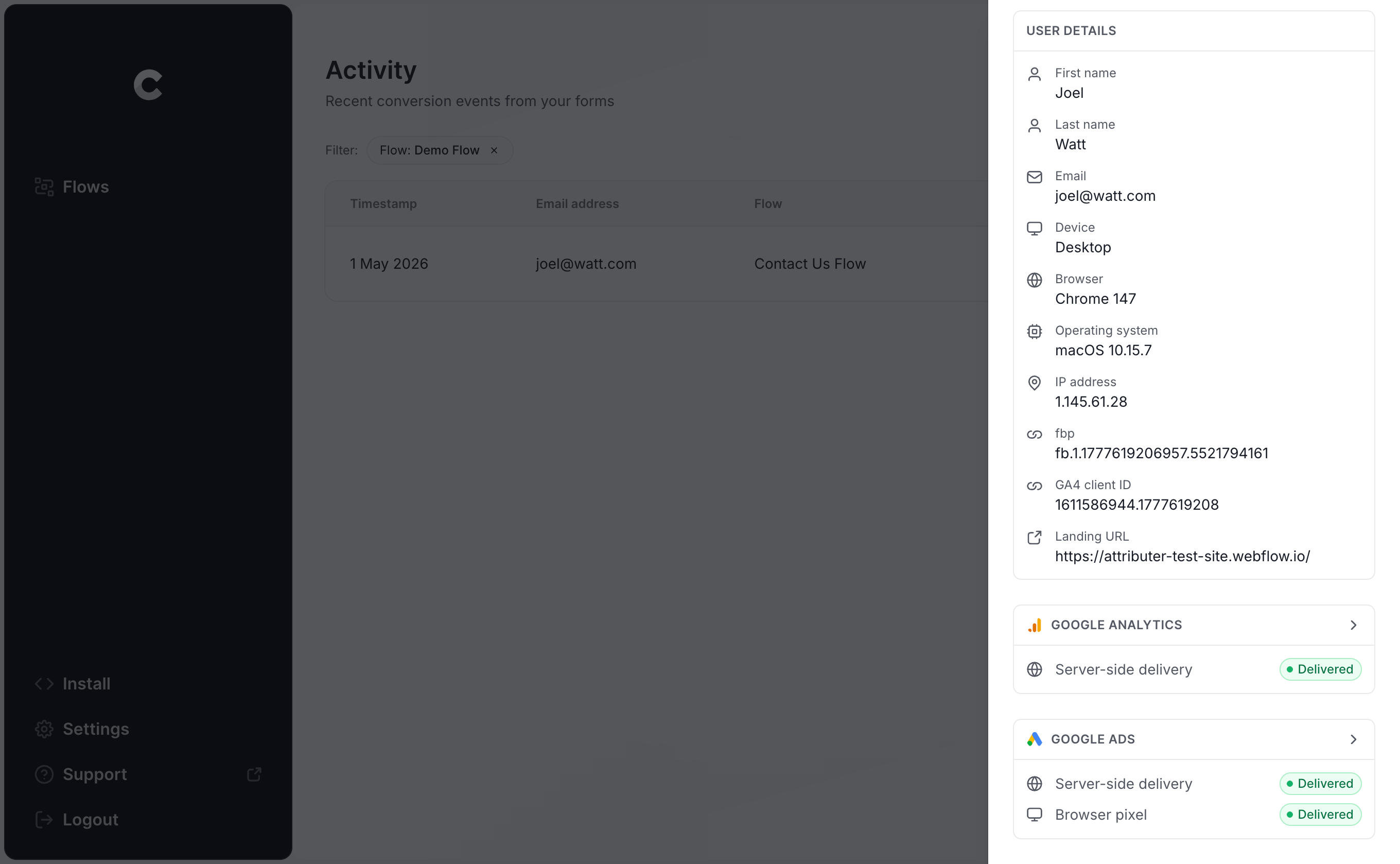
You can even click a level deeper and see the exact data that was passed to Google Ads and how their server responded.
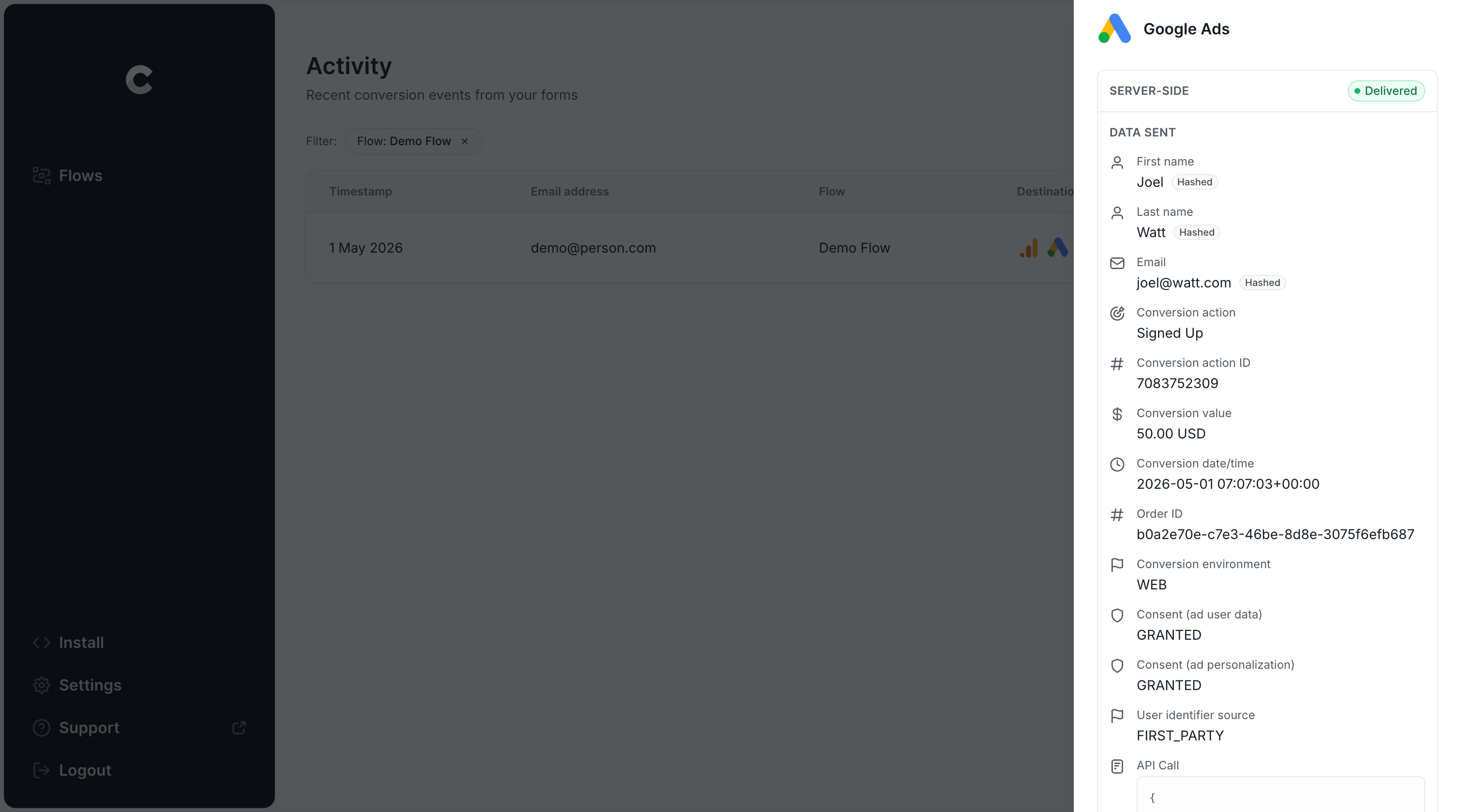
Once your test submission appears in the log with a successful send to Google Ads, you're finished. Most people get through the whole setup in under 5 minutes.
Why Converly is the best way to send conversions to Google Ads from Eloqua
There's more than one way to get Eloqua form completions into Google Ads as conversions, so why pick Converly?
1. Easy to set up
The default for a lot of teams is to use Google Tag Manager to set up conversion tracking, but that means writing custom JavaScript to detect the Eloqua form submission, pushing the lead's name and email into the dataLayer, pulling it out with dataLayer Variables, hashing it with SHA-256 (a requirement from Google), then assembling the Tags and Triggers to connect it all.
It's definitely doable, but if you're not an expert at Google Tag Manager then you're going to waste a lot of time trying to figure it all out.
Converly is just so much simpler. You just choose your trigger (an Eloqua form submission) and your actions (a Google Ads conversion), and you're done. If your team already uses an AI assistant like Claude or ChatGPT, you can even connect it to Converly's MCP and just tell it something like 'Set up conversion tracking between Google Ads and Eloqua', and it will build the flow for you.
2. Not affected by ad blockers and privacy restrictions
If you use browser-based tracking (Google Tag Manager, thank you page visits, button clicks), a meaningful slice of your conversions will never reach Google because ad blockers and privacy-conscious browsers stop the Google Tag from loading in the visitor's browser when they land on your site (which means nothing they do can be tracked).
A study across more than 7 million conversions found browser-based tracking was only able to successfully send about 70% of conversions to Google Ads (so 30% of your conversions would be lost if you went this route).
This isn't an issue if you use Converly. It sends conversions directly to Google's servers, so there's nothing for an ad blocker or privacy browser to interfere with.
3. Works across devices
It's pretty common for a lead to first come across your business on a phone (for example), but not actually complete a form until they are back at their desk on their work computer.
Browser-based tools like Google Tag Manager can't connect those two visits, since they happened in separate browsers on separate devices, so Google wouldn't be able to match the conversion back to the original ad click.
Converly solves this by passing the lead's details (name, email, and more) directly to Google's servers, which lets Google tie the conversion back to the a real person and their original ad click, even though they happened on completely different devices.
4. Sends more data
On top of the lead's name, email, and phone number, Converly also captures technical signals like the Google Click ID (GCLID), IP address, and user agent, and sends all of it to Google Ads with each conversion.
This is important because millions of people have the same name and many people have multiple email addresses, so relying on those to match a conversion back to a real person and the ad they clicked isn't totally effective. But by sending the Google Click ID, the visitor's IP address, etc., you are giving Google a whole heap of extra data it can use to match everything up, even if the ad click and the conversion happen weeks apart on different devices.
That translates into cleaner reporting and more useful data inside your Google Ads account.
5. Supports multiple tools and platforms
Converly integrates with more than 100 form builders, CRMs, scheduling tools, and other website tools (including Eloqua forms). It can also send conversion events to Google Analytics, Google Ads, Meta Ads, ChatGPT Ads, LinkedIn Ads, Microsoft Ads, and several other destinations.
So if you pick up a new tool down the line (say a chat widget for handling inbound leads), or start advertising on a new platform, you don't have to build your tracking again from scratch. Connect it inside Converly and it's done.
6. Gives you a full conversion log and email alerts
If you build your tracking through Google Tag Manager, then there's no straightforward way to tell if it's still working once it's live. It might pass every test you do when you first set it up, but a tweak to your Eloqua form, a change inside GTM, or an edit in Google Ads can break the whole chain and you won't know until you see 0 conversions in your Google Ads account (and Google has gone crazy on your budget trying to get more conversions).
Converly closes that gap. Every conversion gets logged, showing what data came in, what was sent to Google Ads, and how Google Ads responded. You can turn on email alerts too, either for every conversion or just the failures, so you hear about any problems as soon as they happen.
3 things you can do when you properly send conversions to Google Ads from Eloqua
Once real conversion data is flowing into Google Ads, a lot more reporting and optimization becomes possible. Here are 3 things you'll be able to do that will help you improve results:
1. Report on conversions by campaign, ad group, keyword, etc.
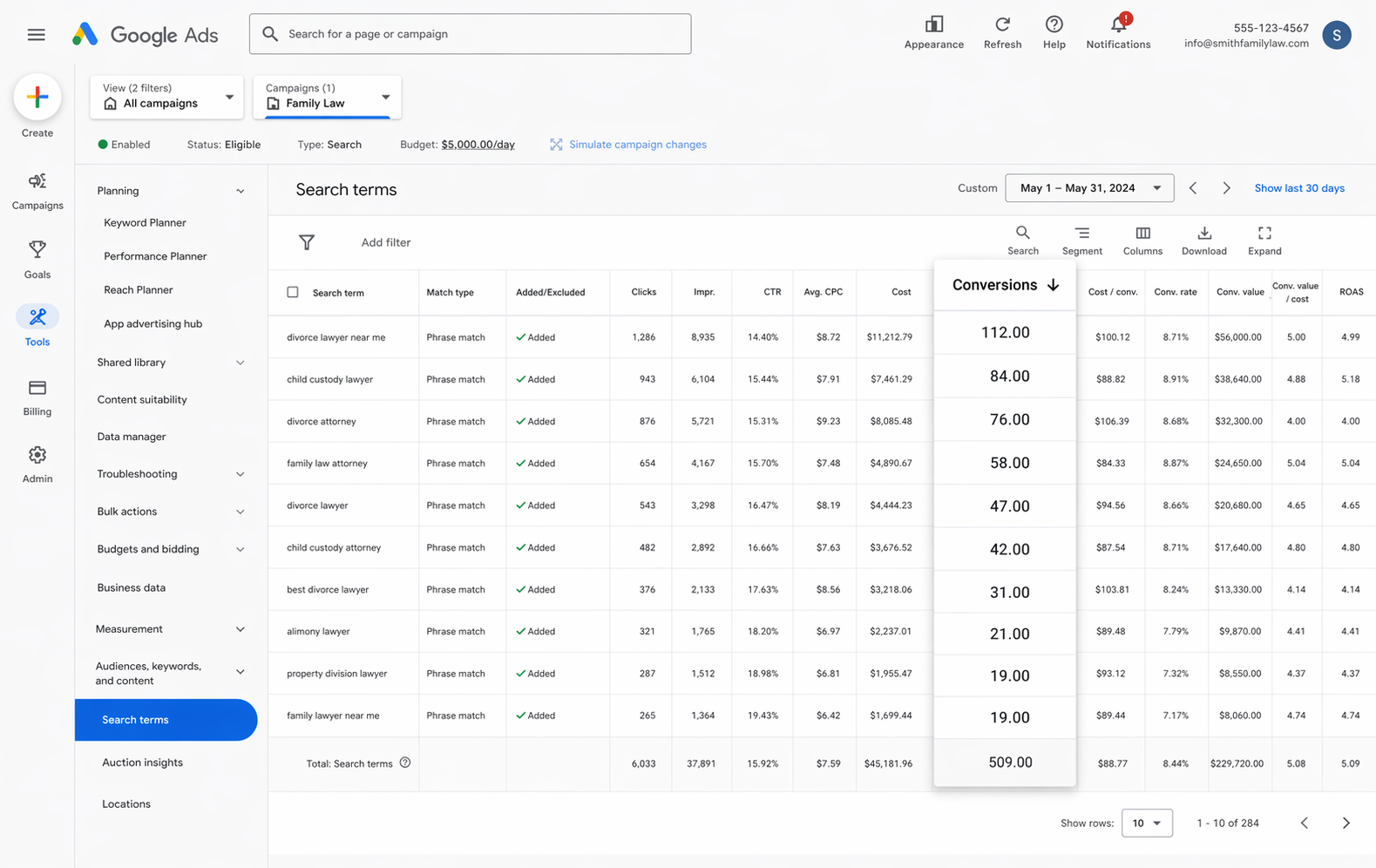
With real conversions tracked, your Google Ads account can show more than just impressions and clicks. You get conversion counts, conversion rate, cost per conversion, return on ad spend, and more, all in one place. And you can break any of it down by campaign, ad group, keyword, ad, or country to see where your account is actually performing.
That level of visibility makes it much easier to spot what's working, what isn't, and where your biggest opportunities for growth are.
2. Use Google's Smart Bidding technology
Manual bidding is a pretty ineffective way to run a Google Ads account. You're basically telling Google ‘I’m willing to pay $3 a click' and it bids up to that regardless of who's actually searching or how likely they are to convert.
Using Google's Smart Bidding strategies is a much better approach. You give Google a target, like $45 per lead, and it handles the bidding on your behalf. It looks at things about the searcher (like their device, location, age, interests, and past behavior) and decides whether to bid higher for people more likely to convert and lower for those who aren't.
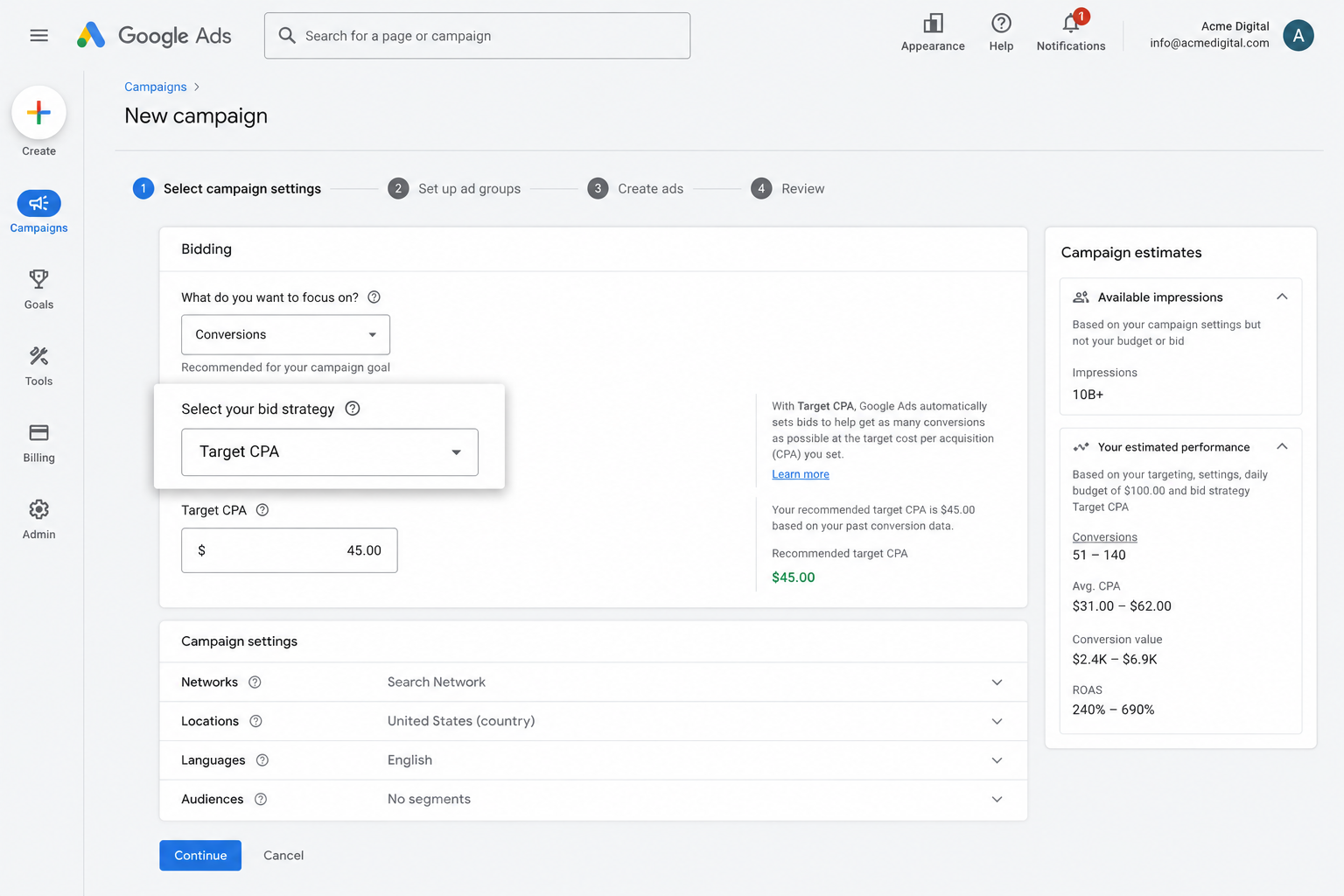
It's a genuinely strong tool for bringing in more leads at a lower cost, but it only works well when the conversion data behind it is accurate. If you're not accurately telling Google which clicks turned into leads and which didn't, it can't learn what a good searcher looks like for your business and you'll waste budget on people who aren't going to convert into real leads and customers.
Setting up accurate, server-side tracking through Converly puts you in a position to get value out of Google's smart bidding and ultimately bring in more leads at a lower cost per lead.
3. Retarget people who visited your site but didn't convert
Solid conversion data also lets you build remarketing lists of visitors who reached your site but never completed an Eloqua form.
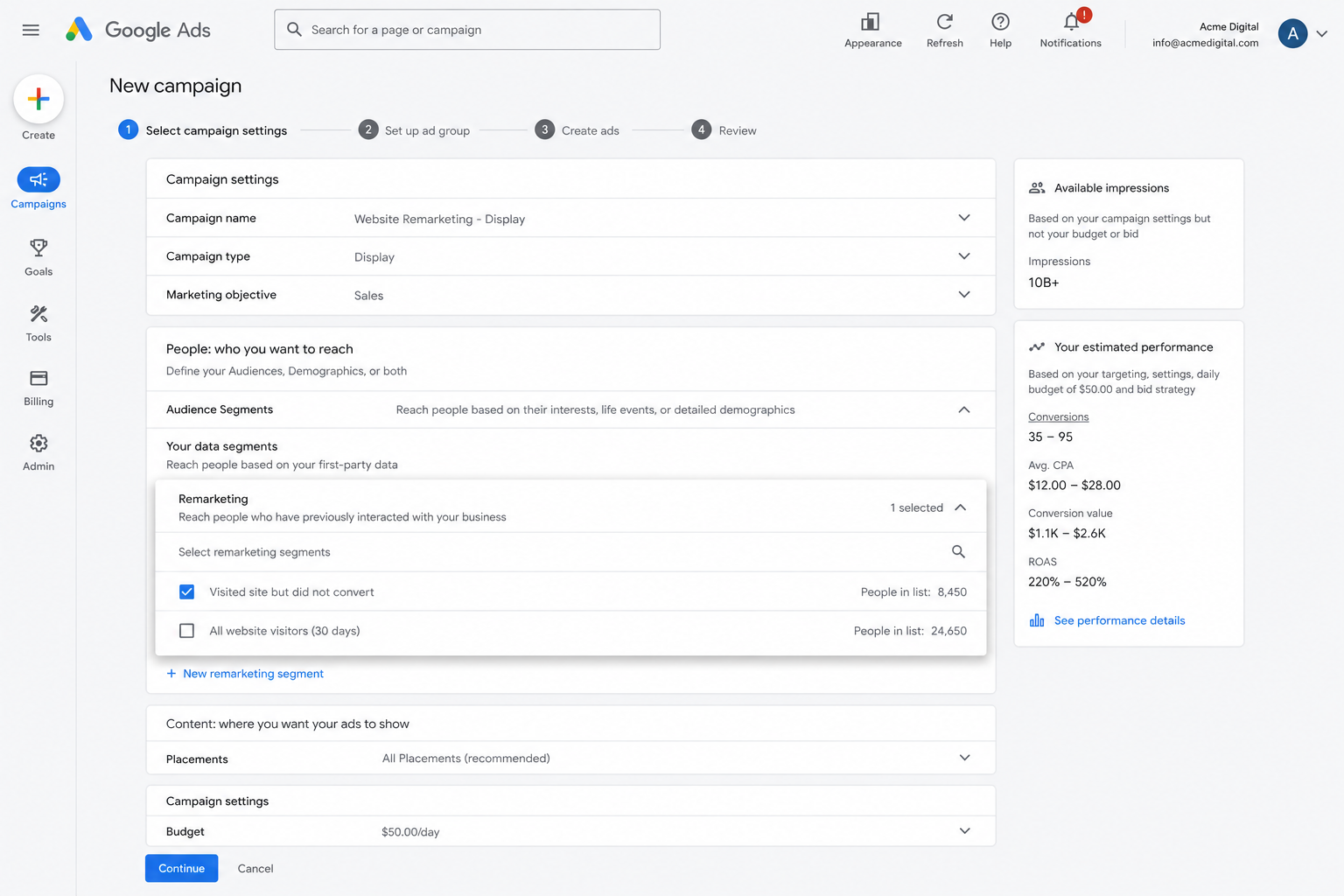
From there, you've got a few ways to bring them back:
- Search Ads - Raise or lower your bids for these visitors the next time they search your target keywords.
- Display Ads - Run banner ads across the Google Display Network so your brand stays visible while they browse other sites.
- YouTube Ads - Serve them YouTube ads to stay top of mind while they're watching video content.
Wrap Up
If you want an easy, reliable way to send conversions to Google Ads whenever a lead completes an Eloqua form on your site, Converly is a solid choice.
Conversions get sent straight to Google's servers, so ad blockers and privacy restrictions in browsers can't get in the way, and Converly passes along a heap of data about the lead (name, email, phone, IP address, user agent, and more) so Google has what it needs to accurately connect the conversion back to the original ad click, even it if was weeks later on a different device.
Setup takes just a few minutes, and it comes with a 14-day free trial, so give it a try today!
About the author

Aaron is the founder of Converly. With over 15 years of experience in digital marketing and SaaS, he's passionate about helping businesses track and optimise their ad conversions.