


Track Duda form submissions as conversions in Google Analytics
Automatically send conversion events to Google Analytics whenever someone submits a form on your Duda website. No coding or technical knowledge required!
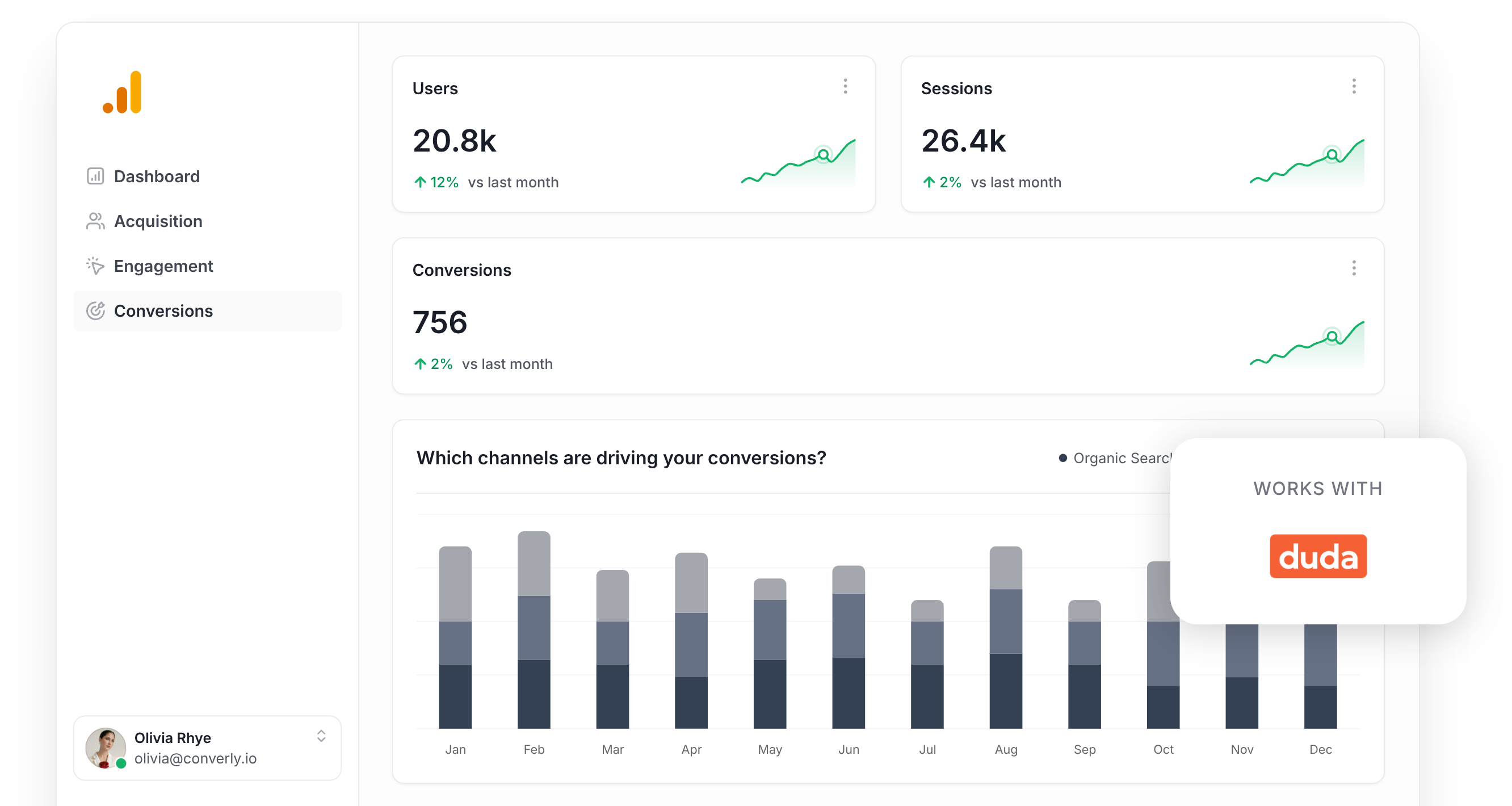
Are you struggling to figure out which of your marketing channels are actually bringing in leads?
Whether it is Google Ads, Meta Ads, SEO, or something else entirely, knowing where your leads come from can be tough without the right setup.
But here is the good news: getting this sorted is actually pretty easy, and you will not need to touch any code or go through any complicated setup processes in tools like Google Tag Manager.
In this guide, we will show you how to set up Converly so that Google Analytics automatically records a conversion event every time someone submits a form on your Duda website.
4 simple steps for tracking Duda form submissions as conversions in Google Analytics
Here is how to get it all set up in 4 quick steps:
Step 1: Build your Conversion Flow in Converly
Converly is a tool designed to send conversion events to your analytics tools and ad platforms whenever someone submits a form on your website.
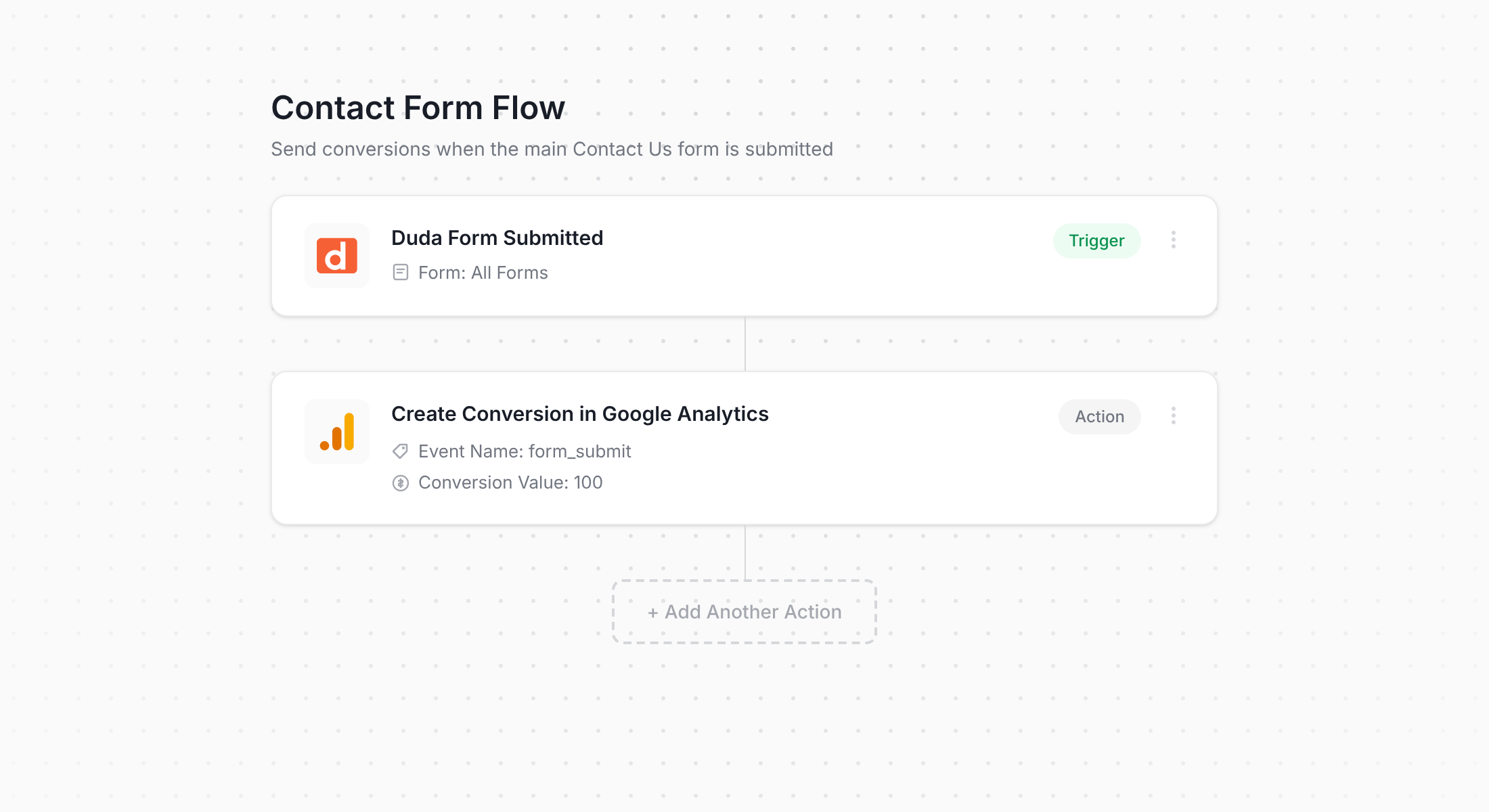
The workflow builder inside Converly makes the entire process painless. If you have ever created an automation in Zapier or set up a workflow in HubSpot, you will be up and running in no time.
Simply pick a trigger (in this case, when someone submits a form on your Duda site) and choose where you want the conversion event sent (like Google Analytics). That is the entire setup.
Step 2: Add the Converly code to your Duda site
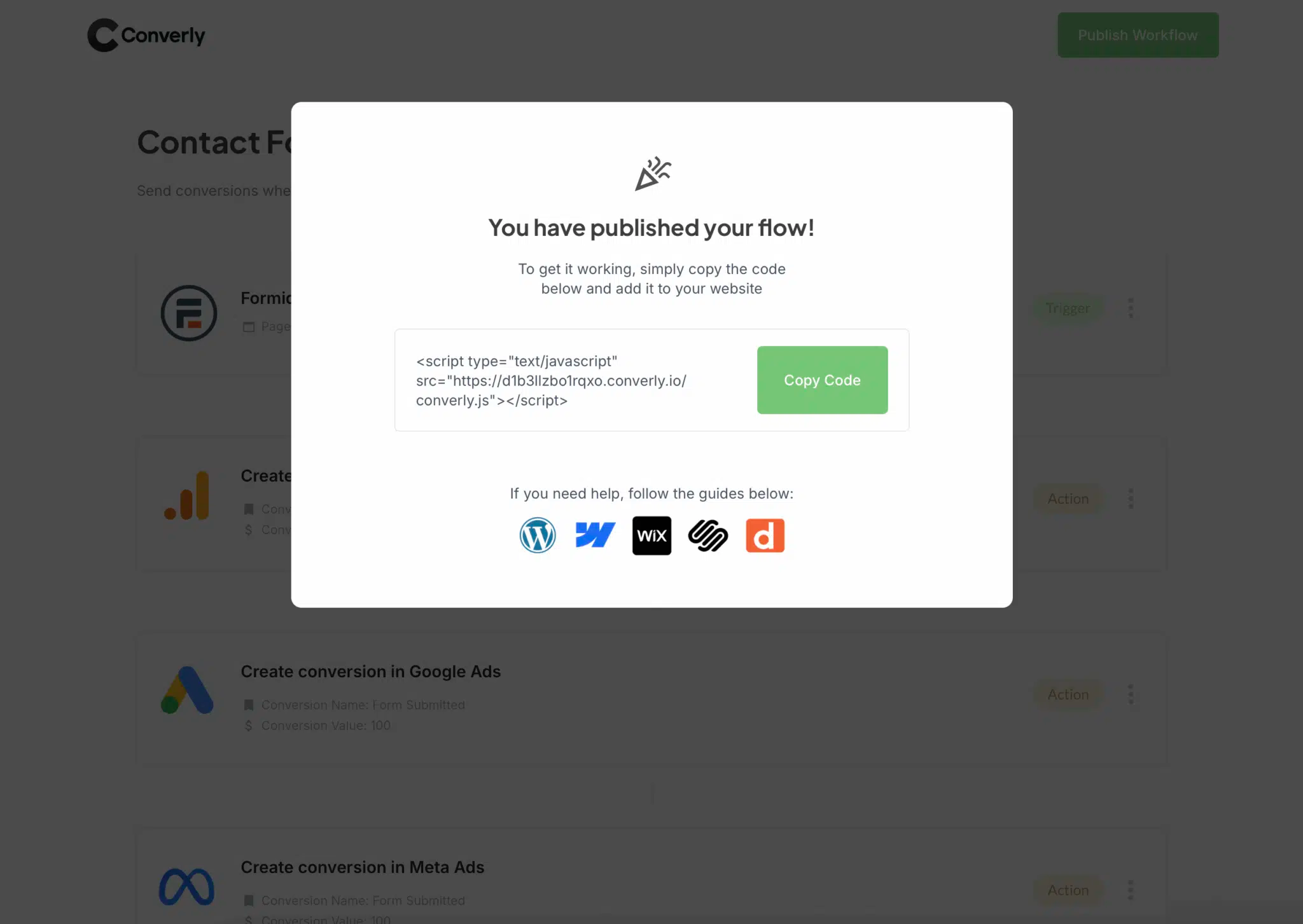
Once your Conversion Flow is ready, Converly gives you a small code snippet to place on your website.
In Duda, you can add this through the site editor. Go to your site settings, find the Head HTML section, and paste the snippet there. After that, publish your site and you are good to go.
Once the code is live, Converly runs in the background. It automatically picks up when someone submits a form on your Duda site and fires the conversion event over to Google Analytics (plus any other platforms you have connected).
Step 3: Test it's working
Now that everything is set up, it's time to confirm that everything is tracking properly.
To do this, simply open up an incognito browser window, head to the page on your Duda site where the form is, and fill it out with a quick test submission.
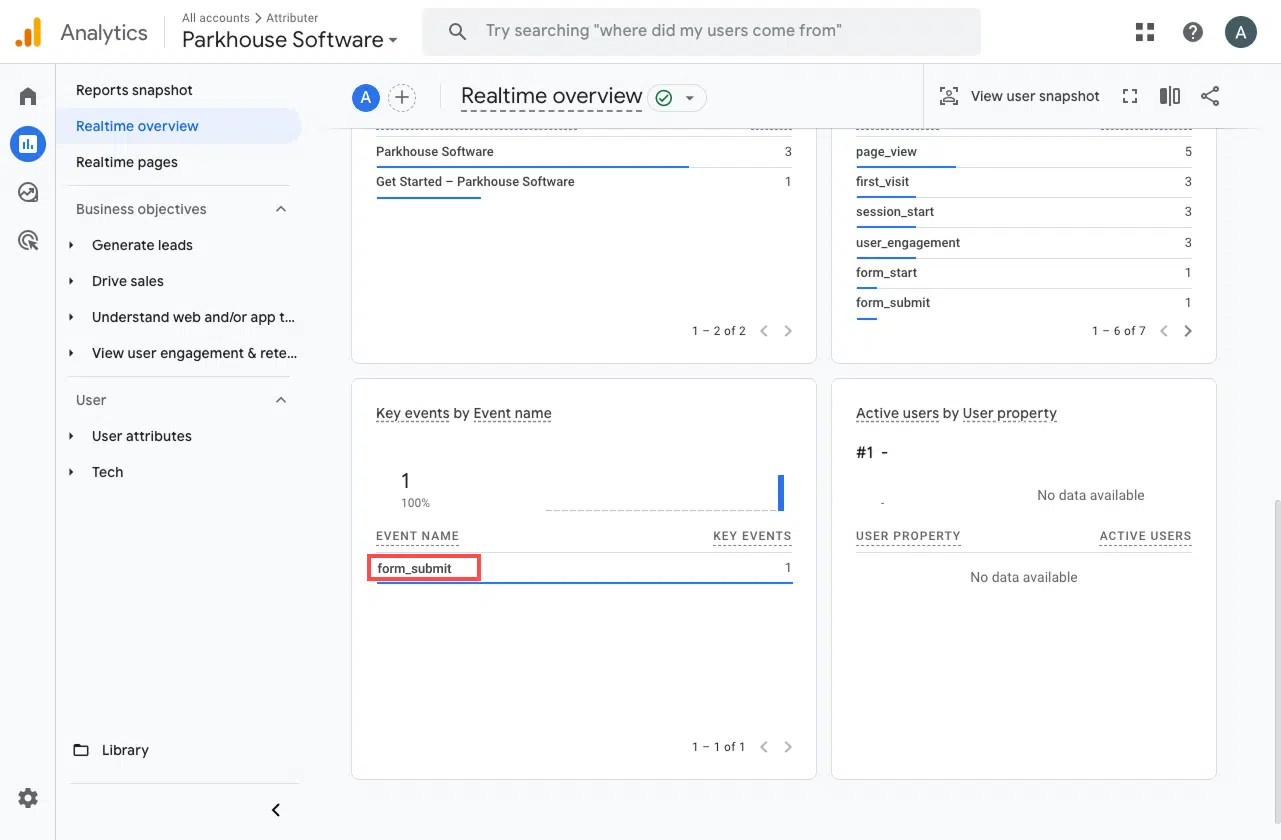
Then hop over to Google Analytics and pull up the Real Time dashboard. Check the Recent Events section. If your test event appears there, you are all set and conversions are being tracked correctly.
Step 4: Mark the event as a 'Key Event' (Optional, but recommended)
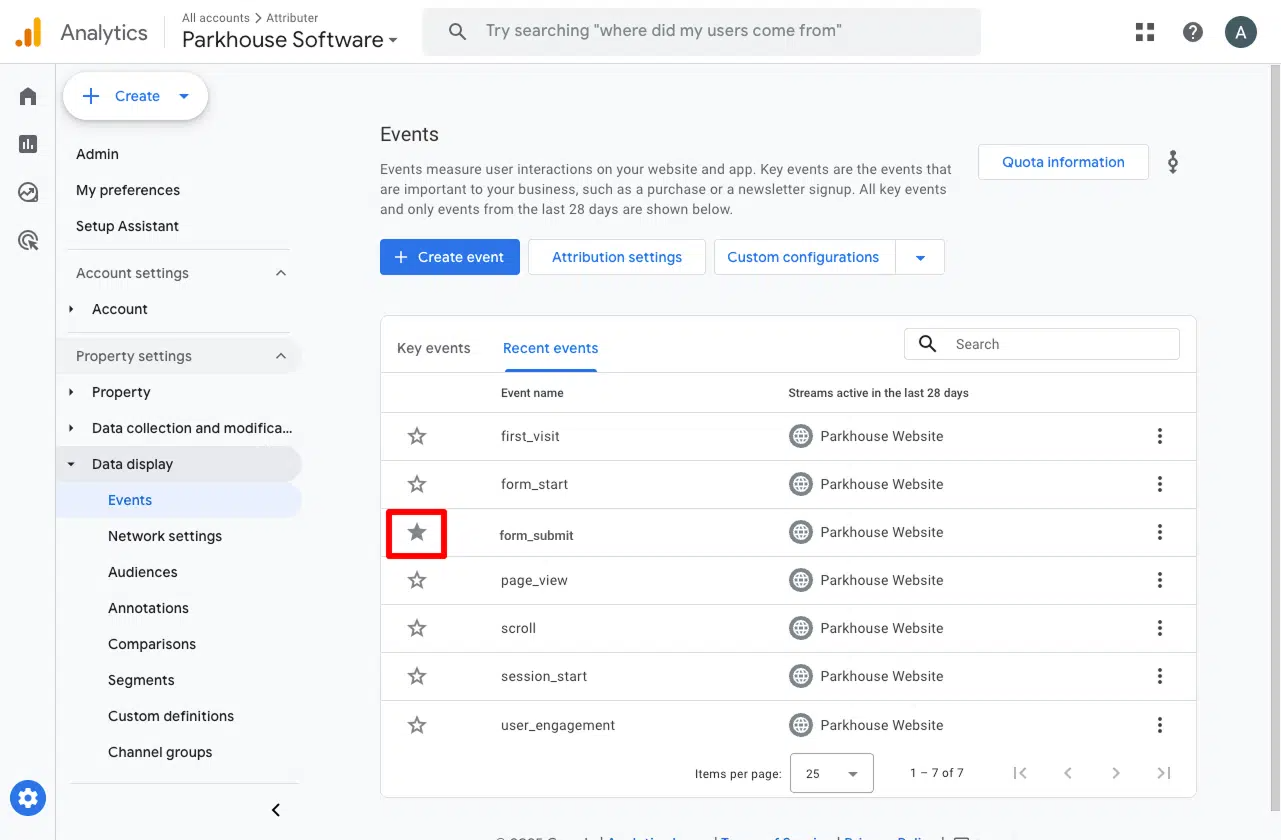
One final thing worth doing is marking the form_submit event as a Key Event inside Google Analytics 4. Doing this tells GA4 to treat it as an official conversion, which gives you access to additional reporting features like seeing the covnersion numbers in your acquisition reports, or tracking it in funnel exploration and path analysis reports.
To set it up, navigate to the Admin section of your GA4 property and click on Events under the Data Display menu. Switch over to the Recent Events tab, locate the form_submit event (or whatever custom name you chose), and click the star icon beside it. That is all there is to it.
Why Converly is the best way to trigger conversions in Google Analytics
There are other ways to track form submissions from a Duda website as conversions in Google Analytics. So why pick Converly over the alternatives? Here are some solid reasons:
1. No code or complicated setup
Many of the other options for conversion tracking require you to dig into Google Tag Manager and set up data layer pushes, or write custom JavaScript. That can be a real headache if coding is not your thing.
Converly flips that on its head. The visual workflow builder lets you get everything configured in just a couple of clicks. Choose your trigger (a Duda form submission), set the destination (Google Analytics), and you are finished. No wrestling with tag configurations or custom scripts.
2. More accurate conversion numbers
When Converly sends conversions to Google Analytics, it uses the Measurement Protocol to deliver them directly to Google's servers instead of relying on the Google tag running in the visitor's browser.
This matters because browser-based tracking is becoming less reliable every year. Ad blockers prevent tracking tags from loading, and privacy features in Safari and iOS (known as Apple ITP) prevent them from working properly even if they do load.
How much of an impact does this have? Well a recent analysis of over 7 million conversions showed that tag-based tracking missed close to 30% of conversions (around 5% of those came from ad blockers, and 25% came from browser privacy restrictions).
Sending conversions server-side with Converly means those conversions show up in your reports instead of disappearing.
3. Supports multiple tools and platforms
Converly connects with more than 50 different tools, including form builders, scheduling apps and live chat widgets. On the destination side, it supports Google Analytics, Google Ads, Meta Ads, LinkedIn Ads, and a whole lot more.
So whenever you add a new tool to your Duda site (like a Calendly scheduling widget or an Intercom chat box), or if you decide to advertise on a new platform, setting up conversion tracking is just a matter of a few clicks inside Converly.
4. Makes it easy to add conditional logic
Converly allows you to build smart rules that fire different conversion events based on the specific actions visitors take on your site.
As an example, say you are handling marketing for a construction company. You could configure a conversion called Quote Requested when someone fills in your quote form, and another one called Brochure Downloaded when a visitor grabs one of your project brochures.
By tracking each conversion separately, you get a much clearer picture of which marketing campaigns are driving the outcomes your business cares about most.
5. Great support provided for free
If you have ever tried getting help from Google or Meta with setting up conversion tracking, you know it can feel like shouting into the void.
At Converly, things work differently. Our team brings over 20 years of experience in advertising and analytics, and we are always happy to help. Whether you want to sort things out over email or jump on a short video call, our support is completely free and we will make sure your tracking is running perfectly.
6. Gives you a full conversion log and email alerts
Send your conversions to Google Analytics through something like Google Tag Manager and you are basically flying blind on whether it still works. A few tests at setup prove it fired that day, but without regular re-testing your tracking can break silently (a change to the form, a tweak in Google Tag Manager, or an edit inside Google Analytics) and nothing tells you until your reports run dry.
Converly clears that up. You get a full conversion log listing every conversion, the data Converly captured for it, what it sent to Google Analytics, the response that came back, and plenty more.
And you can switch on email notifications too. Have one sent for every conversion that lands in Google Analytics, or only when a send fails, so you always know the moment something stops working.
3 useful reports you can run when you track Duda form submissions as conversions in Google Analytics
After 15+ years of running marketing teams, I have spent countless hours in Google Analytics working out where visitors and leads are actually coming from.
These 3 reports are the ones that have delivered the most valuable insights over and over again. Once you have Duda form submissions flowing into Google Analytics as conversions, you will be able to run them too.
1. Conversions by Channel
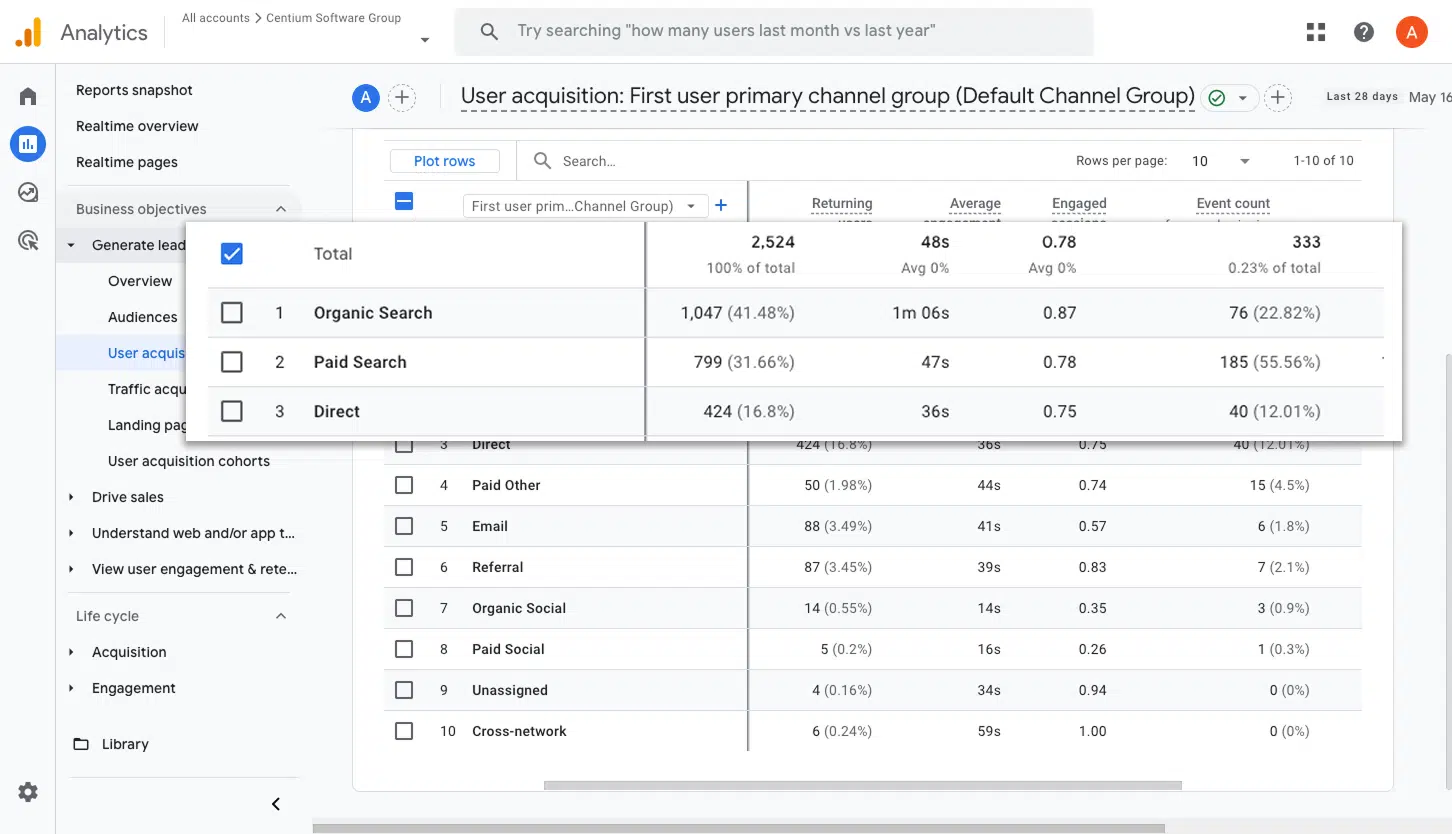
This report gives you a clear view of how many form submissions you are getting from each marketing channel, be it Organic Search, Paid Search, Paid Social, Organic Social, or any other source.
It is one of the quickest ways to spot which channels are generating the most leads and where you might have an opportunity to push harder.
2. Conversions by Meta Ads Network
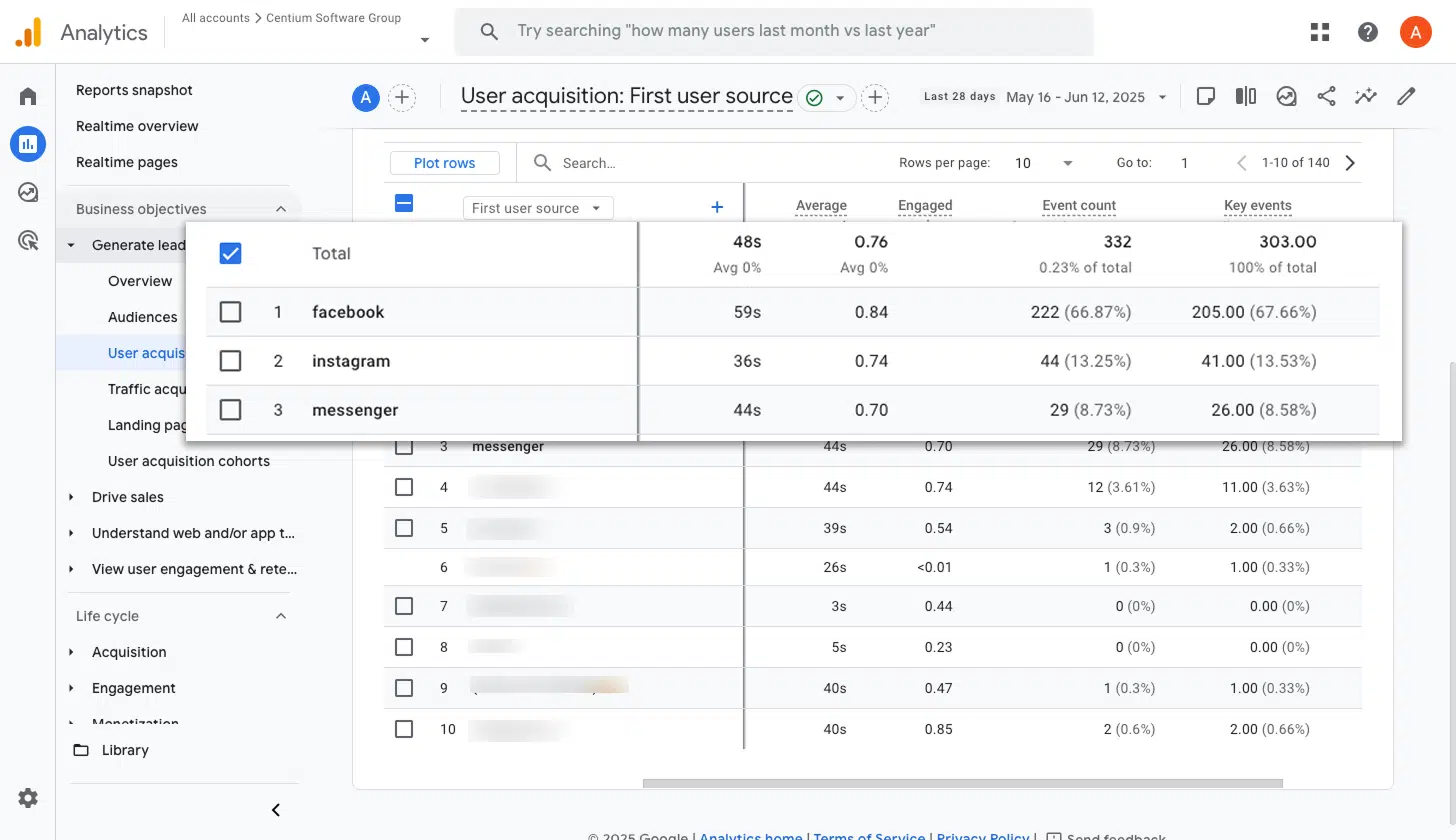
If you are advertising through Meta, your ads are likely showing up across multiple networks like Facebook, Instagram, Messenger, and WhatsApp.
Each of those platforms behaves differently when it comes to driving actual leads, so understanding which ones are converting is important. This report gives you that visibility, making it easy to redirect budget toward the networks that are performing and away from the ones that are not.
3. Conversions by Google Ads Campaign
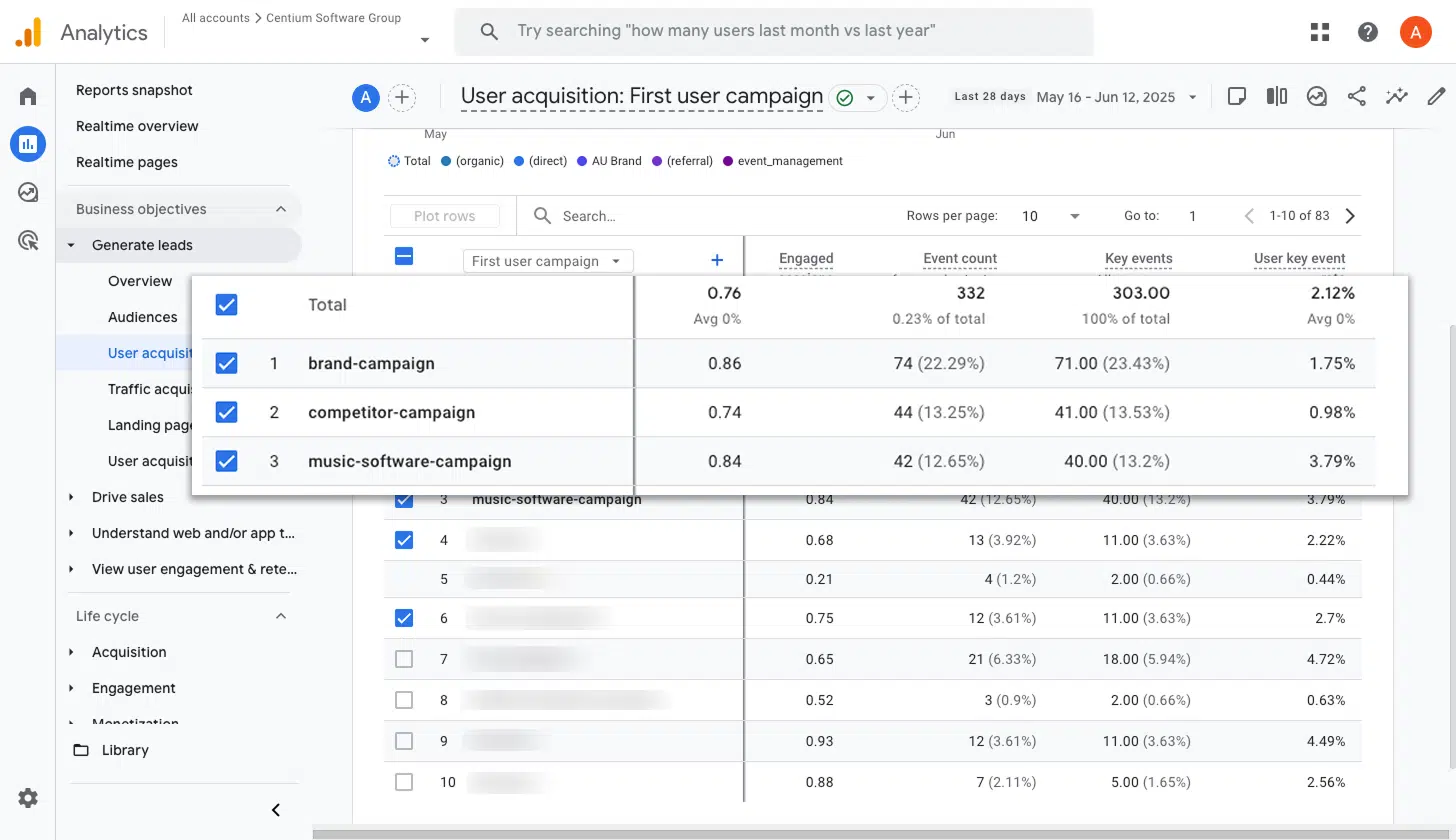
If Google Ads is part of your strategy, you probably have multiple campaigns running at once, possibly targeting different services, keyword groups, or regions.
Understanding which campaigns are actually generating leads is critical for making good budget decisions. This report lays it all out, showing you how many conversions each campaign has generated so you can invest more in the winners and pull back on the rest.
Wrap up
With Converly, getting conversion events into Google Analytics every time someone submits a form on your Duda site is straightforward. There is no code involved and no complicated technical setup to worry about.
And whenever you are ready to expand, connecting platforms like Google Ads or Meta Ads to your Conversion Flow only takes a few clicks. The same conversion data will start flowing to those platforms automatically.
Want to see how it works? Converly has a 14-day free trial, and most people are fully set up in under 10 minutes. Give it a try and see what a difference proper conversion tracking makes.
About the author

Aaron is the founder of Converly. With over 15 years of experience in digital marketing and SaaS, he's passionate about helping businesses track and optimise their ad conversions.