


Track ClickFunnels form submissions as conversions in Google Analytics
Use Converly to automatically send conversion events to Google Analytics whenever someone submits a form on your ClickFunnels pages. No code or technical skills needed!
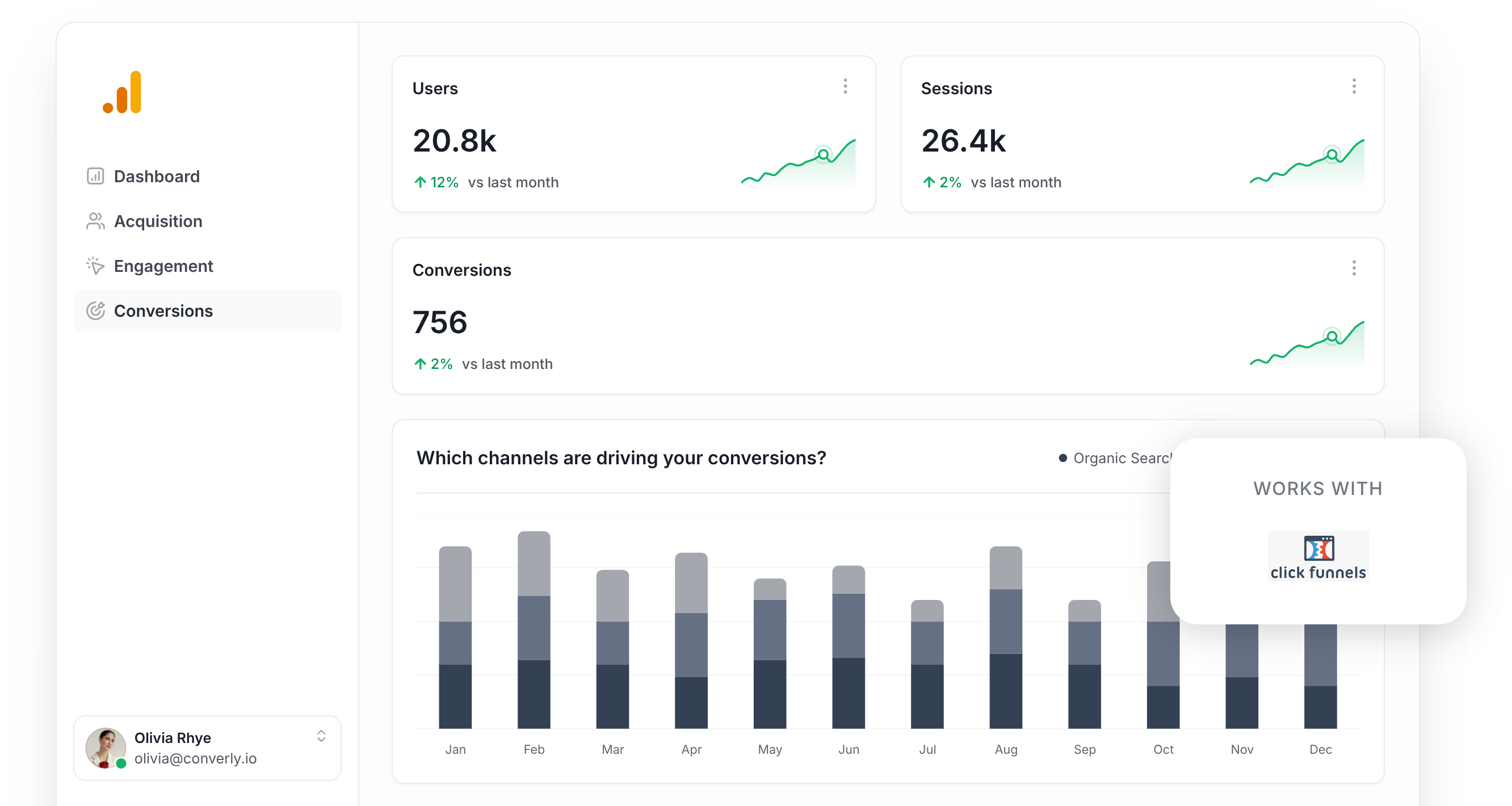
Do you know how many leads your marketing campaigns are actually generating?
If you are running campaigns on Google Ads, Meta Ads, etc, then chances are you want to understand which ones are pulling their weight. Without that visibility, it is all too easy to keep investing in campaigns that are not delivering real results.
The good news is there is a simple fix, and it does not require any coding or technical expertise.
In this guide, we will show you how to use Converly to automatically fire a conversion event in Google Analytics every time someone fills out a form on your ClickFunnels pages. With this in place, you will finally have clear data on how many leads each of your campaigns is driving, which ads are performing, and much more.
4 simple steps for tracking ClickFunnels form submissions as conversions in Google Analytics
Here is how to get conversion tracking up and running in Google Analytics in just 4 steps:
Step 1: Build your Conversion Flow in Converly
Converly is a tool that automatically sends conversion events to your analytics tools and ad platforms (like Google Analytics) whenever someone fills out a form on your website.
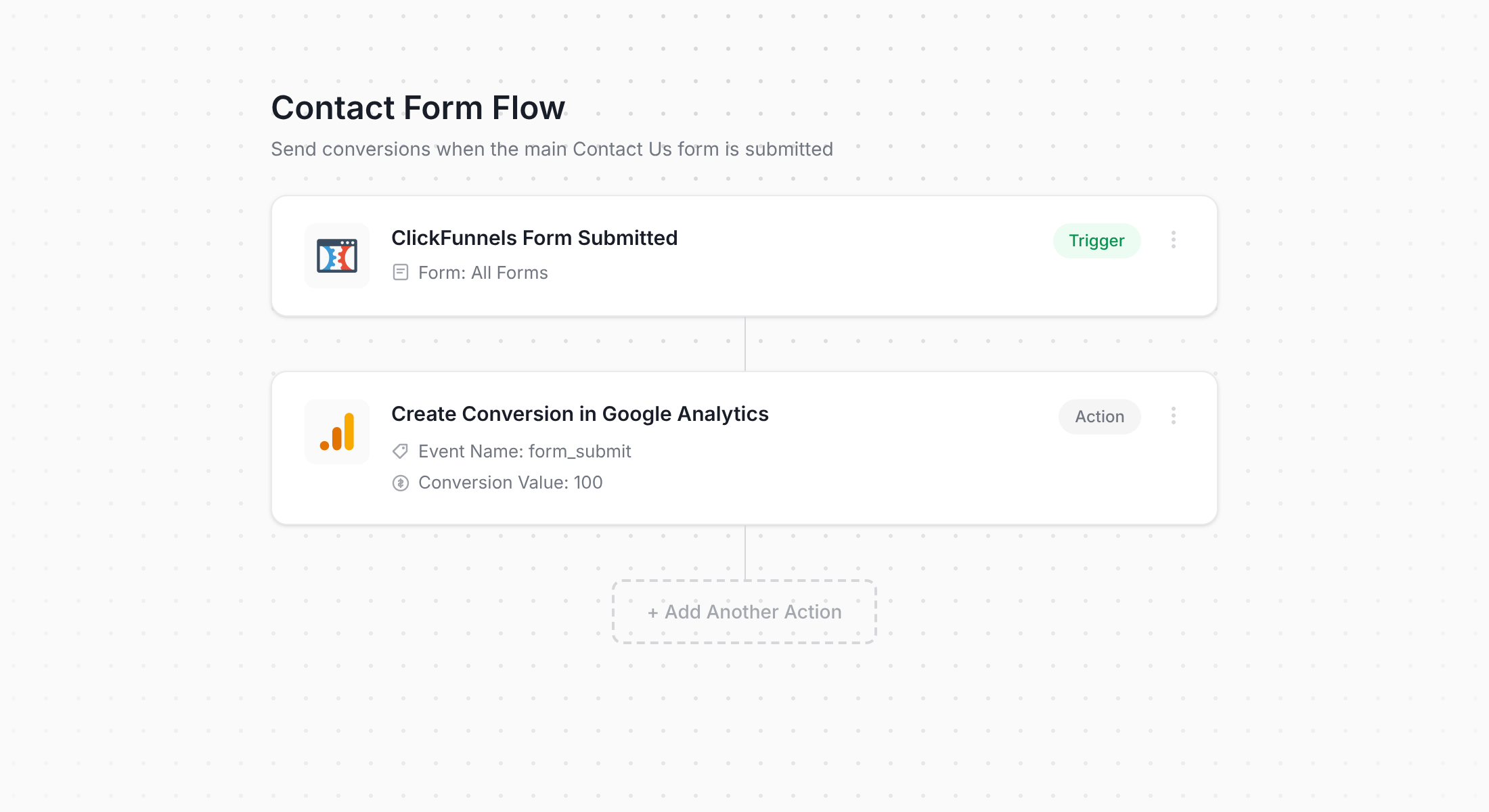
The screenshot above shows Converly's workflow builder, which should feel instantly familiar if you have used tools like Zapier or HubSpot Workflows before.
Getting started is simple: choose your trigger (such as when someone submits a ClickFunnels form on your site) and then select the destination for the conversion event (like Google Analytics). That is literally all you need to do.
Step 2: Install Converly on your ClickFunnels pages
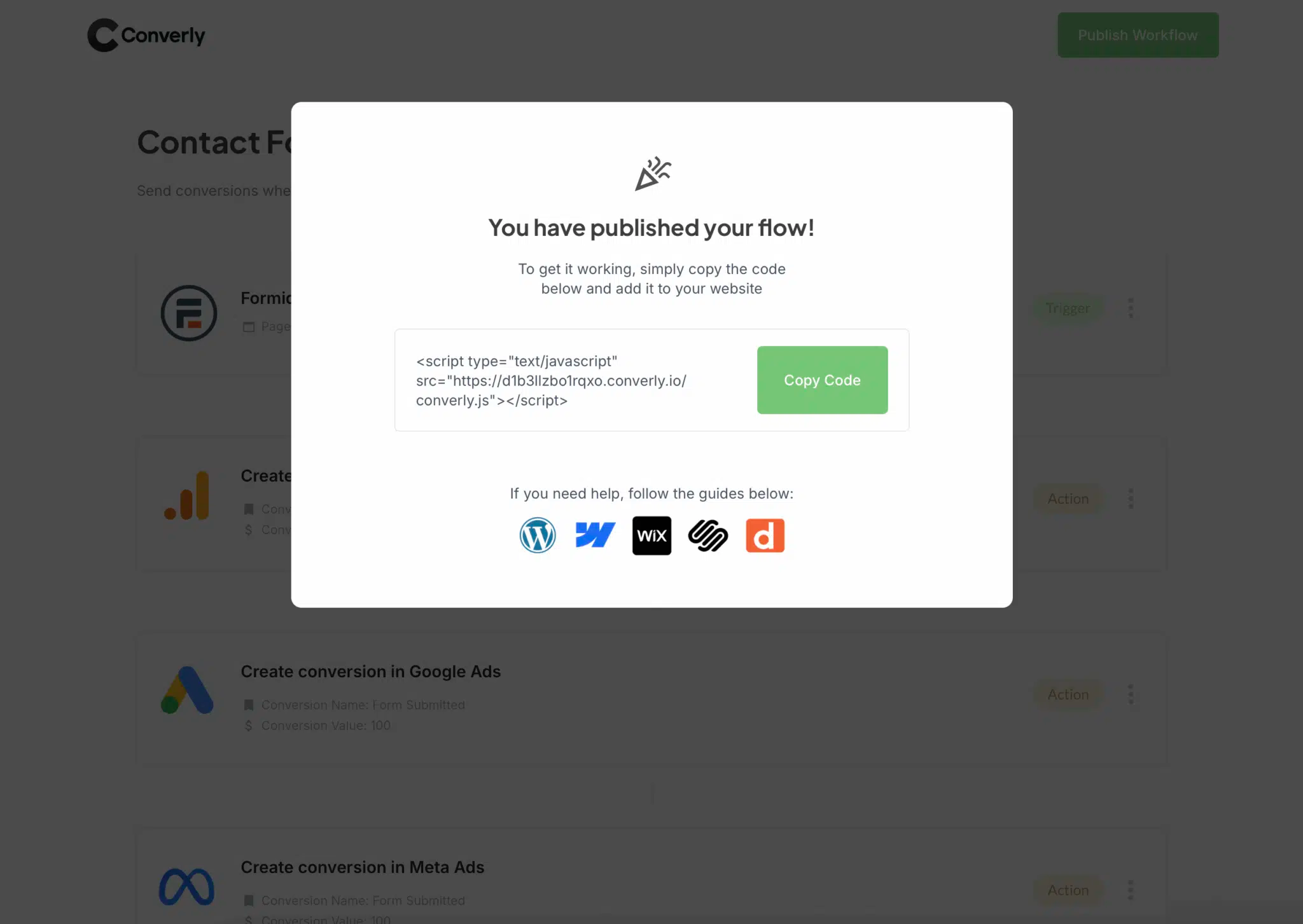
After you have built your Conversion Flow, Converly provides a small code snippet to place on your ClickFunnels pages.
Once that snippet is in place, it handles everything automatically. It watches for form submissions on your ClickFunnels pages and sends the conversion data directly to Google Analytics (along with any other platforms you have connected in your flow).
Step 3: Test it's working
Now that everything is set up, you will want to verify that conversions are being tracked correctly.
The best way to check is to open an incognito window, go to the page with your ClickFunnels form, and fill in a test submission.
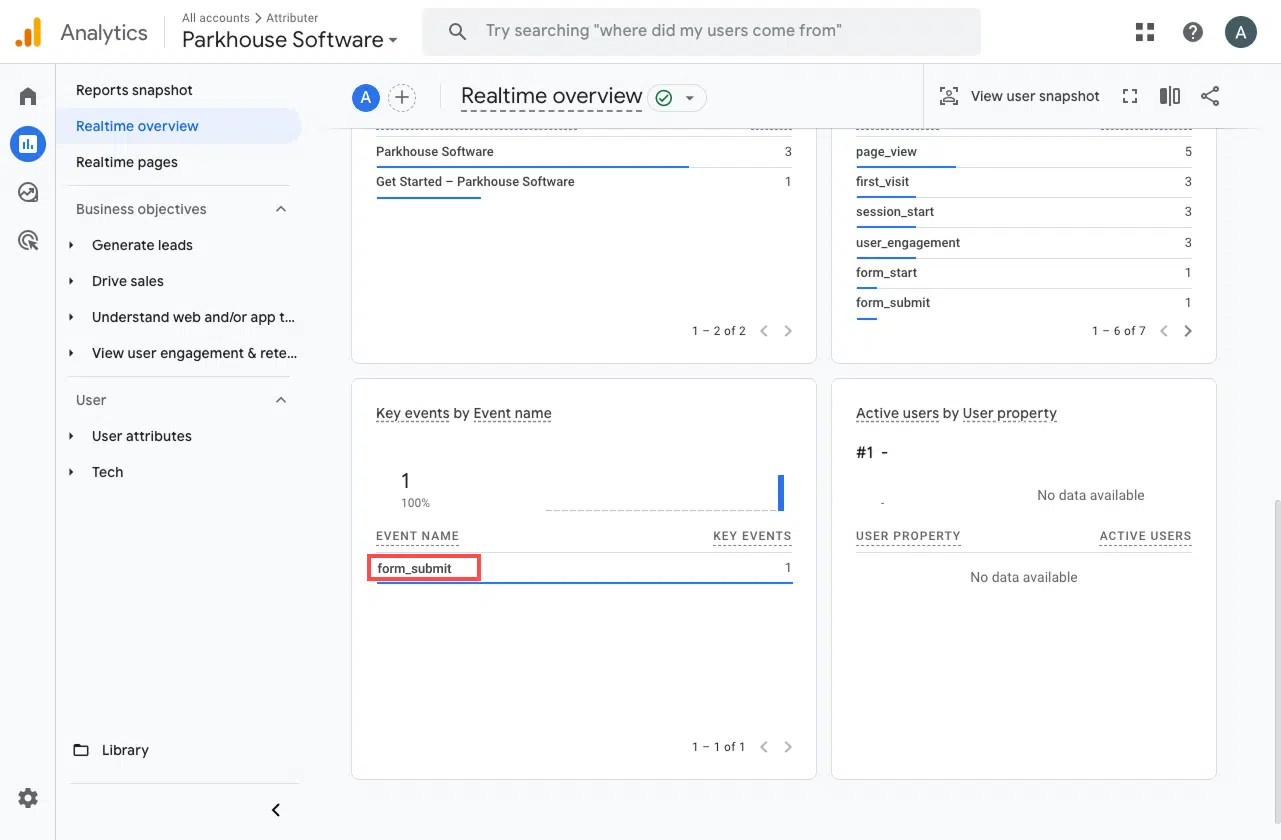
After that, head over to Google Analytics, open up the Real Time dashboard, and look at the Recent Events section. If your form submission shows up there, everything is working as expected.
Step 4: Mark the event as a 'Key Event' (Optional, but recommended)
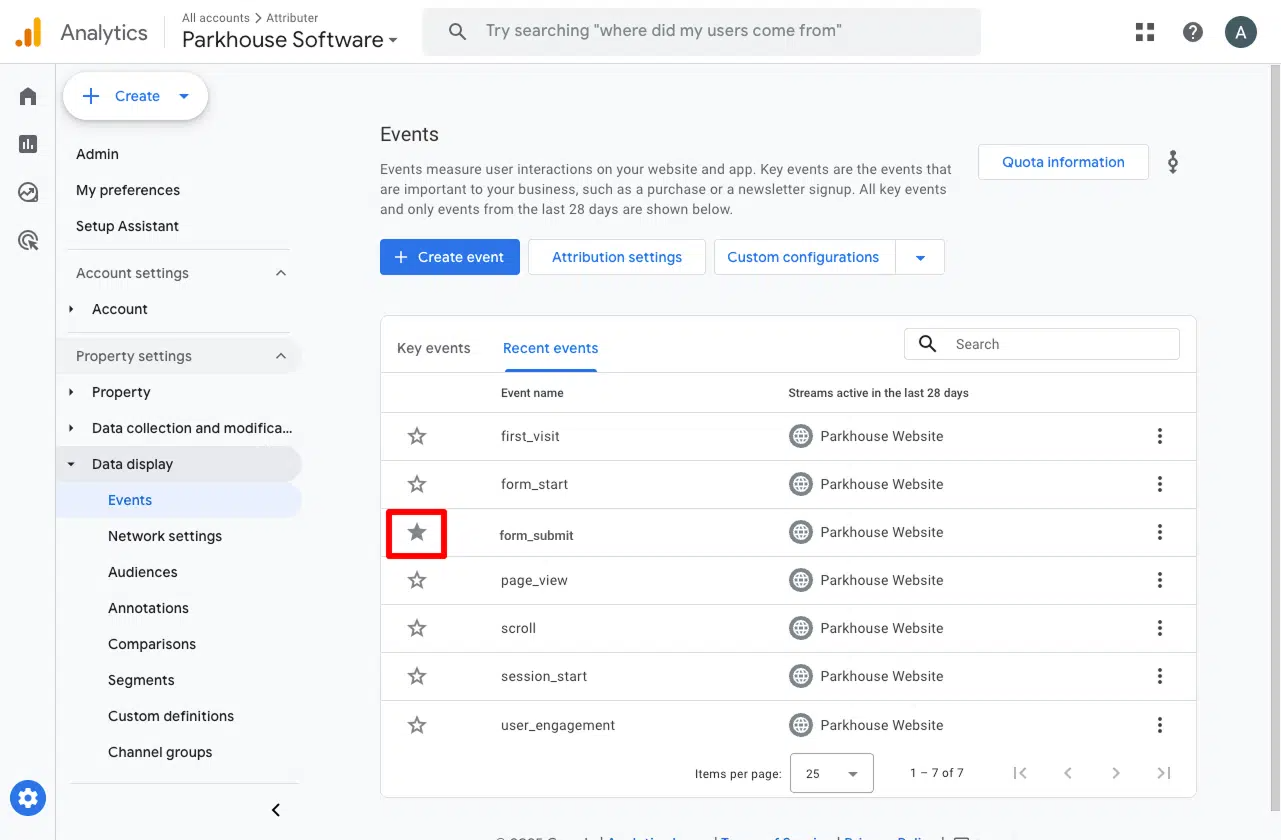
One final thing worth doing is marking your form_submit event as a Key Event in GA4. When you do this, Google Analytics treats it as a conversion, which means you get access to additional reporting features. For instance, you can include it in acquisition reports or set it as a conversion point for funnel and path analysis.
To set this up, go to the Admin section of your GA4 property, then click Events under the Data Display menu. Open the Recent Events tab where all your tracked events are listed. Find the form_submit event (or whatever name you used) and click the star icon to mark it as a Key Event.
Why Converly is the best way to trigger conversions in Google Analytics
There are several methods for tracking ClickFunnels form submissions as conversions in Google Analytics. So why choose Converly over the alternatives? Here are a few compelling reasons:
1. No code or complicated setup
Most other approaches to conversion tracking involve dealing with Google Tag Manager, writing custom scripts, or getting into technical configurations that are not exactly marketer-friendly.
Converly takes a completely different approach. Its workflow builder is intuitive and straightforward, especially if you have any experience with tools like Zapier or HubSpot Workflows.
You simply select a trigger (like a ClickFunnels form submission) and pick what should happen next (such as sending a conversion event to Google Analytics). No Tag Manager, no code, no fuss.
2. More accurate conversion numbers
When Converly sends conversions to Google Analytics, it uses the Measurement Protocol to deliver them directly to Google's servers instead of relying on the Google tag running in the visitor's browser.
This matters because browser-based tracking is becoming less reliable every year. Ad blockers prevent tracking tags from loading, and privacy features in Safari and iOS (known as Apple ITP) prevent them from working properly even if they do load.
How much of an impact does this have? Well a recent analysis of over 7 million conversions showed that tag-based tracking missed close to 30% of conversions (around 5% of those came from ad blockers, and 25% came from browser privacy restrictions).
Sending conversions server-side with Converly means those conversions show up in your reports instead of disappearing.
3. Supports multiple tools and platforms
Converly integrates with more than 50 different tools, spanning form builders, scheduling widgets, chatbots, and beyond. It can also push conversion events to a wide variety of destinations including Google Analytics, Google Ads, Meta Ads, LinkedIn Ads, and many others.
This means that whenever you bring a new tool into your marketing stack or start advertising on a different platform, adding conversion tracking is just a few clicks.
4. Makes it easy to add conditional logic
With Converly, you can create smart rules that fire different conversion events depending on what someone does on your site.
For example, imagine you are the marketer at a financial services firm. You could set up one conversion called Consultation Booked for when someone fills out your booking form, and a separate one called Whitepaper Downloaded for when a visitor grabs one of your free resources.
This gives you the ability to track each type of conversion independently and get a much more detailed understanding of what your campaigns are actually driving.
5. Great support provided for free
Getting help from Google or Meta when something goes wrong with conversion tracking is notoriously difficult. More often than not, you are left to figure things out on your own.
Converly does things differently. Our team has over 20 years of hands-on experience in advertising and analytics, and we provide free support to every customer. Whether you prefer a quick email or a short video call, we will make sure your setup is running smoothly and everything is tracking the way it should.
6. Gives you a full conversion log and email alerts
One frustrating thing about a tool like Google Tag Manager is that you can never really be sure your tracking is still firing. A handful of tests on setup day will confirm it works right then, but unless you keep checking week after week, it can stop working quietly (a change to the form, a tweak in Google Tag Manager, or an edit inside Google Analytics) and you won't notice until your reports run dry.
Converly takes that worry away. You get a full conversion log that lays out every conversion that happened, the data Converly captured for it, what it forwarded to Google Analytics, the response Google Analytics returned, and more besides.
You can also switch on email notifications. Have one sent for every conversion that reaches Google Analytics, or only when a send fails, so you find out the instant something stops working.
3 useful reports you can run when you track ClickFunnels form submissions as conversions in Google Analytics
After spending more than 15 years running marketing teams, I have built and analyzed a huge number of Google Analytics reports to figure out where our leads were really coming from.
Of all the reports I have used over the years, these 3 have consistently provided the clearest and most actionable insights. And once you are tracking ClickFunnels form submissions as conversions in GA4, you will have access to them too.
1. Conversions by Channel
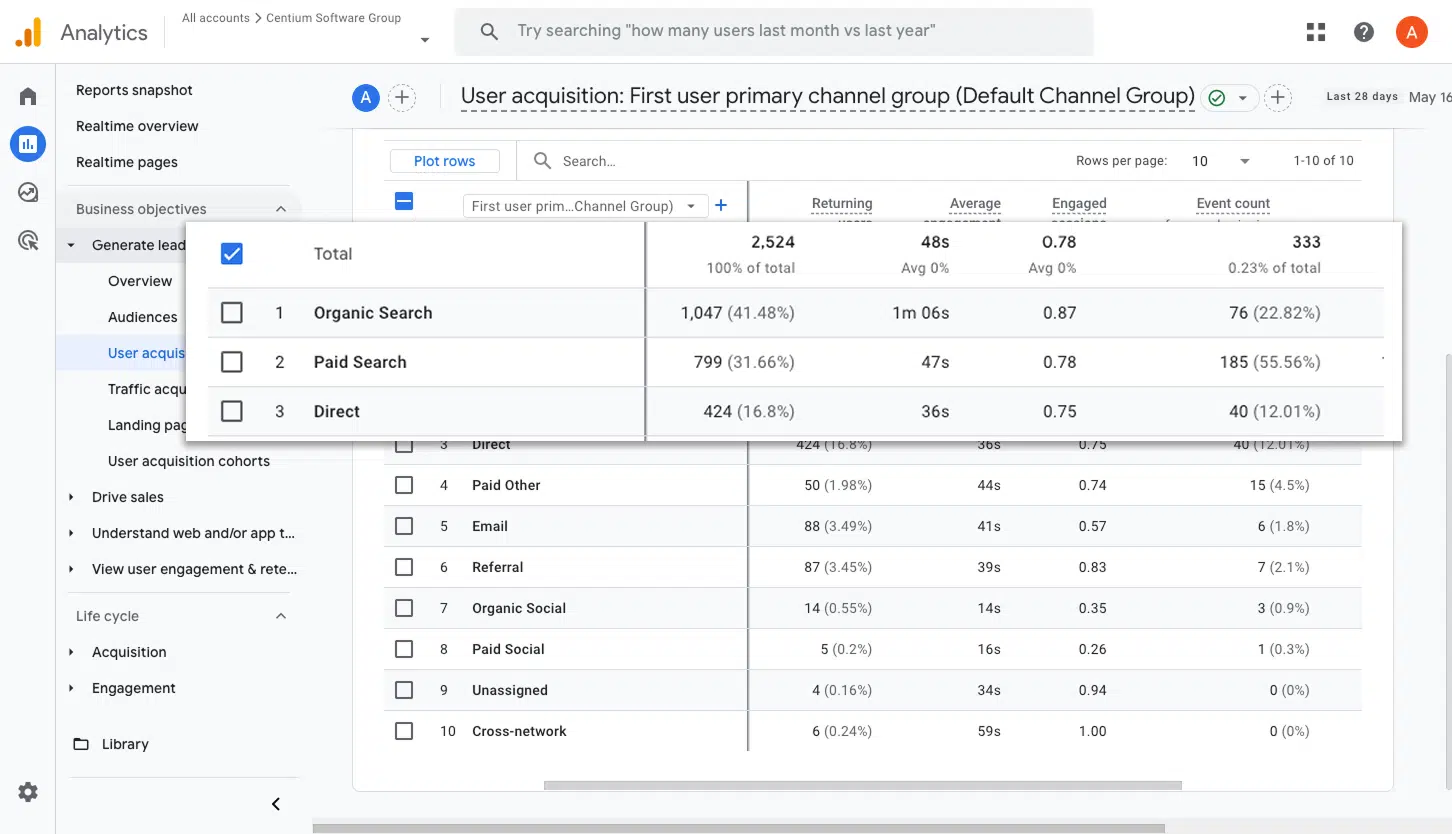
This report gives you a breakdown of how many form submissions are coming from each marketing channel, whether it is Organic Search, Paid Search, Paid Social, Organic Social, or anything else you are running.
It is one of the most useful reports for quickly seeing which channels are driving the most leads and identifying areas where you could potentially get even more results.
2. Conversions by Meta Ads Network
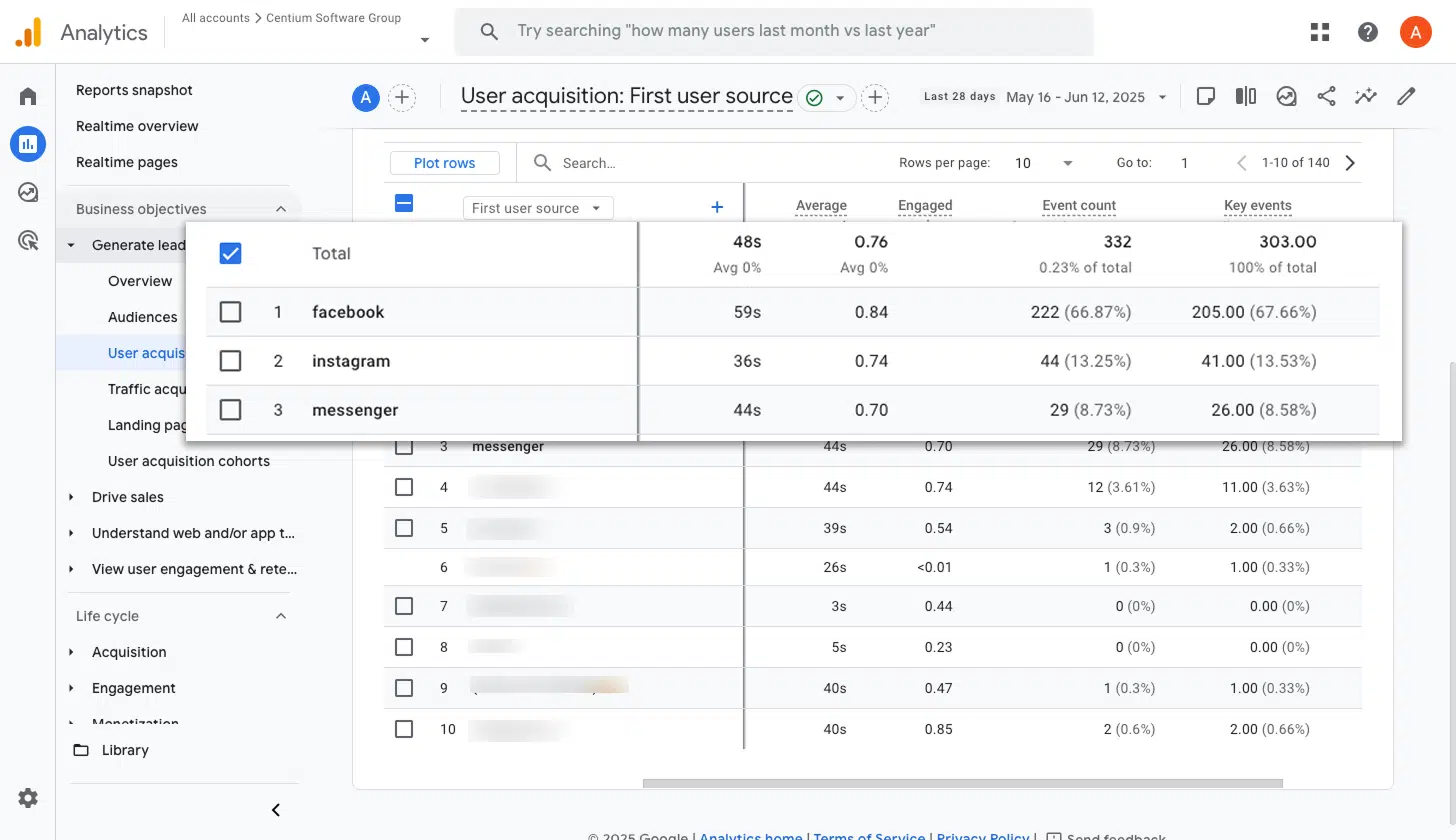
Running Meta ads? They are likely showing up across several different networks such as Facebook, Instagram, Messenger, and WhatsApp.
Since performance can vary significantly from one network to another, knowing which ones are actually generating leads (not just impressions or clicks) is essential.
This report shows you exactly that, breaking down conversions by network so you can invest more in the ones delivering results and pull back on the ones that are not.
3. Conversions by Google Ads Campaign
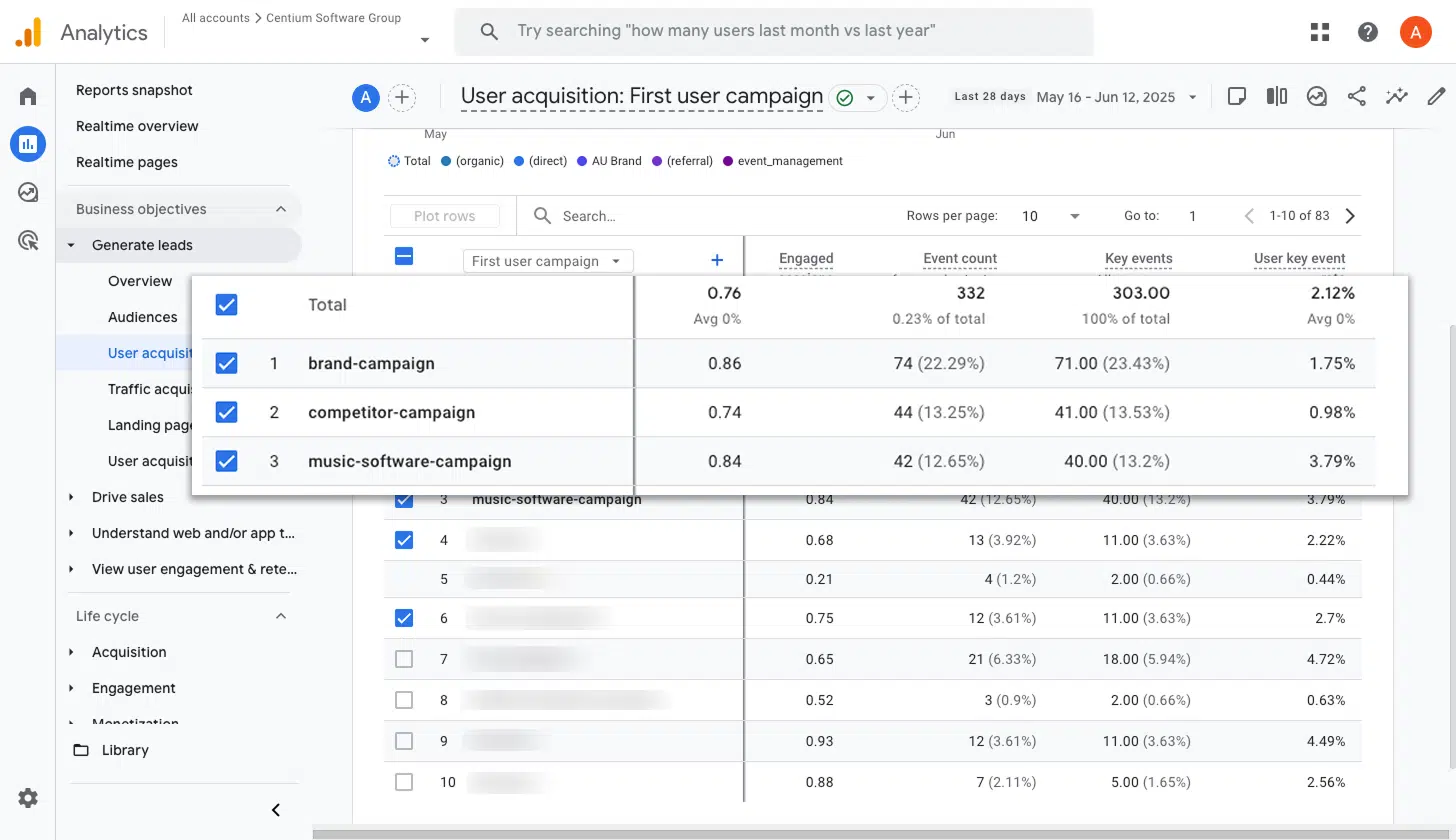
If you are advertising on Google, you likely have multiple campaigns running simultaneously. Some might target different services, others could focus on distinct keyword types like brand terms versus non-brand terms, and some may even cover different geographic regions.
Knowing which campaigns are actually converting is crucial for making smart budget decisions.
This report gives you a clear view of conversions per campaign, so you can double down on what is working and reduce spend on what is not.
Wrap up
Follow the steps above and you will have Google Analytics recording a conversion event every time someone submits a form on your ClickFunnels pages, all without writing any code or dealing with a complex technical setup.
And if you start advertising on platforms like Google, Meta, or anything else down the line, you can simply add them to your Conversion Flow and have the same data flowing to those platforms as well.
Getting started is quick and easy. Converly offers a 14 day free trial and setup typically takes less than 10 minutes. Give it a try and see the difference for yourself!
About the author

Aaron is the founder of Converly. With over 15 years of experience in digital marketing and SaaS, he's passionate about helping businesses track and optimise their ad conversions.